
Shopping Center Roofing in Longview, TX
Shopping Center Roofing
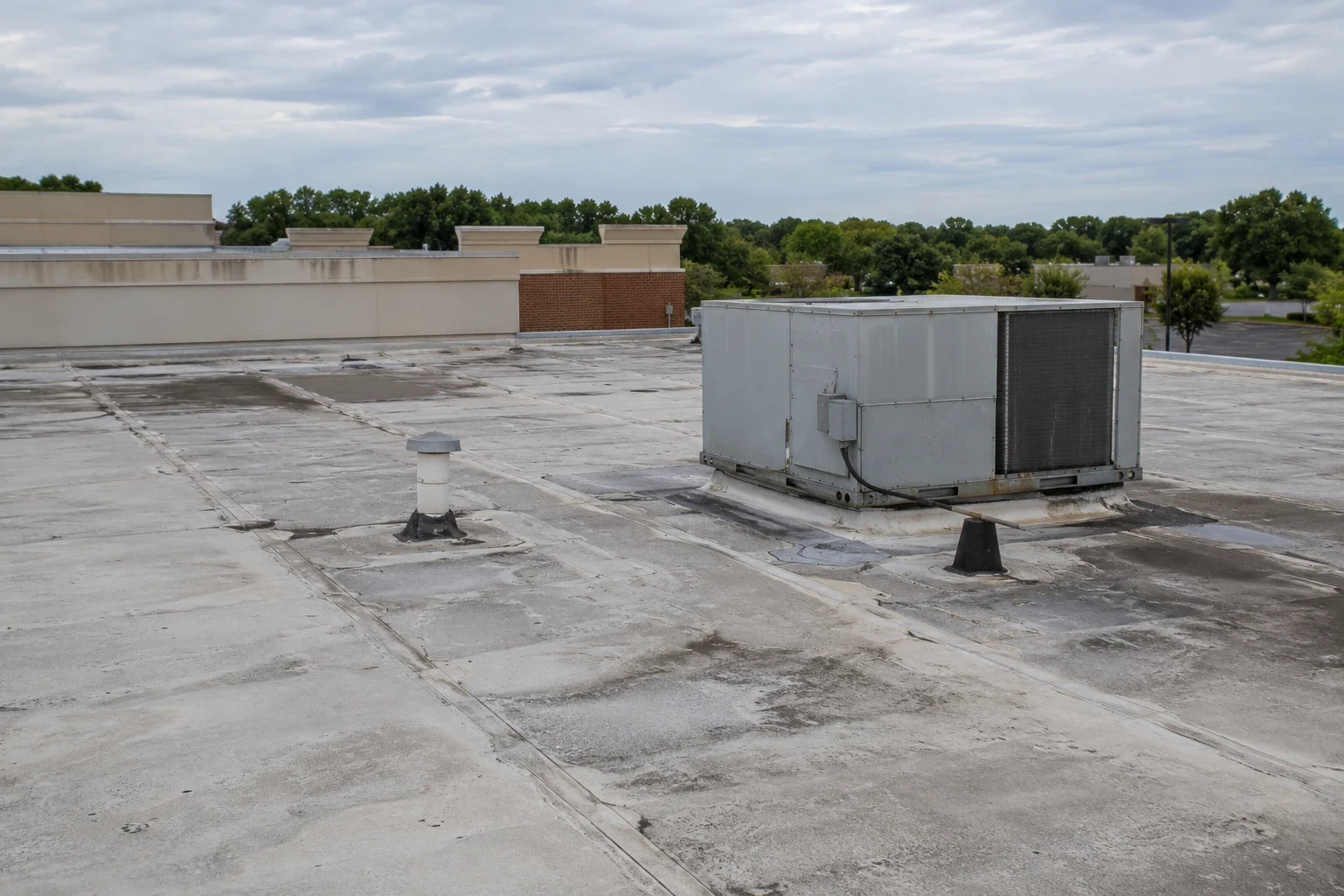
A retail roof can leak over one tenant while water enters at a curb several bays away. Longview shopping centers also have shared walks, storefront signs, delivery doors, and rooftop equipment that must keep working during a repair. We map the affected roof zone, trace the water path, and separate the repair area from neighboring tenants before opening the assembly. The first decision is whether the membrane, edge, drain, or penetration is actually letting water through.
US 80, also called Marshall Avenue, carries commercial activity across Longview, and Downtown planning includes continued retail and mixed-use activity. Those settings call for different staging and access plans, but neither tells us what a particular center's roof contains. We confirm the roof system, prior repairs, drain layout, and tenant schedule with the property team, then give the manager a scope that identifies what is known and what still needs testing.
Keep storefronts and service lanes working
Retail work has two boundaries: the roof area being repaired and the ground area used for access. We coordinate lifts, material drops, and debris handling around customer entrances, accessible walks, restaurant exhaust, and delivery windows. If a tenant needs uninterrupted receiving, the sequence can move between roof zones rather than block the entire rear lane. The daily plan names which area is restricted, how long the restriction should last, and who can release it.
Along Estes Parkway, Longview identifies a south-city commercial corridor where retail reinvestment is part of its planning focus. That wider context can matter when a center has limited parking or multiple entrances, but the site contact sets the actual access route. A phased reroof plan can keep sections in service while crews complete tie-ins. We also protect signage, tenant equipment, and pedestrian routes from tear-off debris.
Trace leaks across adjoining tenant bays
Water can travel along a deck flute, insulation joint, conduit, or ceiling grid before it appears inside a store. A stain beneath a demising wall can be offset from the roof entry. We compare the report location with drains, seams, curbs, wall transitions, and earlier patches, then inspect the likely water path. When the source is not visible, a controlled test or selective opening may be more useful than spreading sealant across a wide area.
Large shopping centers may combine low-slope membrane fields with canopies, metal edges, kitchen exhaust curbs, and sign supports. Each transition gets its own inspection note so a repair at one tenant does not conceal a separate failure nearby. A leak investigation records the entry point and repair limits. A grocery roof plan may also need to account for refrigeration equipment and receiving hours, while a big-box roof review often involves long roof zones and larger staging footprints.
Check the full drainage route
Retail roofs collect windblown packaging, leaves, and grit near drains and behind rooftop units. We check strainers, drain bowls, overflow paths, scuppers, and the slope around each outlet. A blocked opening requires a different correction from a settled area or a failed drain flashing. The report shows whether water is moving to an outlet, where ponding remains, and whether the outlet detail itself needs repair. A clear flow path protects both the roof assembly and the tenant space below.
Longview's hot summers and seasonal thunderstorms put drainage high on the shopping-center maintenance list. Before a heavy rain period, inspect the outlets, membrane, and overflow path; our report records the condition and any repair needed. A drain and scupper repair can correct a failed outlet tie-in, while ponding-water repair addresses low areas only after the drainage route and roof structure have been considered.
Protect rooftop units and tenant penetrations
Packaged units, kitchen exhaust, refrigeration lines, signs, and communications equipment create a dense field of curbs and penetrations on many retail roofs. We inspect flashing height, metal counterflashing, sealant condition, support movement, and clearance for service technicians. A unit replacement can disturb a sound roof detail if the curb dimensions change or the old flashing is reused without checking its attachment. The repair scope should identify who disconnects equipment and who restores each roof transition.
At a long retail strip, roof zones may hold different equipment vintages and patch histories. We photograph the affected curb and mark nearby seams so maintenance staff can connect the work record to the correct tenant bay. Curb and support repairs address movement or failed flashing. Perimeter work is checked separately so a curb correction does not hide an opening at the roof edge.
Choose a repair boundary that will hold
A localized patch makes sense when the membrane around the defect remains sound, the substrate is stable, and the repair can tie into compatible material. If wet insulation, recurring seam movement, or widespread coating failure appears, the owner may need a broader repair or replacement comparison. We identify the visible evidence, note any concealed conditions that remain untested, and explain why the proposed boundary includes each roof zone. That gives the manager a defensible scope instead of a patch with no stated limit.
Longview's adopted commercial building and energy codes are administered through the City's plan-review process. When work changes the roof assembly, we describe the proposed scope and coordinate the relevant project information; the authority determines applicable review. A replacement assessment can compare repair, recover, and tear-off when repeated failures make a local patch a poor fit. The decision should account for tenant disruption, drainage work, and future access needs.
Give the property team a usable record
Closeout should let the next manager understand what was opened and what was restored. We provide roof-zone labels, before-and-after photos, material notes, drain corrections, and any follow-up condition that remains unresolved. Tenant names can help locate a report internally, but the roof plan should use durable zone references that survive a lease change. We also note whether a test was completed and whether the work area can return to ordinary service.
For a center in Longview, share the roof plan, tenant directory, equipment list, leak log, access hours, and any current construction schedule before inspection. The property contact can identify sensitive loading areas and tenant restrictions. We will return a repair scope that separates confirmed work from optional testing and gives the manager a clear next step for each affected roof zone.
At a multi-tenant center, a roof leak can affect more than one lease space or enter above a shared corridor. Confirm the suite report and inspect the roof area that serves it, including drains and nearby penetrations. The property manager can coordinate tenant notices, while the crew records the roof-zone boundary and any interior area that needed protection. If work crosses a demising wall or shared equipment area, make that coordination explicit before the scope is approved.
Commercial Roofing Questions
Can a shopping center stay open during roof repairs?
Yes, when the work area, tenant entrances, delivery route, and debris controls are planned before mobilization. Some roof zones may need short restrictions while others remain in service.
How do you identify the source of a leak over one tenant?
We compare the interior report with roof seams, drains, curbs, walls, and prior repairs. If the water path remains uncertain, a targeted test can help define the opening instead of widening the patch.
What should a manager provide before an inspection?
A roof plan, tenant and equipment list, leak history, access rules, and upcoming delivery or construction windows help us inspect the right zones and protect store operations.
When does a retail roof need more than a spot repair?
Repeated leaks, wet insulation, broad seam failure, or an unstable substrate can justify comparing a larger repair with recover or replacement. We document the findings behind that recommendation.