
Grocery Store Roofing in Longview, TX
Grocery Store Roofing
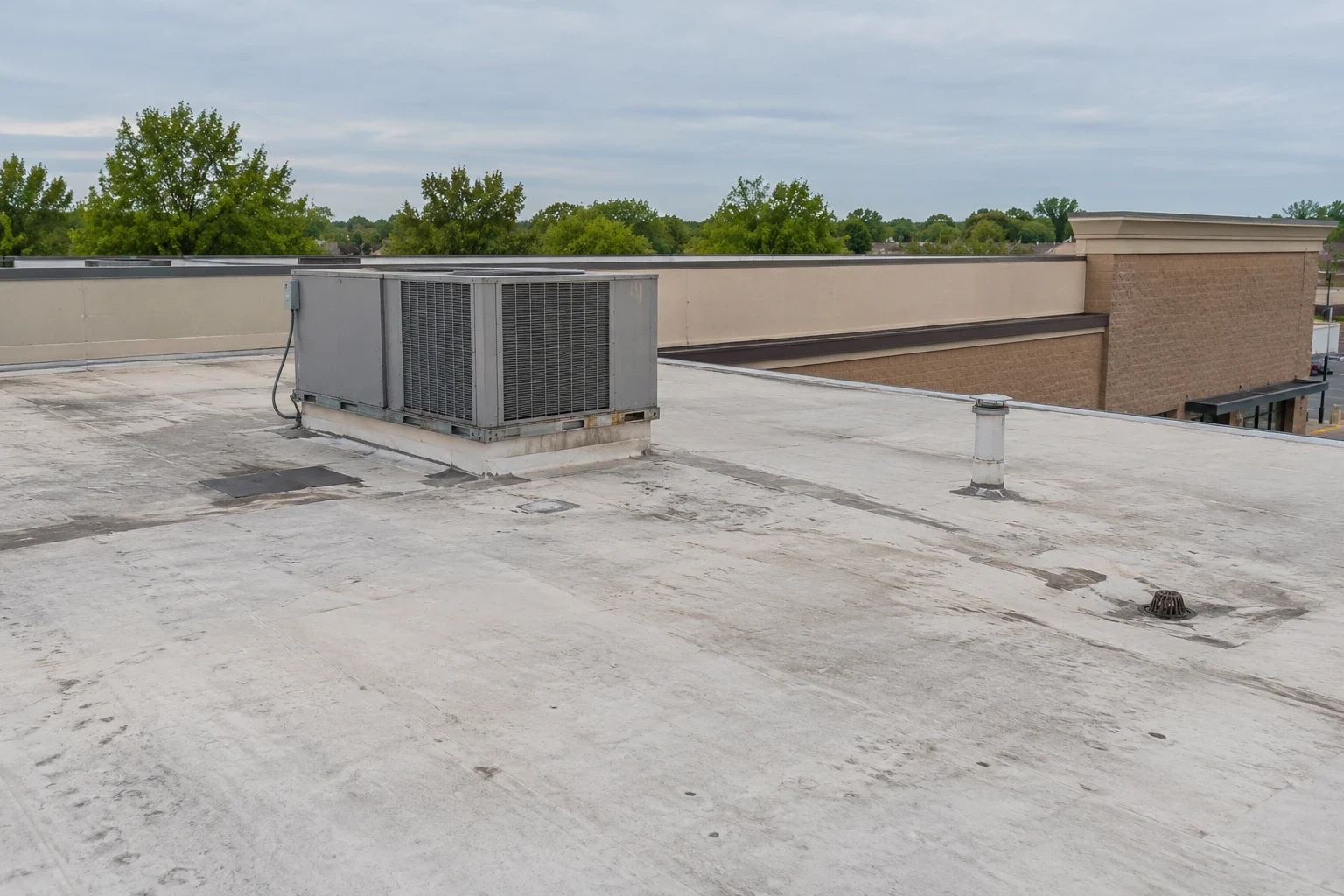
A grocery roof has more than a membrane to protect. Refrigeration lines, exhaust systems, service curbs, and drains all meet above rooms where temperature and sanitation matter. We inspect the roof zone over the reported condition, trace water paths, and coordinate any opening with store operations before work begins. If a leak is near a cooler or food-preparation area, the repair plan must protect the interior use as well as restore the roof detail.
Longview's retail activity follows corridors such as US 80/Marshall Avenue and Estes Parkway, and the city experiences hot summers with seasonal thunderstorms. Longview's hot summers and seasonal thunderstorms make drainage and heat-exposed details useful inspection priorities. Before recommending a repair, we review the store's roof plans, equipment locations, leak history, receiving hours, and interior controls with the facilities contact.
Coordinate roofing with refrigeration systems
Walk-in coolers and freezers depend on refrigeration lines and controls that may pass through or sit above the roof. We identify the related curbs, pipe supports, conduit, and insulation before handling membrane near that equipment. If a line must be moved or protected, the refrigeration contractor coordinates the mechanical work and the roof crew restores the flashing around it. The scope should show each trade's boundary so a finished roof repair is not left exposed by later equipment service.
Condensate can also follow piping and appear below the wrong roof zone. We inspect the penetration against the reported drip before calling it a membrane leak. When flashing at a cooler line or unit base has split, we rebuild that specific interface and confirm its tie-in to the field membrane. A leak investigation traces the path before the repair limit is set. Refrigeration staff should confirm operating controls before a test affects their equipment.
Protect receiving and back-of-house access
Roof work over a receiving lane can interfere with deliveries, waste pickup, and emergency access. We confirm truck windows, dock door use, lift placement, and overhead clearance with store management. If material must be staged near a service entrance, the plan names the time and route so deliveries do not meet construction traffic. Tear-off debris and fasteners are contained, and any temporary closure is communicated before the work zone changes.
US 259 connects Longview Business Park with I-20 and US 80, part of a local industrial geography that can influence how service vehicles reach different parts of the market. The site contact identifies the grocery store's access layout, receiving window, and safe route for lift and material staging. A phased work sequence can keep a receiving area available while crews move through roof zones, provided the site has a safe alternate route and the tie-in can be closed daily.
Keep drains clear around coolers and exhaust
Kitchen exhaust residue, packaging, and leaves can collect around rooftop units and interrupt water movement. We check strainers, drain bowls, overflow outlets, gutters, and the membrane around each detail. A blocked outlet is handled differently from a low roof area or a cracked drain ring. The inspection records which outlets were clear, whether water had a path to them, and whether flashing or substrate conditions call for additional work.
Longview's warm-season storms can test the drainage route, while July normal highs near 94 degrees place sustained heat on exposed membrane and sealants. We use those conditions to plan inspection timing and material handling, not to assume a store has a roof defect. A drain and scupper service can correct a failed outlet detail. If water remains after cleaning, the next step is to distinguish slope, obstruction, and concealed insulation conditions.
Set interior protection before opening the roof
When a repair is above food preparation, dry storage, or refrigerated space, the store contact identifies the interior controls required for that area. We agree on barriers, product relocation, ceiling protection, and the length of any room restriction before cutting into the roof. If conditions change after opening, the crew stops at a stable boundary and communicates the next decision. This keeps the repair sequence connected to the building's actual use.
We also record whether the observed moisture is limited to a surface finish or has reached insulation or deck. An inspection with photos can document several roof zones, while a moisture survey may help identify areas for follow-up testing. Neither method replaces a controlled opening when the assembly needs direct confirmation; the report explains what the available evidence supports.
Match the repair to the existing assembly
Grocery roofs may have membrane fields, coated sections, metal canopies, and past patches from equipment work. We identify the material and condition at each repair area before selecting compatible flashing or membrane. A patch should extend to sound material and seal at the curb, seam, or edge that failed. If the existing surface has multiple coatings or unidentified mastics, testing and preparation may be necessary before a new layer can bond.
Longview reviews commercial building plans under adopted local codes. When a scope changes an assembly, we give the owner clear roof details and coordinate project information for the authority's review as applicable. A restaurant roof plan often adds cooking exhaust and grease-management concerns; a shopping-center repair can involve shared access and several tenants. We keep the grocery scope focused on its refrigeration, receiving, and food-service needs.
Leave a maintenance record staff can use
The closeout identifies the roof zone, repair material, curb or drain detail, photos, and any follow-up recommendation. We note equipment that was protected or temporarily isolated, the work boundary, and whether interior controls can be removed. That record helps the next shift distinguish a completed repair from an area that still needs observation or testing. A roof map and equipment list can keep future visits from repeating the same identification work.
For a store in Longview, send roof plans, refrigeration layouts, exhaust locations, delivery hours, leak reports, and any food-area protection requirements before inspection. We will coordinate the visit with facilities and store operations, then return findings tied to actual roof zones. If a broader capital decision is needed, the report will separate urgent water control from longer-term assembly work.
Refrigeration lines and exhaust equipment make roof coordination important for grocery operations. Ask the store facilities lead which units were serviced recently and whether any line or curb change coincides with the leak report. Inspect nearby membrane and drainage details without disrupting cold-chain work. If an interior area needs protection, coordinate with store staff before opening the roof. Keep photographs labeled by roof zone so the service record can be compared with mechanical tickets and future maintenance visits.
Commercial Roofing Questions
Can roofing work happen while a grocery store is open?
Usually, when the work zone, delivery schedule, and interior protection are agreed in advance. Some roof or room areas may need temporary restrictions while the rest of the store stays open.
Who handles refrigeration lines during a roof repair?
We coordinate the roof flashing and curb work with the refrigeration contractor, who controls and services the equipment. The scope identifies each trade's boundary before the line or curb is disturbed.
How do you handle a leak over a cooler or food area?
We trace the likely roof entry, coordinate interior safeguards with the store, and confirm the repair area before opening the assembly. The closeout records any condition that needs follow-up.
What should be checked after a Longview storm?
The visit can focus on reported leaks, exposed seams, equipment curbs, drains, and overflow paths. We document observed conditions rather than infer roof damage from weather alone.