
Infrared Roof Moisture Survey in Longview, TX
Infrared Roof Moisture Survey
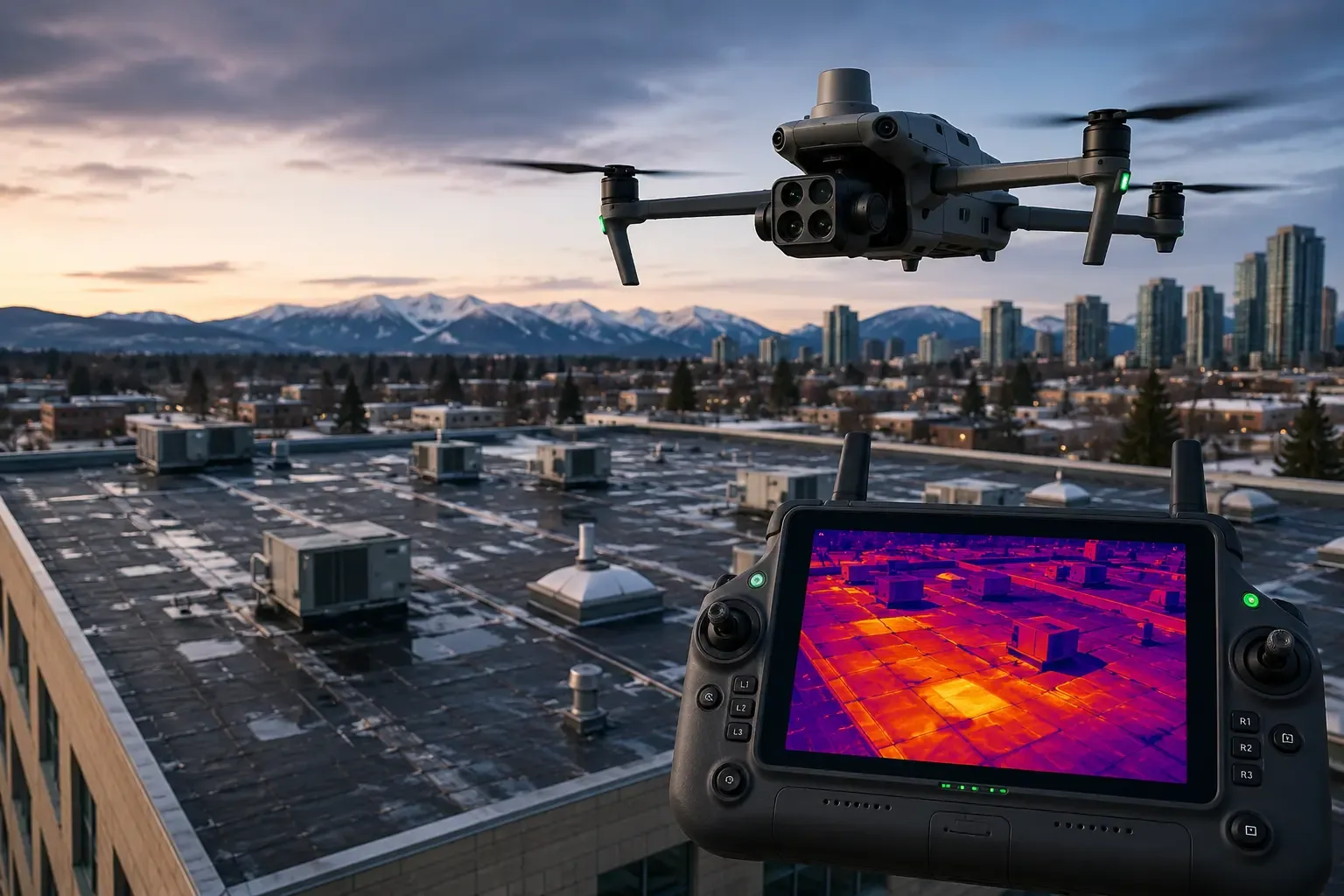
An infrared survey can help locate areas that may hold moisture beneath a commercial roof, but a thermal image is not proof by itself. We collect roof-surface readings under suitable conditions, map patterns by roof zone, and select representative locations for test openings. The openings show whether insulation is wet, how layers are arranged, and whether the deck or attachment needs attention. The final report distinguishes observed thermal patterns from conditions confirmed at the roof.
Longview's hot, humid summers create a demanding environment for roof surfaces, while seasonal rain can expose leaks that travel away from their entry point. Industrial roofs near Longview Business Park may cover large areas with equipment clusters and multiple drainage routes. We organize the survey around roof geometry, leak history, surface material, access, and the question the owner needs answered. If the weather or roof construction makes infrared readings unreliable, we explain the limitation and recommend another way to inspect.
Choose conditions that support useful readings
Infrared performance depends on the roof assembly, surface emissivity, weather, time of day, recent rain, and temperature change. We review roof construction and survey timing before collecting data. Standing water, wet surface debris, reflective metal, shading, rooftop equipment, and recently applied coatings can affect what the camera records. The operator notes those conditions and avoids labeling an image pattern as trapped moisture when another explanation is plausible.
Longview's July daily highs average about 94 degrees, and thermal contrast can develop as the roof cools after solar exposure. The survey window is selected around the day's temperature change, sun exposure, and roof surface conditions. We check actual conditions, select a suitable survey window, and document the equipment and method used. If the surface remains uniformly warm or shaded areas prevent comparison, the report recommends a different method or a return visit rather than overstating the result.
Map patterns and select test locations
We divide the roof into zones using available plans, field landmarks, drains, and equipment. Thermal patterns are compared with visible membrane condition, interior leak notes, slope, repairs, and known ponding. The survey map shows the areas with relative temperature differences and the locations recommended for test cuts. A consistent zone system lets the owner connect the images with repair tickets and later inspections.
An on-roof inspection helps interpret details around seams, curbs, drains, and penetrations that the camera cannot evaluate. We select openings where the result can answer a question: whether insulation is wet, whether multiple layers exist, or whether a suspected area is a surface effect. Openings are repaired after the test according to the roof system. If the survey identifies separate areas with different patterns, each is treated as its own finding rather than folded into one broad estimate.
Confirm suspected moisture before repair quantities
A warm or cool signature can result from moisture, insulation variation, surface material, shading, air movement, or equipment. We use the image to guide inspection, then verify representative locations through test cuts or another appropriate method. The report identifies which points were opened and what was found below the membrane. If a thermal anomaly was dry at test, we state that result and avoid counting it as wet roof area.
When moisture is confirmed, we map its extent and note the condition of the deck, insulation, and existing membrane. A repair scope can then define removal and replacement around the verified boundary. If wet material is widespread, the owner may need to compare a larger replacement or recover path. The decision follows openings and assembly condition, not color on an infrared image.
Use the survey to answer a roof question
Owners request infrared work for different reasons: unexplained leaks, suspected wet insulation, pre-purchase review, warranty documentation, or prioritizing repairs across a portfolio. The survey goal determines coverage and test locations. For an acquisition, the useful question may be whether selected areas show moisture that warrants more invasive review. After a storm, the focus may be a reported roof zone and its nearby drainage or flashing. The report should state the question and the limits of what the survey can establish.
Longview's Downtown and I-20 corridor have distinct planning contexts and a mix of building uses. Whether a roof serves retail, office, or industrial operations, the inspection plan should reflect its assembly and access rather than corridor identity alone. A due-diligence roof survey can combine infrared mapping with field openings, roof plans, and maintenance records when an owner needs a broader condition review. We keep the thermal data tied to the property and survey date.
Protect the roof during testing
Test cuts penetrate the roof assembly, so each opening needs a planned location, a documented purpose, and a compatible repair. We coordinate roof access, tenant activity, equipment clearance, and interior protection before starting. The opening is sized to inspect the layers and then closed with material appropriate for the existing system. If the deck is deteriorated or the area cannot be safely accessed, we stop and coordinate the next step with the owner.
Survey routes avoid unnecessary foot traffic and keep equipment operators away from fragile skylights, unguarded edges, and active mechanical units. For occupied buildings, the contact should identify rooms beneath planned test areas and critical equipment below. We mark each opening on the zone map and record its repair status. This avoids leaving an owner with an image set but no traceable account of where destructive verification occurred.
Deliver a map that supports the next decision
The deliverable can include survey date and conditions, roof-zone map, thermal images, test locations, opening results, photographs, and repair recommendations. It separates anomalies, verified wet areas, and locations not tested. If an image is inconclusive, we say so. The owner can use the report to prepare a repair quantity, request another inspection, or monitor a roof at a defined interval. A roof condition report can combine these findings with other roof observations and maintenance priorities.
In Longview, provide roof plans, leak history, prior repair records, and any known coating or overlay work before scheduling. We will confirm whether conditions support infrared work and identify the verification steps required. Clear source and test records help the facility team understand what is known beneath the surface and what still needs investigation.
Survey conditions matter: surface temperature, recent weather, roof construction, and access all affect how the images should be interpreted. We mark candidate areas on the roof plan and compare them with visible seams, drains, and reported interior locations. A useful result identifies where an opening could answer a moisture question. The report does not count a thermal pattern as wet insulation until a test confirms the assembly. Keep the scan date and conditions with the map so later readers understand what the image can and cannot support.
Commercial Roofing Questions
Does an infrared image prove the roof insulation is wet?
No. The image identifies temperature patterns that may warrant testing. We verify representative areas with test openings or another appropriate method before describing wet insulation as confirmed.
When should an infrared survey be scheduled?
Timing depends on roof material, recent weather, surface conditions, and expected thermal contrast. We review those factors before setting a survey window and reschedule if conditions will not support reliable comparison.
Will the survey include test cuts?
Test openings are planned when they are needed to confirm the assembly. We agree on locations, document each opening, and repair it with materials suitable for the existing roof system.
Can you estimate wet insulation from the thermal map alone?
The map can guide investigation, but confirmed quantities should rely on field verification. The report separates image anomalies from openings where wet material was actually observed.