
Commercial Roof Inspection in Longview, TX
Commercial Roof Inspection
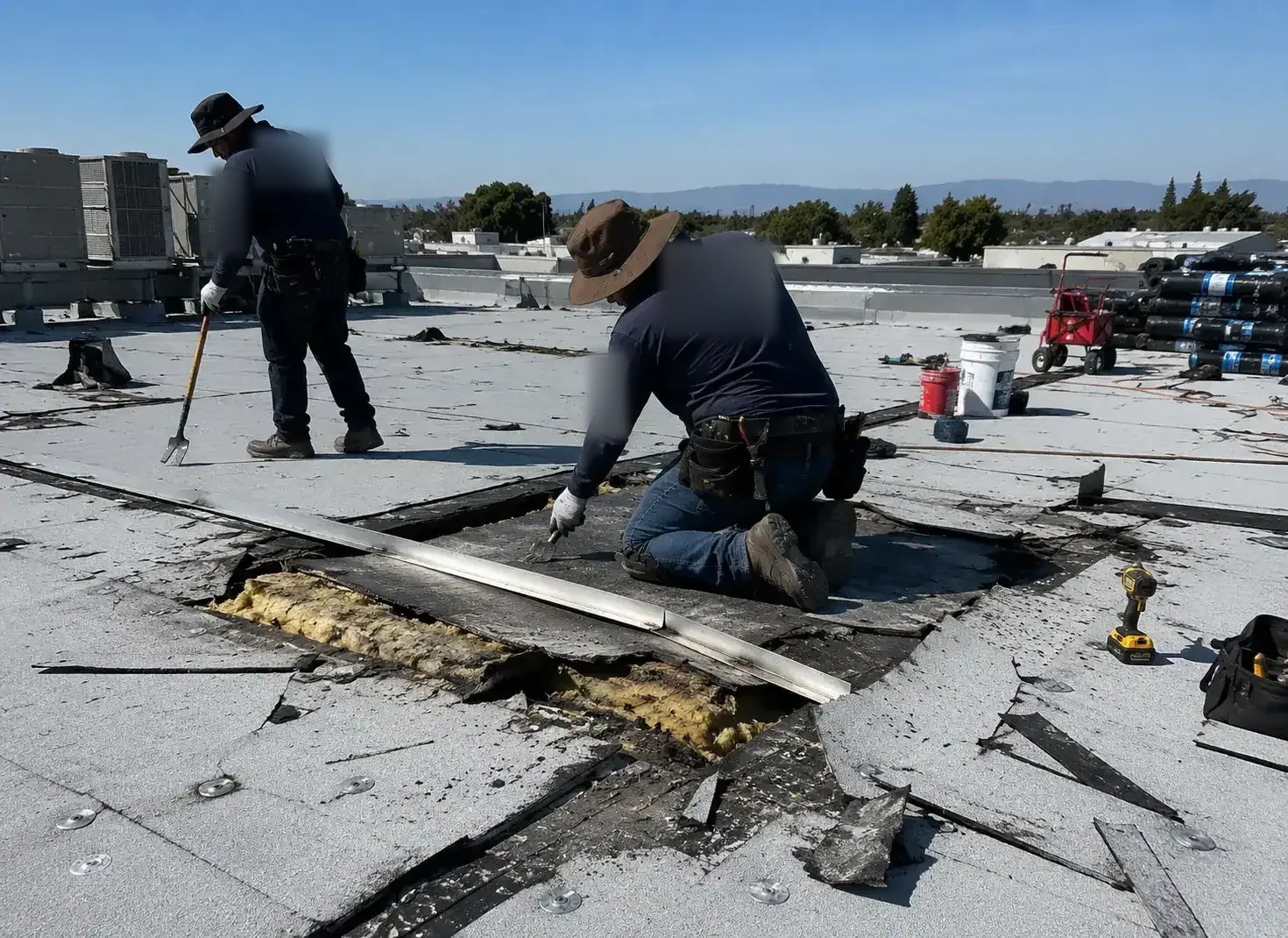
Downtown Longview combines commercial reuse with offices, retail, housing, and public spaces. When building work adds rooftop equipment or changes how interior areas operate, an inspection should establish which roof zones, flashings, and drainage details the project may affect. We record the visible assembly and prior repairs before new work obscures that baseline.
Hot summer exposure and seasonal storms make outlet flow, exposed edges, and repair history useful to review together. At Longview Business Park, industrial and distribution uses bring their own access and equipment constraints; downtown properties can have different tenant routes and wall transitions. We inspect the actual building and note what is confirmed, what needs testing, and which detail should be revisited before a renovation scope is set. For proposed equipment work, we photograph curb corners and service clearances before the mechanical crew changes the layout, then note whether flashing access or a test opening belongs in the next scope.
Inspect the field and roof details
We start with the field membrane and look for splits, blisters, open seams, punctures, exposed reinforcement, surface erosion, and areas where attachment has loosened. At transitions, we check curbs, skylights, pipes, wall flashings, expansion joints, coping, and edge terminations. Each finding is tied to a roof-zone reference rather than an approximate description such as 'near the back.' When conditions allow, photographs show the detail and surrounding field so maintenance staff can locate it later.
Prior repairs receive particular attention. A patch may be separating at its edge, covering a different material, or directing runoff toward a new weak point. We note whether a repair appears stable and what compatibility question remains. The repair service can address a confirmed defect; a broader condition report may help when an owner needs a planned list for multiple buildings or budget cycles.
Follow water to every outlet
Drainage is inspected as a path across the roof, not only as a strainer at the outlet. We look at slope, settled insulation, low areas, scuppers, gutters, overflow openings, bowls, and membrane around each drain. Debris may be easy to remove, but repeated ponding can point to a slope, attachment, or structural condition that needs further review. We record where water appears to collect and whether an outlet or surrounding detail shows visible damage.
Longview's July normal high is near 94 degrees. We inspect seams and flashing for heat-related movement and check the drainage path for retained water. We describe observed ponding and drainage details without inferring concealed conditions. Where more information is needed, a drainage repair review or moisture test can define a follow-up scope. This makes it easier to distinguish routine cleaning from correction of a roof plane or drain assembly.
Compare roof findings with building reports
Interior observations can direct a roof walk but do not identify the opening on their own. We ask where stains, drips, or odor occur and whether they appear after a particular wind or rainfall pattern. The roof inspection then checks plausible paths above the affected rooms, including penetrations, walls, seams, and drains. If the source remains uncertain, the report names the unresolved possibilities and recommends targeted testing rather than assigning an unsupported cause.
For larger sections, an infrared moisture survey can help identify areas for test cuts, especially when visual clues are limited. The survey findings should be interpreted with roof openings and interior conditions. If moisture or deck problems are confirmed, the report can distinguish a localized repair from areas that merit broader evaluation. This prevents a maintenance walk from promising more certainty than its access and inspection methods provide.
Review storm and seasonal exposure
Longview's July normal high is near 94 degrees, and a 2008 tornado track reached the city and damaged roofs and trees. After a reported impact, we inspect edges, metal, penetrations, and the affected roof zone and document what the field shows. We photograph observed conditions and separate them from historical context so the owner can decide whether a focused damage assessment is needed.
Recent work also matters. A roof may have received a patch, coating, or equipment change since the last inspection, and those changes can affect later maintenance. We compare visible repairs with available records and note unverified history as a question rather than a fact. If damage is active, the emergency repair team can help protect the interior while the permanent scope is developed. Otherwise, findings can be ranked for scheduled maintenance.
Rank findings by urgency and evidence
Inspection notes work best when they distinguish immediate water entry, developing defects, and routine upkeep. Each item identifies the roof zone, observed condition, likely consequence, recommended next step, and any access or test needed to confirm scope. Photos make the observation traceable. We avoid treating a minor surface mark as a failed assembly without supporting evidence, and we identify areas that were blocked or unsafe to reach. A manager can assign each finding to a building contact without repeating the roof walk.
A facility with several roofs can use a roof asset management plan to track age, repairs, warranties, and recurring findings across buildings. Longview's commercial and industrial properties vary widely, so a prioritized list should not imply that each roof receives the same treatment. We can group work by leak risk, water handling, access, and operational impact to help the owner sequence budgets and avoid letting a small repair become an interior disruption.
Make the next roof decision clear
The closeout report includes inspected areas, accessible routes, photographs, roof-zone references, and recommended actions. If we found a suspected failure without enough evidence to define repair dimensions, the report calls for the next test. If the roof looks serviceable in the inspected zones, we state what was observed and note the limits of access. This gives maintenance staff a usable starting point instead of a generic pass-or-fail label.
In Longview, provide roof plans, prior inspection notes, leak reports, and access rules before the visit. We will focus the walk on the questions that matter to the property and return findings that distinguish urgent repair from planned maintenance. The report can then support owner decisions about repairs, further testing, or a longer-term roof program.
A useful inspection plan identifies the question for each roof zone before the crew starts. One area may need a drain check, another a seam review, and a third only a baseline photo. We record those tasks separately so the owner can see what was evaluated and what was outside the visit. If wind, active rain, or a restricted hatch limits access, the report names the area that should be revisited rather than treating the incomplete route as a full roof assessment.
Commercial Roofing Questions
What does a commercial roof inspection include?
We inspect accessible membrane, seams, flashings, edges, drains, penetrations, equipment details, and prior repairs. Findings are recorded by roof zone with photographs and next steps.
Can you tell the cause of every interior leak during the walk?
Not always. Water can travel before appearing indoors, and some areas need test openings or moisture evaluation. The report identifies what is confirmed and what additional inspection would resolve uncertainty.
What inspection interval fits our roof and maintenance records?
Timing depends on roof condition, age, warranty requirements, use, and storm exposure. We can review the existing records and recommend an interval that fits the assembly and maintenance plan.
Will the inspection report include repair priorities?
Yes. We separate active leaks, developing defects, upkeep items, and conditions that need testing so the owner can sequence work and budget decisions.