
Medical Office Roofing in Longview, TX
Medical Office Roofing
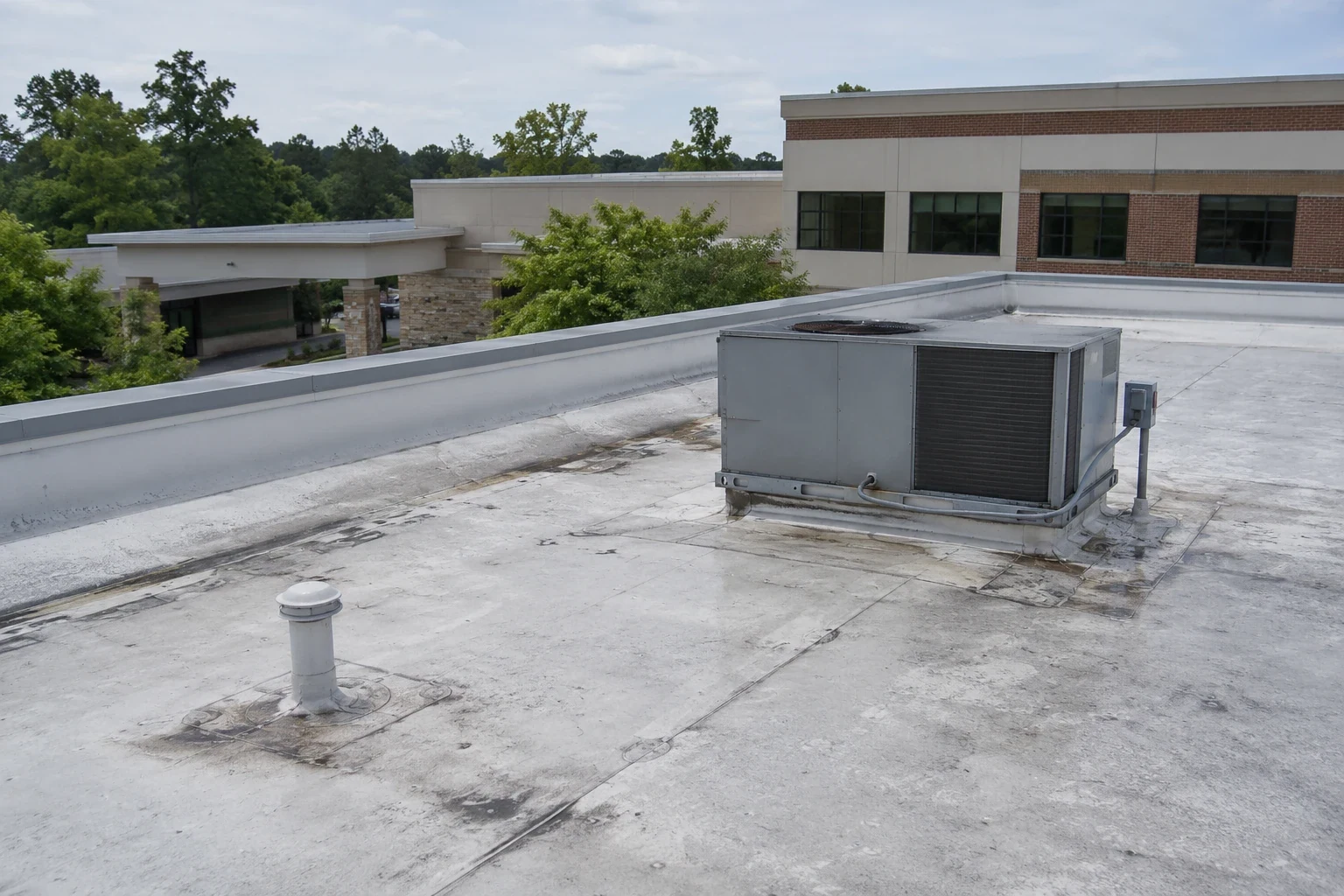
A leak in a clinic can affect exam rooms, records, diagnostic equipment, and the schedule for the day. We identify the affected roof zone, check the interior report against seams, penetrations, curbs, and drains, then define a repair boundary that can be completed safely. The work plan needs patient access, staff routes, HVAC operation, and room protection alongside the roofing details. A repair should resolve the entry path without creating a new disruption inside the clinic.
Longview's healthcare economy includes Christus Good Shepherd, while outpatient clinics and medical offices serve patients across the city's commercial areas. Downtown Longview has a dedicated small-area plan for building reuse and infill; other clinics may sit along US 80/Marshall Avenue with different parking and access patterns. We inspect the clinic's roof assembly, then coordinate access and interior protection with the office manager. We coordinate the visit with the office manager and identify rooms or equipment that need special protection before opening the roof.
Protect patient areas before roof access
Before work begins, we identify exam rooms, procedure spaces, waiting areas, medication storage, and electrical equipment below the repair. The clinic can help choose a time when a room can be temporarily cleared or relocated. We set protection before the roof is opened and keep the interior boundary as small as practical. If ceiling material is wet or unstable, staff should keep patients and visitors away until the building contact confirms the area is safe.
Roof access can cross a patient route, staff entrance, or parking area. We coordinate ladders, lifts, deliveries, and noise with the clinic manager so patients can continue reaching the building. Longview's commercial corridors and downtown blocks present different staging limits, so the access plan must match the parcel. A phased occupied-building sequence can keep unaffected rooms available while roof work moves through separate zones.
Trace leakage around clinic equipment
Interior staining often leads the investigation, but water can travel along a deck or insulation seam before it appears above an exam room. We compare the report with roof slope, drains, wall transitions, skylights, curbs, and medical or HVAC penetrations. A condensate leak, clogged drain, or failed membrane detail can produce similar symptoms. We inspect the plausible routes and record which one is confirmed, which remains uncertain, and whether a test opening is needed.
Longview's humid East Texas climate and summer thunderstorms can expose weak flashings or ponding that a dry-day walk will not make obvious. When moisture may extend beyond one penetration, an infrared moisture survey can help choose test locations. A leak repair addresses the verified exterior path. If the roof is wet over a larger area, we document that condition before proposing a wider replacement scope.
Coordinate HVAC and medical utility penetrations
Clinic roofs can carry HVAC units, exhaust fans, conduit, vents, and utility lines that require regular service. We inspect flashing at each curb and pipe, verify that access panels stay clear, and note where supports have shifted or compressed insulation. If a unit must be disconnected or moved, the roofing and mechanical scopes identify which trade handles the opening and when the system can return to service. No roof detail should block an equipment technician from reaching required controls.
Where the curb itself is cracked or too low for a sound tie-in, a curb and support repair may be needed. We also check nearby outlets because equipment can interrupt runoff and direct water toward a penetration. A drainage inspection identifies blocked bowls, damaged rings, and low spots. These roof details matter to a clinic because an unplanned room closure can follow a small failure.
Use compatible materials for the existing roof
Medical-office roofs may use single-ply membranes, built-up systems, modified bitumen, metal, or coatings. We identify the existing assembly before selecting a patch, primer, flashing, or seam method. Heat-welded sheet repairs need a clean surface and compatible membrane. EPDM uses different preparation and flashing components. If prior repairs include mastics or coatings, the work scope addresses those materials rather than placing a new product over an unknown surface.
Longview's July normal daily high is about 94 degrees, so heat affects work timing and material handling during the summer season. We follow product requirements for surface temperature, moisture, cure, and dry-in. A commercial office roof program can share tenant coordination practices, while a hospital roof plan requires broader clinical continuity controls. The scope stays specific to the clinic's equipment, access, and roof condition.
Keep a clinic roof record by zone
Maintenance records help staff connect a new ceiling report to an earlier roof repair. We use roof-zone labels, dated photographs, material notes, and a list of items needing follow-up. The clinic can retain those records with equipment service history and room maintenance logs. During a preventive maintenance visit, crews can check drains, seams, curbs, and previous repairs before a leak affects patient scheduling.
If rooms, HVAC units, or rooftop penetrations change, update the roof plan and keep the prior repair boundary visible. Longview's healthcare providers operate across multiple building types, but each facility may have different access and use restrictions. The maintenance record should preserve those operational details without assuming the same procedure applies to every clinic. A current roof-zone map helps staff and contractors coordinate later service efficiently.
Return the space with a clear repair status
Closeout shows the repaired detail, surrounding membrane, roof zone, and any condition that remains open. We record interior protection used, room status, materials, and whether mechanical work or a separate ceiling repair remains. If the cause could not be confirmed, we identify the next test rather than mark the leak resolved. This gives the clinic manager a useful handoff for staff and the next service visit.
In Longview, share room schedules, patient-access needs, roof plans, prior leak reports, and HVAC service windows before the visit. We will coordinate with the office manager, inspect the exterior assembly, and outline the work needed to restore the roof detail. The record should make clear which rooms can reopen and what follow-up remains. It can also identify the room contact who received the handoff and any service window that staff should keep available.
In a medical office, schedule roof access around patient arrival, deliveries, and any area where noise or dust could affect appointments. Ask which suite reported water and whether the ceiling is shared with another tenant or common corridor. The roof map should point to a zone, not a patient name. If testing requires entry from inside, the office manager can arrange a separate time and protection plan. Closeout should list the rooms affected and confirm when the space was released back to staff.
Commercial Roofing Questions
Can a clinic stay open during roof repairs?
Often, if the affected room, access route, noise, and interior protection are coordinated with staff. Some rooms may need temporary closure when work is directly overhead.
How do you protect exam rooms from roof debris or water?
We identify the rooms below the roof zone, agree on protection and access with the clinic manager, and secure the opening before work pauses. Staff should keep patients clear of any wet or unstable ceiling area.
Could an HVAC condensate issue be mistaken for a roof leak?
Yes. We inspect drain routing, equipment curbs, membrane details, and the reported interior area, then coordinate with the HVAC technician when the source is not clear.
What should the office manager provide before inspection?
Room schedules, leak locations, roof plans, equipment service hours, and patient-access requirements help us plan a safe visit and limit disruption.