
KEE Commercial Roofing in Longview, TX
KEE Commercial Roofing
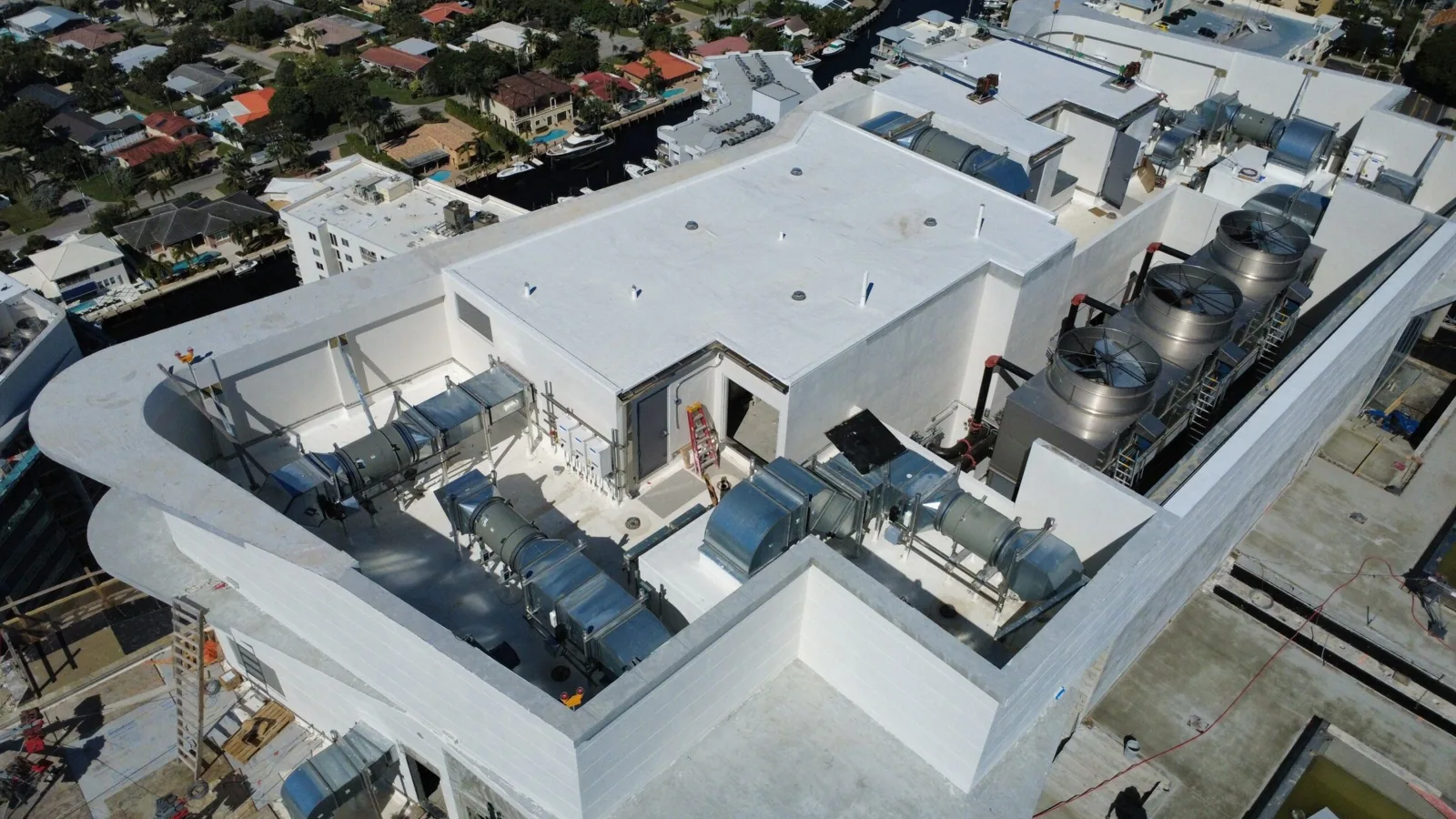
A membrane described as KEE needs to be identified before a repair method is chosen. KEE/PVC products can differ in formulation and system details, and the existing sheet must be compatible with the material used for a patch. In Longview, TX, we inspect markings, seams, surface condition, and previous repair records, then test a prepared area if weldability is uncertain. The inspection also checks curb flashing, drains, edges, and insulation below the sheet. That evidence establishes whether the failure is local or whether the roof assembly needs a broader plan.
Longview's July normal high reaches about 94 degrees, so we check surface temperature before a heat-welded repair. Facilities in the city’s industrial and distribution parks may have service traffic and equipment penetrations, while commercial buildings near the I-20 corridor can have different access and staging limits. At the property, we verify the installed sheet and account for heat, maintenance routes, and drainage when assessing the KEE assembly. The work plan should address both the sheet and the interfaces that can keep stressing it.
Verify the sheet before naming the repair
KEE refers to ketone ethylene ester, used in some PVC-alloy roofing membranes. Product formulation, reinforcement, thickness, and system details vary, so a generic PVC patch should not be assumed compatible. We look for existing roof documentation and membrane markings, inspect the exposed edge, and compare the surface with available repair history. If identity remains uncertain, we choose a small test location and confirm how the sheet responds before opening a larger area. The scope records the material identified and any remaining uncertainty.
Surface contamination can also change the repair. We check for grease, oxidation, chalking, old coating, adhesive residue, and foot-traffic wear. A clean test weld can show whether the existing membrane accepts heat fusion, but the surrounding field and substrate still need inspection. If the sheet has become brittle or its reinforcement is exposed, the repair may need a wider tie-in. A hands-on roof inspection can compare seams, flashing, and exposed membrane across connected roof zones before a system-specific repair is priced.
Check the weld and the material around it
Many KEE/PVC membranes use heat-welded seams. We probe laps and intersections for open edges, wrinkles, voids, and spots where a prior patch has lifted. The weld should fuse through a clean, prepared surface; excessive heat can damage the sheet, while insufficient heat can leave a weak bond. We test the conditions and then inspect the completed weld after it cools. If only a short seam section has released and adjacent material remains flexible, a local repair may be possible. If separation continues or the sheet pulls under tension, the boundary must expand.
At perimeter details, movement can put force on a seam well away from the visible opening. We inspect termination bars, edge metal, parapet flashing, corners, and curb transitions. Longview’s building stock includes industrial parks, airport-related commerce, healthcare, and retail; each facility may have different roof access and equipment traffic. We do not infer a KEE failure from the property type. A perimeter metal repair may need to be coordinated when the membrane has pulled away from a loose cap or edge.
Trace chemical exposure and drainage
KEE/PVC membranes are used in some settings where surface exposures matter, but compatibility still depends on the actual substance, concentration, temperature, and membrane product. We inspect around exhausts, process equipment, service paths, and discharge points for residue, surface change, or weakened seams. We document the observed condition rather than labeling a stain as chemical failure. If the exposure could affect a repair material, product guidance or a test may be needed before applying a patch. The scope also identifies whether equipment or discharge conditions need correction.
Water can carry debris or residue across the roof and collect at low points. We follow slope to drains and scuppers, check the membrane connection at the bowl, and look for ponding that remains after drainage. A drain and scupper correction may be needed if water stands at the failed KEE seam. For uncertain insulation conditions, an infrared survey can help select test cuts; the openings confirm what layer is wet and where a stable tie-in can be made.
Plan for Longview heat and storm exposure
Longview July climate normals reach daily highs around 94 degrees Fahrenheit. That makes roof-surface temperature a practical limit for cleaning and welding, especially when the repair uses a test weld to confirm material response. We coordinate work around heat, wind, and forecast rain, then secure any opened seam before leaving the roof. Longview has also recorded hail and a tornado track that reached the city. After severe weather, we check KEE seams, edge securement, curbs, and rooftop attachments for observed displacement or impact; the historical record alone does not show what happened at a current building.
Commercial plans in Longview are reviewed by the City’s Building Inspection Division under the adopted construction and energy codes. If a larger assembly change is proposed, we document the roof system, attachment, insulation, and repair boundary so the owner can coordinate required review. A small weld repair and a broader recover are different scopes. The latter must account for existing layers, membrane height at drains and curbs, and whether moisture is present. We identify those questions before additional material covers the assembly.
Compare KEE with other single-ply assemblies
A KEE membrane should be compared with alternatives by confirmed formulation, exposure, seam condition, attachment, and repair access. PVC roofing can share heat-welded details, but product-specific compatibility still matters. TPO systems also use welded seams, while EPDM uses different bonding materials. The right system depends on substrate, drainage, equipment, and future service requirements, not just a label or color. We explain what can remain and where new membrane must meet existing material.
If the KEE roof is dry and stable, local repairs may preserve sound areas. When wet insulation, broad seam failure, or deck concerns are confirmed, selective removal or replacement may provide a better boundary. A recover assessment checks retained layers before a new system is placed over them. We document the proposed assembly and state what field conditions would change the scope, including test results and concealed substrate findings.
Record product identity and repaired areas
The closeout file should state which KEE membrane was identified, what surface preparation was used, where the repair begins and ends, and what was found beneath the sheet. Photographs show the test area, weld, flashing transitions, and any excluded concern. If the membrane identity remains uncertain, that limitation stays in the report so later maintenance does not treat an unverified material assumption as confirmed. This record helps the next technician choose compatible materials and compare the same seam or roof zone.
Share roof plans, product records, leak locations, previous repair notes, equipment or exhaust constraints, and access hours. We will verify the sheet and substrate, then mark whether a local weld is appropriate or the assembly needs wider work. For a property in Longview Business Park or on a commercial corridor, the inspection route and staging plan follow the building’s own operating limits. A photo-backed roof report preserves the findings for future maintenance.
Commercial Roofing Questions
Is every PVC membrane also a KEE membrane?
No. KEE describes a particular alloy formulation used in some PVC membranes. We inspect product markings and records before selecting a repair material. If identification remains uncertain, a test area or product guidance may be needed to confirm compatibility.
Can a KEE seam be repaired with a standard PVC patch?
The patch must match the identified membrane and system requirements. We check the existing sheet and test weldability when necessary. A generic PVC material should not be applied until compatibility and surface preparation are confirmed.
What does heat do to a KEE roof repair?
Surface temperature affects cleaning, handling, and the weld window. We test the prepared material and follow the system requirements rather than welding by appearance alone. If conditions are outside that window, the seam is protected and the permanent repair is rescheduled.
When is a broader KEE replacement worth considering?
Multiple open seams, membrane brittleness, wet insulation, or attachment problems can extend past a local patch. We map affected zones and test the substrate, then compare selective work with a larger replacement boundary. The report ties that choice to confirmed conditions, not roof age alone.
Related roofing work.
- Commercial Roof Inspection
- Commercial Edge Metal, Coping, and Gutter Repair
- Infrared Roof Moisture Survey
- PVC Commercial Roofing
- TPO Commercial Roofing
- Commercial Roof Replacement
- Commercial Roof Recover and Overlay
- Commercial Roofing in Longview Business Park, Longview, TX
- Commercial Roof Condition Reports