
Commercial Roof Leak Repair in Longview, TX
Commercial Roof Leak Repair
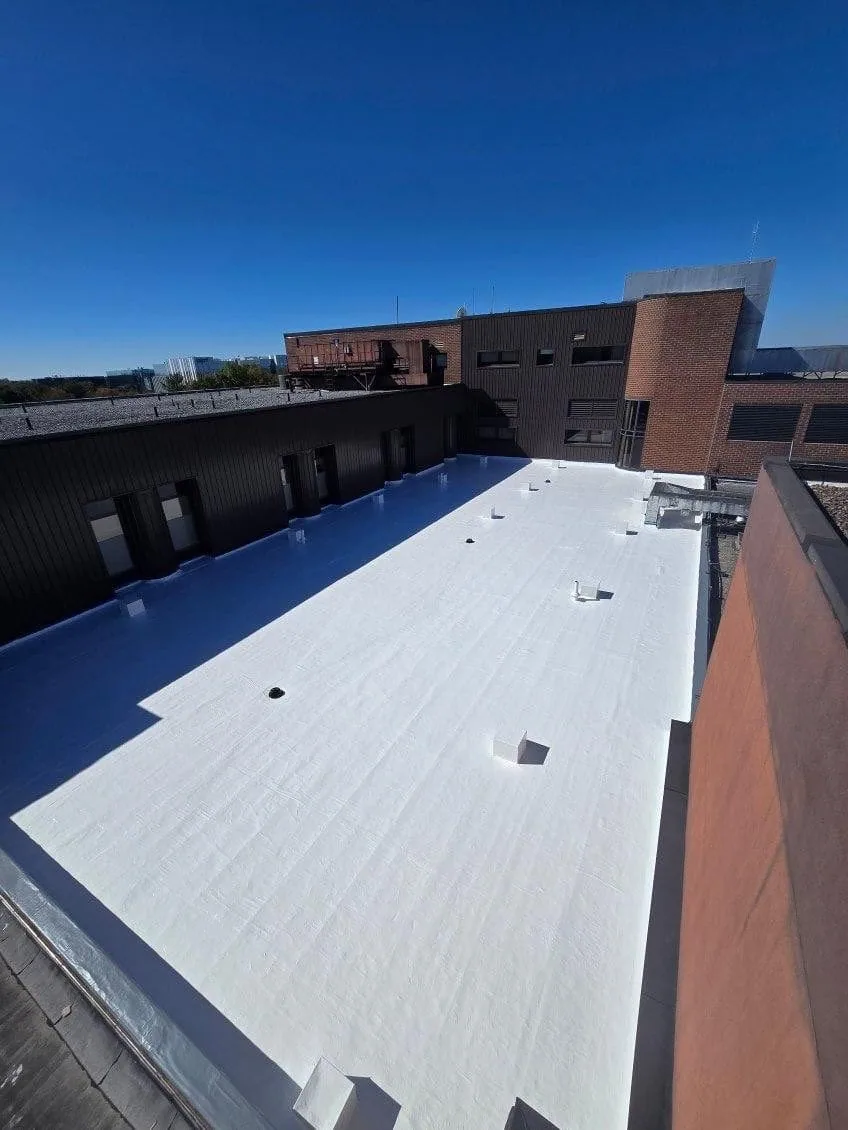
A leak that begins after rooftop equipment work calls for a close look at the trade handoff. A new curb, conduit, or support can disturb an older roof assembly, so we compare the service date with the water report and inspect the worked detail alongside nearby seams and flashing. The roof repair scope identifies which interface failed, what material needs preparation, and where a compatible tie-in can reach sound membrane. If the timing does not point to the equipment work, we follow the evidence elsewhere in the affected roof zone before pricing a repair.
Longview's hot, humid summers and frequent thunderstorms put repeated stress on exposed seams and transitions. A facility near Downtown Longview may need interior protection around active office or retail space, while an industrial building by the US 259 and I-20 network can require coordination with production and loading schedules. We isolate a workable roof zone, keep unaffected areas protected, and document the condition before repair. A clear diagnosis lets the owner separate a localized opening from a broader moisture problem.
Trace water to the roof entry point
We begin with the stain location, when it appears, and whether wind direction or rainfall changes the symptom. Then we inspect the roof area above and around it: laps, field membrane, wall transitions, curbs, pipe boots, skylights, drains, and edge details. Water can follow a steel deck flute or insulation seam, so we test nearby details instead of assuming the visible opening is the only candidate. If several paths remain plausible, the report says so and recommends the next inspection step before a permanent repair is priced.
Longview's rain events can expose separate weak points on a large roof at the same time. We distinguish an active path from old staining by checking membrane condition, trapped moisture, recent repairs, and the surrounding material. When a broad wet area is possible, an infrared moisture survey can help target test cuts; those openings confirm whether insulation or the deck is involved. If moisture has spread beyond the visible leak, the repair boundary expands only after the owner sees the evidence.
Protect the interior while the leak is active
For water entering an occupied area, the first priority is limiting damage below while a safe roof inspection is arranged. We help identify affected rooms, vulnerable equipment, electrical concerns, and locations where ceiling material may be holding water. The facility team can move contents or isolate the area while temporary collection or covering protects the space. A temporary measure controls exposure; it does not replace locating and correcting the exterior opening.
Longview experienced an EF1 tornado track in 2008 that reached the city and caused roof and tree damage. After a wind-driven event, we check whether a new opening coincides with lifted edges, displaced metal, punctures, or debris impact, then photograph conditions before repair. If the roof is unsafe because of lightning, wind, or standing water, the crew waits for safe access rather than adding risk. When the opening can be reached safely, a temporary dry-in can limit further entry until a permanent detail is ready.
Repair the failed membrane or flashing
The repair method follows the roof system. A heat-welded membrane needs compatible sheet, clean preparation, and a weld that reaches sound material; an EPDM assembly uses different cleaners, primers, tapes, and flashing components. We remove loose or contaminated material, prepare the surface as required, and extend the correction far enough to secure the repair. At a curb or pipe, the flashing must accommodate movement and terminate above the water plane. A bead of sealant over an open seam is not a substitute for rebuilding the detail.
Edges and drainage points deserve a separate check because the entry can sit away from the interior stain. We inspect coping joints, wall terminations, gutters, scuppers, and clamping rings for looseness or corrosion. A coping and edge-metal repair may be needed when water enters behind the perimeter. At a drain, a drain-detail correction can address a failed ring or membrane connection rather than merely clearing debris. Each repair is tied to the observed failure and surrounding roof condition.
Confirm what is wet before closing the repair
Water under a membrane can extend beyond the visible opening, weakening insulation or affecting the deck. We check suspect areas with inspection openings and record the layer sequence, moisture condition, attachment, and substrate. If insulation is wet, the scope should identify removal and replacement boundaries before the roof is closed. If the deck is affected, the owner needs to know whether it remains capable of supporting the repair and what structural review is appropriate. We do not describe a surface patch as complete when the underlying assembly still needs work.
On a large commercial roof, a moisture map can help prioritize where to test, but no scan replaces confirmation at representative locations. Longview's summer heat can dry a surface quickly while moisture remains lower in the assembly. We compare instrument readings with field openings and interior conditions, then explain any uncertainty. A broader roof inspection can document other defects discovered during the leak investigation so the facility manager can address urgent water entry and planned maintenance separately.
Keep the building running during repair
Leak work needs a plan for roof access, tenant notice, interior protection, staging, and the daily weather window. In Longview, a distribution facility may need loading areas kept clear, while Downtown offices may ask for work to avoid busy entry periods. We identify the room or operation below each repair zone, protect the path to the roof, and coordinate equipment access. If a repair requires opening the assembly, the work area is limited to the section crews can secure and make weather-tight.
For a property with repeated leak calls, a roof condition report can connect each symptom to a roof-zone map and recommended next step. A manager can then distinguish a recurring defect from a new entry point and assign follow-up to the right building. Work records list the repair material, location, observations, and any area left for monitoring. That history can reduce repeat investigation when another rainfall reveals a separate weak detail.
Document the source and the completed correction
At completion, we photograph the failed detail, the prepared repair area, and the finished membrane or flashing. The record identifies the roof zone, probable water path, materials used, and whether moisture or substrate damage was found. If a permanent repair could not be completed because of unsafe conditions or an unavailable component, the report states what temporary protection remains and what work is still needed. That gives the facility team a clear status rather than leaving the repair history at a verbal update.
In Longview, share interior photos, the time and weather when leakage occurs, roof plans, and any prior repair notes. We will inspect likely entry paths and define the correction supported by the evidence. If the leak is intermittent, include which rooms or equipment are affected so we can plan the right inspection window. Closeout notes show what was repaired and which areas warrant a separate roof review.
Commercial Roofing Questions
Why is the roof opening not directly above the ceiling stain?
Water can travel along the deck, insulation joints, framing, or a curb before it appears indoors. We compare the stain with roof geometry and test more than one likely entry point when the path is not clear.
Can you stop a leak before the permanent repair is ready?
When roof access is safe, temporary dry-in can reduce additional entry. We identify what protection is in place, its limits, and the permanent repair needed to close the failed detail.
How do you know whether insulation is wet?
We use visual findings and targeted openings to confirm suspect areas. Infrared readings may help choose test locations, but the assembly must be checked before we decide how far the repair extends.
Will a repair include photos and a written scope?
Yes. The repair record can show the failed detail, roof zone, materials used, completed work, and any unresolved condition that needs a separate decision.