
PVC Commercial Roofing in Longview, TX
PVC Commercial Roofing
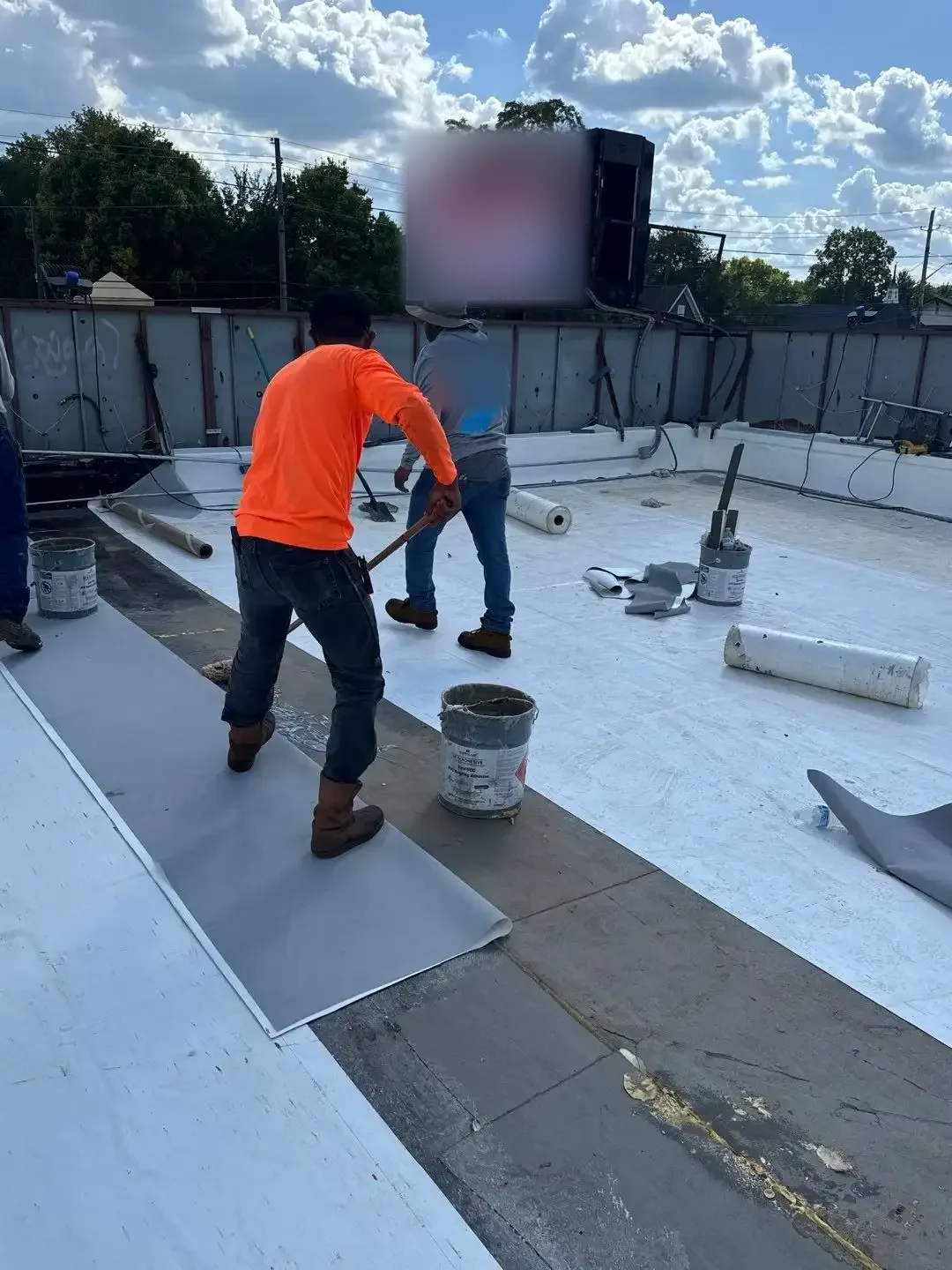
A PVC seam beside a rooftop exhaust can be clean on one side and coated with residue on the other. That difference affects preparation and welding, so we inspect the membrane and nearby equipment before choosing a repair. In Longview, TX, we trace leaks through seams, curb corners, drains, and wall terminations, then check whether the sheet and substrate can accept a new hot-air weld. The roof surface tells part of the story; insulation openings may be needed to determine whether water has moved beyond the visible seam.
Longview’s US 80 and Estes Parkway corridors serve varied commercial activity. A property’s use may affect exhaust, service traffic, and access, but it does not identify the membrane. We confirm the PVC assembly, attachment, seam condition, and flashing. Local summer highs near 94 degrees also affect surface temperature and the weld window.
Prepare the weld area for a reliable tie-in
PVC seams are heat welded, but contamination, moisture, aged material, or uneven preparation can prevent proper fusion. We examine the lap for separation, fish-mouths, wrinkles, edge lift, and previous patches. Around kitchen exhaust or industrial equipment, we look for deposits that may collect on the membrane and test whether cleaning exposes a weldable surface. A test weld can confirm how the sheet responds before a larger repair begins. If the material is brittle, cracked, or incompatible with the proposed patch, we describe the limit instead of covering a weak edge.
The finished repair needs a stable boundary on all sides. We remove failed material as needed, dry and prepare the substrate, then form the weld and inspect it after cooling. The scope identifies whether the repair is at a field seam, flashing, or accessory connection and includes photographs of preparation and closeout. A localized roof repair may fit when adjacent PVC remains sound. If several seams show separation or moisture continues beneath the field, additional openings can establish whether the failure is isolated or part of a broader assembly issue.
Inspect exhaust, grease, and other rooftop exposures
PVC is selected for some commercial roofs where exposure at the surface matters, but the actual membrane formulation and system requirements still control the repair. We inspect exhaust paths, grease deposits, chemical residues, service carts, and equipment vibration near the damaged area. The visible stain or residue does not by itself establish chemical damage. We check for swelling, softening, discoloration, loss of weld strength, or a surface change that continues beyond the deposit. If the condition cannot be cleaned without affecting the membrane, we stop and identify a test area or alternate repair detail.
Penetrations add another interface. A grease duct, pipe, curb, or support may move independently from the roof sheet. We inspect flashing height, corners, clamps, pitch pockets, and the tie-in to the field. A curb and support review can identify whether movement is coming from the attachment rather than the membrane itself. If a leak follows a drain path, that work may need a separate line item.
Account for hot surfaces and water movement
Longview July normals approach 94 degrees for a daily high. PVC welding depends on surface condition, material temperature, wind, and the available weather window. We set the welding window to suit the product instructions and cover any exposed seam if a shower can reach it. Temperature shifts also move terminations and metal interfaces. After a reported hail or tornado event in Longview, inspect PVC seams, perimeter details, and equipment flashings for visible movement or impact before setting a repair scope.
We also follow drainage direction. A PVC repair in a low area must not obstruct a drain or cover an overflow path. We inspect ponding, scuppers, bowl attachment, and roof slope near the seam. If water remains against a curb or transitions across a patch edge, the repair must address the route and the flashing detail together. A roof inspection can map connected details when a leak source is unclear. The report identifies checked and unchecked areas so the owner knows what the repair decision covers.
Compare PVC with the surrounding assembly
A PVC roof includes more than the membrane. We identify cover board, insulation, vapor control layers where visible, deck, attachment, edge metal, and penetrations. If moisture is present below the sheet, we map its extent with test openings before deciding what to retain. An infrared survey can help identify candidate zones, but the opening confirms whether insulation is wet. We note curb heights and drain elevations if another layer is being considered, since a new roof surface can change flashing and water flow.
PVC and TPO both use welded seams, while EPDM uses a different seam and flashing approach. A KEE membrane is another PVC-alloy option with its own product requirements. The correct comparison accounts for the actual exposure, expected service access, attachment, and details at transitions. We do not choose from color alone or treat a system name as evidence that an existing assembly can remain. An overlay assessment or replacement scope follows test results and roof condition.
Keep rooftop work coordinated with the facility
Commercial buildings in Longview’s retail corridors may need customer entrances and deliveries kept clear, while an industrial roof can have active exhaust and mechanical systems that cannot be interrupted. We confirm roof access, equipment shutdown limits, lifting areas, and the rooms or operations beneath the work. For a Downtown Longview property, public routes and sensitive occupied spaces can shape the sequence; at a business park facility, staging and production schedules may govern material movement. The plan identifies the work zone and the daily limit for any opened membrane.
Before mobilizing, we set a method for temporary dry-in and communication if weather changes or a concealed wet area appears. The repair scope identifies who approves added removal and how the opening will remain protected while that decision is made. If a new curb, duct, or equipment support is being installed by another trade, we coordinate the membrane interface before the cut is made. A phased work plan keeps affected roof zones and interior routes clear during repair.
Record the repaired seam and surrounding details
A useful closeout shows the finished weld, transition, nearby flashing, and any surface preparation that affected the repair. We record which roof zone was opened, what material was removed, whether insulation was wet, and where the tie-in ends. If a test cut found a condition outside the approved work, it is marked separately with a recommended next step. The facility team can then check the same PVC seam and nearby curb on a future visit without relying on the interior leak location.
Share the roof plan, known leak locations, membrane and repair records, equipment constraints, and available access hours. We will inspect the sheet, identify any contamination or movement, and document whether a local weld repair can hold or if the assembly needs broader work. For a commercial building along US 80 / Marshall Avenue or in Downtown Longview, the repair plan remains specific to the roof in front of us.
Commercial Roofing Questions
Can PVC be welded if the surface has grease on it?
The deposit must be removed using a method compatible with the membrane, then the prepared area should be tested. If cleaning changes the surface or the sheet no longer welds, we identify another repair detail or a wider removal boundary rather than covering the residue.
Does PVC resist every chemical or exhaust exposure?
No membrane should be treated as compatible with every substance or concentration. We identify the existing sheet and examine the actual deposit and surface condition. Product requirements or a test may be needed before specifying a repair near exhaust or chemical discharge.
Why inspect the roof below a failed seam?
Water may have reached the insulation, cover board, or deck even when the seam opening is small. We use test openings where the layer condition affects the repair choice. The report shows which zones were sampled and where the new weld stops.
Can a PVC roof be repaired during a hot Longview afternoon?
The surface temperature and system requirements determine the suitable weld window. We check conditions before preparation and verify the test weld when needed. If heat or forecast weather prevents a reliable tie-in, we protect the area and return under better conditions.