
EPDM Commercial Roofing in Longview, TX
EPDM Commercial Roofing
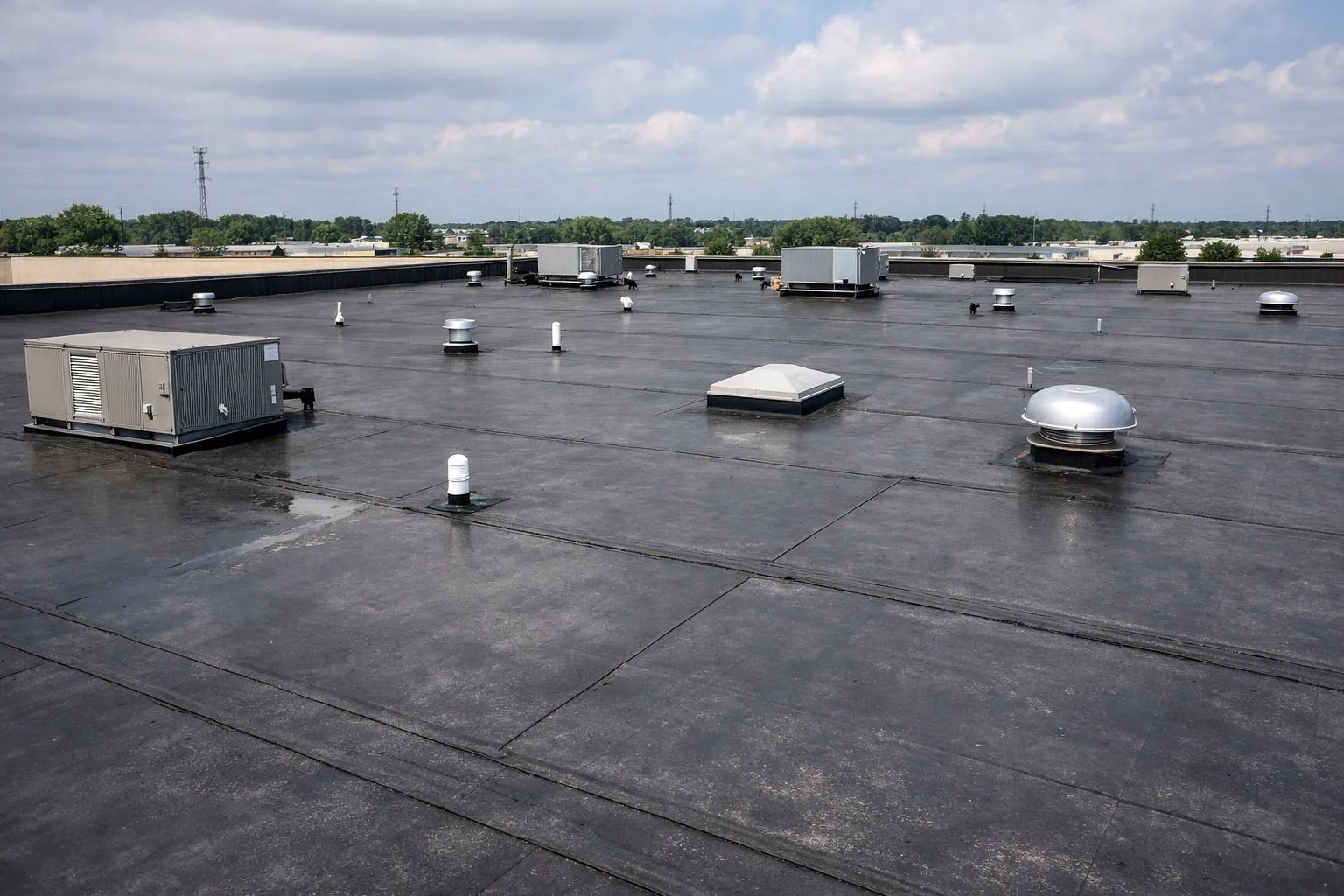
An EPDM lap can peel at one corner while the rest of the sheet still appears flat and secure. In Longview, TX, we inspect the bond line, nearby flashing, and substrate before deciding whether the repair can stop at that seam. EPDM is a rubber membrane with seam and flashing materials that differ from heat-welded single-ply systems. The repair has to match the existing sheet, surface preparation, and tie-in method. We follow the water path from the opening to the low point and check whether insulation or cover board has also been affected.
Longview’s summer heat puts regular movement at perimeter metal, curbs, and roof transitions. A facility in Longview Business Park may have equipment service routes across the roof, while an aviation-related site near East Texas Regional Airport may require different access coordination. We confirm the installed assembly at each building, check attachment and seams, then shape the repair sequence around use and roof access.
Find why the lap released
EPDM seams rely on compatible bonding materials and careful surface preparation rather than a heat weld. We inspect for edge lift, adhesive failure, tape separation, wrinkles, dirt, moisture, and patch layers that no longer bond to the sheet. A seam can open where water, residue, or movement has weakened the interface. We clean and prepare a test area as the system requires, then check whether the existing membrane can accept a new lap or patch. If the surface remains contaminated or the rubber is too deteriorated, a local repair may not hold at the proposed boundary.
Seam direction also matters. We compare the opening with roof slope and drainage so a patch is not placed where water will run beneath its edge. At intersections and terminations, we inspect each adjoining piece of membrane and look for stress from a curb, wall, or metal edge. A leak investigation can include nearby details where the interior symptom does not align with the visible lap. The report records what was clean, what separated, and which material interface will be rebuilt.
Check membrane tension at the edges
EPDM can pull away from a perimeter or penetration as the membrane moves and ages. We inspect whether the sheet has drawn back from walls, curbs, drains, or edge metal, and whether flashing remains tall and attached. A shrinking field can load seams and corners even if the center of the roof looks intact. We look for tenting, bridged details, open terminations, and displaced metal, then compare them with the sheet layout and visible attachment. The scope should restore both the membrane connection and the detail that is applying the stress.
Longview planning recognizes commercial areas along US 80, Moberly Avenue, and the southern I-20 corridor. Building access and circulation differ across those corridors, but roof geometry must be confirmed on site. When a perimeter component has moved, a coping or edge repair may need to be coordinated with EPDM flashing. If the sheet has pulled away across several edges or the substrate will not accept a secure tie-in, we map the affected zone and compare local work with broader replacement.
Rebuild penetrations with compatible materials
At a pipe, curb, skylight, or drain, we inspect the boot or flashing, clamps, corners, and the membrane connection around the full detail. Sealant can fail while the EPDM beneath remains sound, or the field sheet can be damaged beside a stable curb. We identify which interface has opened before removing material. A new boot must fit the pipe and surrounding roof, and a curb repair needs a stable surface with a sound membrane termination. Where equipment or conduit moves, the support detail can continue stressing the rubber after the flashing is patched.
If a leak has reached the insulation, we open the assembly at selected locations and establish a dry, stable repair boundary. An infrared moisture survey may help select tests, but an opening confirms the layer condition. At drains, we check the clamping ring and water opening so the repair does not block flow. A drainage inspection can accompany EPDM work when recurring ponding or a loose bowl connection is part of the problem.
Schedule adhesive work around Longview conditions
Adhesives and seam tapes need a prepared surface and suitable conditions for application. Longview’s July climate normals show sustained hot-season exposure, so we monitor roof-surface temperature and select a work window that fits the EPDM system. Moisture, dust, sudden rain, or heat outside product limits can interfere with bonding. We protect any opened seam before leaving the roof and define how the work will be secured if the forecast changes. The daily plan accounts for cure or set requirements before the repaired zone returns to normal roof traffic.
The city’s weather record includes hail and a tornado track that reached Longview. After severe weather, we inspect EPDM edges, seams, rooftop attachments, and penetrations for displacement or impact. After a reported weather event, inspect the affected property and base the recommendation on visible conditions and any testing the owner approves. For work near Longview Business Park, loading and access constraints can affect when materials reach the roof. At each property, we coordinate the route and note areas that could not be reached safely.
Compare repair, recover, and replacement
A local EPDM repair can fit when the seam opens in one area, the surrounding sheet remains bondable, and the insulation is dry. A broader scope is warranted when several laps have released, the membrane has receded from multiple edges, or wet material continues under the field. We check how many layers exist, what deck supports the membrane, and whether a new detail can connect to stable material. If the owner is considering an overlay, a recover assessment must confirm that retained layers are dry and suitable.
EPDM repair is not interchangeable with TPO or PVC welding. TPO and PVC use heat-welded seams with their own compatible flashing details, while EPDM uses a different bonding method. We compare systems against roof use, substrate, attachment, penetrations, drainage, and future maintenance access. A replacement plan may be more appropriate if the membrane, insulation, or deck cannot support a reliable local tie-in.
Make the next EPDM inspection straightforward
Closeout images show the cleaned surface, repaired lap, flashing corners, and any removed wet insulation or cover board. We mark the roof zone and note whether the patch is permanent or temporary. If adjoining seams or edges remain outside the scope, the report identifies them as separate follow-up items. This record gives maintenance staff a reference for checking the same seam direction and transition later instead of returning to an interior stain without knowing what was repaired.
Send the roof plan, known EPDM repair records, leak locations, equipment limitations, and access hours. We will inspect the lap, perimeter, penetrations, and substrate, then document which materials can remain. A photo-backed condition record can preserve findings for a future maintenance visit at a property in Longview or the broader airport-industrial area.
Commercial Roofing Questions
Can EPDM seam tape be replaced without removing the whole sheet?
It can when the surrounding rubber is clean, flexible, and firmly attached, and the seam edge reaches a sound boundary. We test preparation and adhesion before extending a repair. If the sheet has shrunk or wet insulation reaches farther beneath it, the scope needs a wider removal area.
Why would an EPDM sheet pull back from a curb?
Membrane movement, attachment, curb movement, or a failed flashing detail can place tension at the transition. We inspect the full curb, surrounding sheet, and attachment before resetting the flashing. The repair needs to remove the stress source as well as close the opening.
Can EPDM be heat welded like TPO?
No. EPDM repairs use compatible seam and flashing materials instead of heat-welding the rubber sheet. We identify the exact roof system and prepare the surface accordingly. A TPO patch or weld procedure does not automatically suit an EPDM assembly.
What if the EPDM looks sound but the insulation is wet?
A test opening shows whether moisture has reached the layers beneath the membrane. We open representative areas, map wet material, and remove it to a dry, stable boundary. The report shows the test locations and tie-in so the owner can distinguish a local repair from a wider assembly problem.
Related roofing work.
- Commercial Roof Leak Repair
- Commercial Edge Metal, Coping, and Gutter Repair
- Infrared Roof Moisture Survey
- Commercial Roofing in Longview Business Park, Longview, TX
- Commercial Roof Recover and Overlay
- TPO Commercial Roofing
- PVC Commercial Roofing
- Commercial Roof Replacement
- Commercial Roof Condition Reports