
Commercial Roofing in the Estes Parkway Corridor, Longview, TX
Estes Parkway Corridor
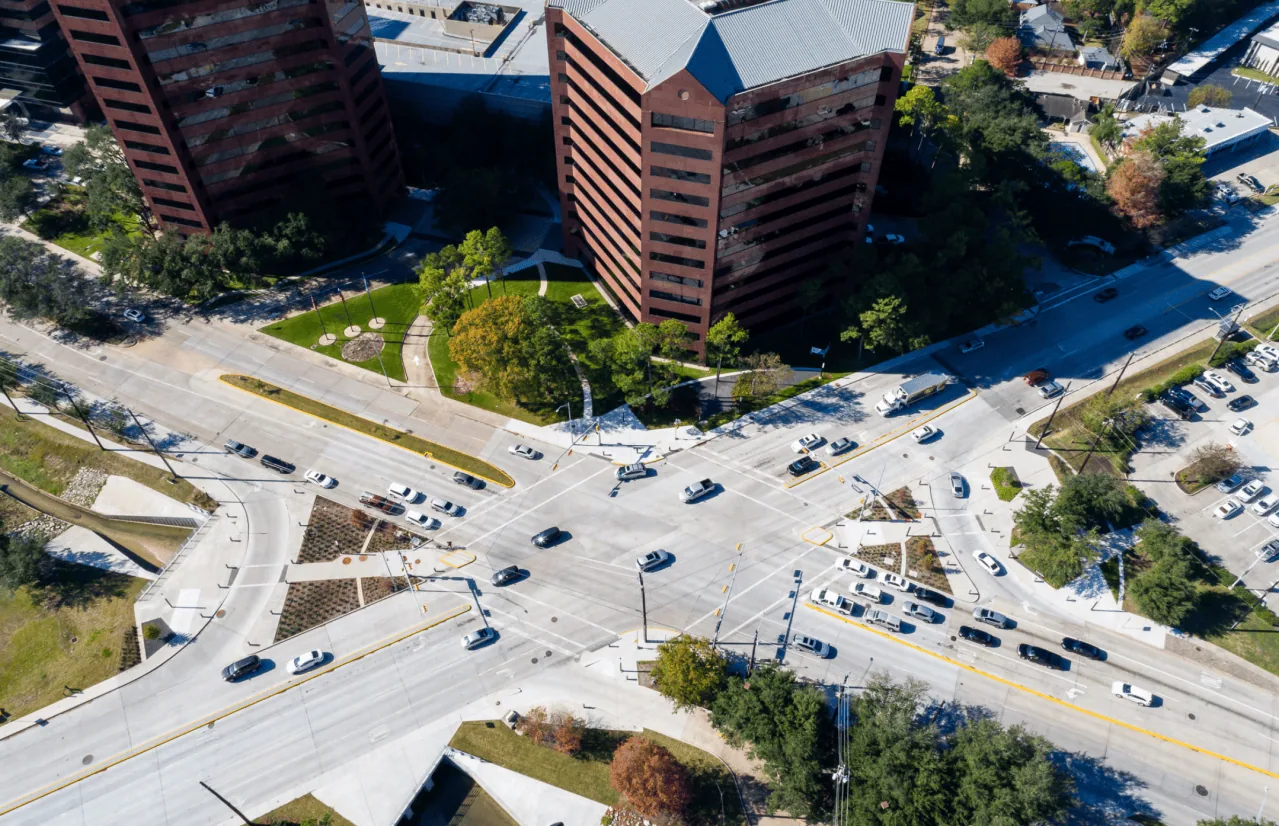
Estes Parkway is one of Longview’s important south-city commercial corridors, where the City’s plans focus on gateway identity and retail revitalization. The route is considered alongside South Eastman Road in the area’s economic development. For a business owner, that broad context can affect access planning, but it does not identify the condition or system on any one roof. We inspect the building, trace reported water, and document the field details before recommending repair, maintenance, or renewal.
The nearby I-20 plan treats Estes Parkway as a gateway into Longview and considers how the corridor can improve its area identity. Roof work here may take place near active commercial entrances, loading activity, or occupied space. We confirm the safest ladder or lift route, identify which operations need protection, and arrange a work window with the property contact. The scope then follows the property’s roof map and operating requirements.
Set the work zone before moving materials
At the first call, collect the roof plan, access instructions, current leak report, and prior repairs. Confirm where the crew can park, stage, and lift material without blocking customer or service access. Mark tenants or operations that need notice, and identify who can approve opening the assembly. On the roof, inspect the named zone and its adjacent seams, perimeter transitions, drains, and rooftop penetrations. Record what is visible before deciding whether any concealed area needs a test.
Longview’s commercial economy includes manufacturing, distribution, healthcare, education, telecommunications, and retail. That variety makes scheduling a property-specific task; it does not mean a corridor building has any particular roof type. A roof inspection can establish the accessible conditions, while emergency service can control an active opening. For a retail property, reserve a safe route around customer doors and tell the crew when deliveries or high-traffic periods should be avoided.
Inspect the full route near the reported area
A ceiling stain may be offset from the point where water enters. Trace the roof slope from the reported room toward drains, seams, curbs, parapets, and wall flashing. Check any previous repair for adhesion and separation, and look for a second detail that could also carry water. The report should distinguish a visible opening from a suspected path and name the next verification step if the route is not clear.
Longview summers are hot and humid, and the area has documented hail and tornado exposure. Longview's summer heat, hail reports, and documented tornado history make post-event inspection a useful step when a property reports roof damage. A leak investigation follows the field evidence, and drain service can document outlets and ponding near the inspection zone. If material below the membrane may be wet, identify a controlled test area before stating that the assembly needs removal.
Choose the smallest sound repair boundary
A limited repair is appropriate when the failure is localized and the surrounding material can support a reliable tie-in. We check attachment, substrate condition, contamination, previous coatings, and the detail that receives the new material. If the opening exposes wet insulation or damaged cover board, show the owner before extending the scope. The work order separates approved repair from additional quantities that depend on concealed conditions.
Retail reinvestment and gateway improvements may lead a property owner to coordinate roof work with façade, parking, or tenant updates. Roofing should be sequenced with those projects so new signs, equipment, or parapet work do not disturb completed flashing. A replacement project can be phased around operations, while a maintenance visit can log repaired transitions after adjacent work is complete. The property manager should identify which contractor controls each roof opening.
Coordinate with South Longview property work
The City associates Estes Parkway with South Eastman Road in the economic development of southern Longview. That connection is useful for owners coordinating several sites or planning work with local improvements. Keep a separate roof map and repair history for each property even when one owner coordinates work across both sites. Keep a separate map, system file, and work history for each building, then use the corridor plan only to coordinate access, timing, and public-facing construction around the site.
A location-specific visit to the South Eastman Road corridor can address its own property conditions, and the broader I-20 gateway area has a separate planning context. At either site, the inspection follows the roof itself. If work will affect drainage, structure, or rooftop equipment, Longview’s Building Inspection Division and the owner’s design team can confirm whether plan review is needed.
When several roof zones are involved, measure each separately and show which areas can be completed in one work phase. Include the number of penetrations, edge transitions, and drains that must be reset, since those details affect labor and temporary protection. If only a sample area has been opened, keep the untested portion as an allowance and name the observation that would change it. A clear quantity sheet helps a property manager compare the immediate repair with a planned renewal without treating a corridor-wide improvement project as a roof diagnosis.
Label each quantity to the roof plan so the owner can inspect the scope.
Keep photos before and after preparation in the same work file.
Include a labeled overview and detail image.
Attach that image to the plan sheet.
Keep photos and quantities tied to each section
Closeout records the building and roof-zone labels, materials, preparation, repair limits, photographs, and any field test. State which details were inspected and which could not be reached. For a multi-tenant corridor property, use the same zone name on the work order, plan, and invoice. That lets the manager identify the completed repair if another tenant later reports water and helps the next crew inspect the correct seam or curb.
Longview’s city plans identify Estes Parkway as a commercial corridor and a focus for retail revitalization. Owners can use that planning context when coordinating schedule and frontage work, while relying on the roof record for technical decisions. A condition report preserves a dated baseline. Owners managing buildings across the Longview commercial service area can keep each corridor property's repair history tied to its building and roof zone.
Arrange an inspection that fits the site
Provide roof plans, prior repair records, warranty papers, interior leak locations, and the property’s access rules. Tell us which entrances, parking lanes, or tenant areas must stay open. Name the facility contact who can authorize a test and coordinate interior protection. Emergency response is available every hour of every day, including holidays, and a safe route to the roof helps the crew address immediate water intrusion.
We will document the accessible roof, explain what the field evidence supports, and return photos with repair limits. If a test, design review, or larger project is the next step, the report will say why. The property team can approve a defined scope and coordinate it with the building schedule.
Commercial Roofing Questions
Do you service commercial properties along Estes Parkway?
Yes. We inspect and repair commercial roofs along the corridor, with access and operating windows confirmed for the specific property.
Does the gateway plan tell you what is wrong with my roof?
No. It provides broad corridor context. We determine roof condition from building records, accessible details, and any approved testing.
Can the repair be scheduled around retail operations?
We can coordinate staging, entrances, deliveries, and pedestrian protection with the property contact before work begins.
What records help you prepare a roof scope?
Send the roof plan, leak report, prior service, warranty documents, access requirements, and any nearby façade or equipment work orders.