
Commercial Roofing in East Texas Regional Airport Airpark, Longview, TX
East Texas Regional Airport Airpark
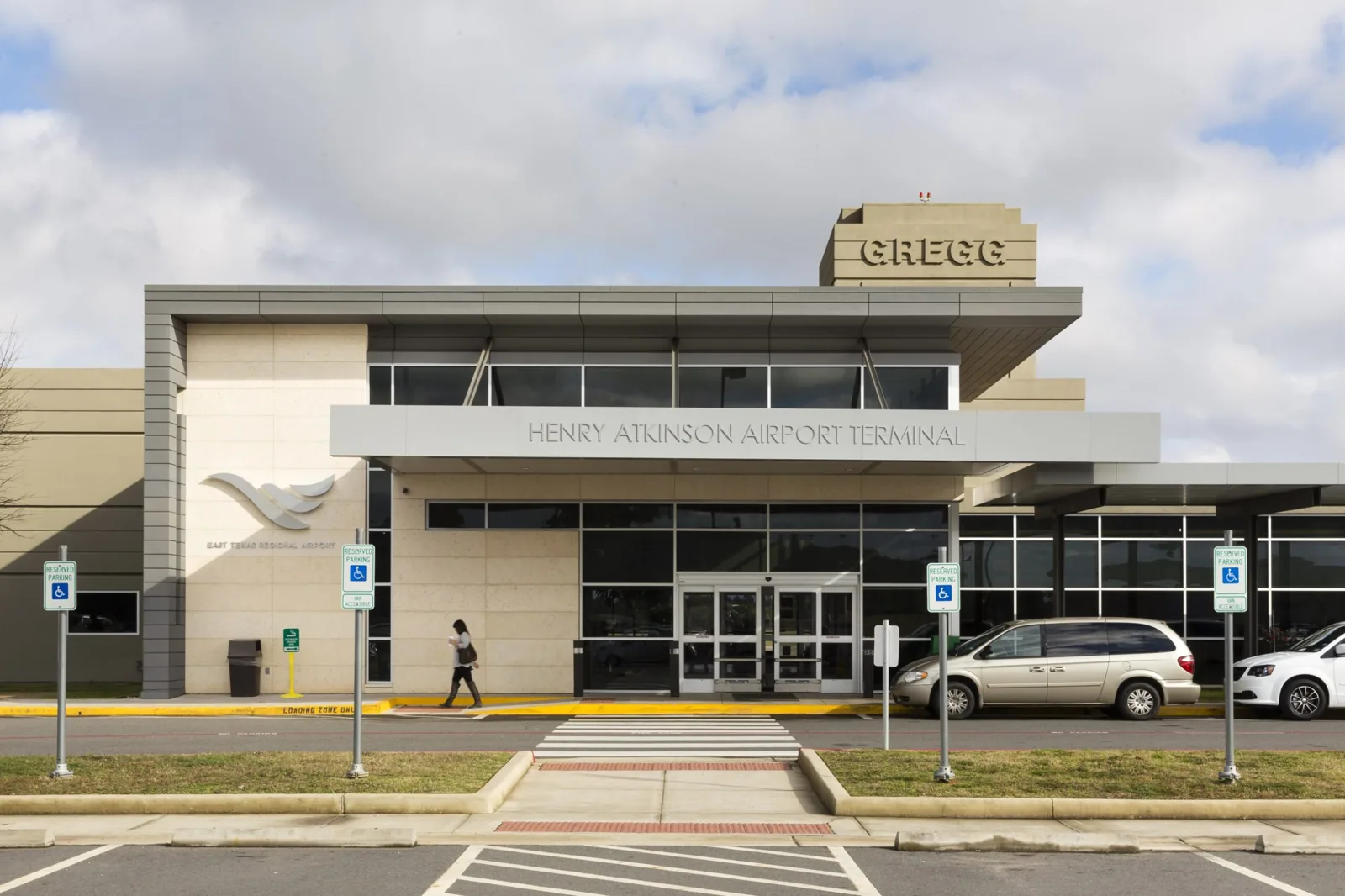
Commercial roof service in the East Texas Regional Airport Airpark starts with the facility’s building plan, operations, and access requirements. The airport is associated with an industrial area of roughly 300 acres and a Foreign Trade Zone designation, part of Longview’s industrial and logistics market. We inspect commercial and industrial roof assemblies, trace leaks, repair flashing and drainage, and coordinate new work with the project team. For each facility, confirm the roof system from its documents and field inspection, then record the affected zones, access limits, and repair history.
The airport serves Longview and the surrounding region, with daily American Eagle service to Dallas/Fort Worth. That aviation connection helps frame the area’s operating context, while roof work still depends on the property’s own schedule and safe access route. Longview’s hot, humid summers and storm exposure make drainage and perimeter details worth reviewing. We document what is visible and separate confirmed defects from questions that require a test.
The 300-acre park and Foreign Trade Zone cover a broad area associated with the airport, rather than one roof or one operator. A project manager should identify the relevant parcel and building before requesting a site visit. For an active facility, provide the roof plan and operating contact; for a building in design, send the roof layout and equipment schedule. We can then focus the review on a real asset and avoid assigning site-wide quantities to a specific roof without measurements.
Confirm site access before the crew arrives
Identify the exact building and roof zone, gate or check-in procedure, escort contact, and work window before dispatch. If a lift or material delivery is needed, coordinate the route and staging area with facility operations. An airport-adjacent site may have operating constraints that differ by property, so the crew should follow the instructions provided by the site contact instead of assuming unrestricted access. Note equipment shutdowns, active vehicle paths, and areas that cannot be crossed.
A commercial roof inspection can map accessible details, while an emergency response can stabilize an active opening outside regular hours. Include roof plans, prior work, warranties, and any permission needed for a test opening. The project manager or facility lead should identify who can approve the work and arrange interior protection if the inspection exposes a damaged assembly.
Inspect the installed assembly, not the area label
Collect the roof map, installation closeout, system submittals, warranty, and service records. Compare the documentation with visible seams, edges, curbs, penetrations, and changes between construction phases. A business park may include separate facilities and additions; do not apply one building’s material record to another. If the surface is concealed and a test opening is needed, state what the test could establish and how the roof will be restored before asking the owner to approve it.
East Texas Regional Airport is a regional aviation asset near Longview’s industrial and logistics market. That fact provides context for the service area, not an inventory of hangars or roof types. A curb and support inspection can examine equipment interfaces, while a perimeter detail review can document edge conditions. We match repair material to the verified assembly and written instructions rather than choosing from the airport district name.
Trace water around curbs, seams, and drains
For a leak, record the interior location, timing, recent service, and any weather around the report. Then inspect roof slope and nearby drains, seams, wall transitions, and penetrations. Water may travel beneath the surface before it reaches a ceiling, so the indoor mark is not automatically the entry point. The service note identifies visible failure and any route that remains a possibility, with testing listed as a separate step.
Longview’s hot season and humid conditions can stress exposed roof details, while storms make clear drainage paths important. A leak tracing service follows the reported route, and drain and scupper work checks outlets near the zone. If a moisture survey is used to choose an opening, record it as a screening result until the material is verified. The owner should see the test location and the restoration method before work starts.
Set work limits around operations and access
A repair scope should identify what is removed, how the receiving surface is prepared, where the new material ties in, and how the work is checked. If the substrate is wet or the deck is damaged, document the condition and get approval before widening the work area. For a site with restricted movement, identify the staging area and daily closure point in advance. Temporary protection must be available if weather interrupts an open repair.
Longview’s commercial and industrial market includes distribution, manufacturing, healthcare, education, and aviation-related properties. Each facility sets its own operational limits, so the repair plan should name the access window and the person controlling that area. A replacement plan can phase removal and dry-in, while a coating assessment first verifies the existing surface and substrate. A coating is not a substitute for correcting concealed damage or poor drainage.
Keep records usable across the project lifecycle
Closeout includes the building and roof-zone labels, system information, surface preparation, materials, photos, repair limits, and any field test. If equipment or another trade changed the roof, attach that work order and identify the party responsible for the opening. Note areas that could not be accessed and what is needed to complete the inspection. A future manager should be able to locate the same seam, drain, or curb without relying on the memory of the original crew.
For a property in the Longview Business Park or another part of the city’s industrial market, keep a separate asset file for each building. Each property in the Longview service area receives a separate roof record, with dated photos and observations retained in condition reports. Keep each operator's records tied to its own building so one site's service history does not stand in for another's.
Prepare the site contact and roof file
Send roof plans, system papers, warranty terms, previous repairs, active leak reports, and access instructions before the visit. Identify the escort, gate, lift location, equipment restrictions, and whether a test opening requires separate approval. For new construction, include the approved drainage and equipment drawings. For an occupied facility, note loading schedules and the areas where work could interrupt operations.
We will inspect the agreed roof zone, document the evidence, and return an actionable repair or renewal scope. If the visit cannot reach a detail safely or the system remains unverified, the report will identify that limit and the next step. The facility team can then make a decision based on the building record rather than assumptions about an airport-area property.
For turnover, include inspection photos, approved details, and a list of access points for future maintenance.
Record the approved entry contact with the closeout file.
Include the visit date and building label.
Commercial Roofing Questions
Is the airpark one building or one roof system?
No. It is an industrial park associated with the regional airport. Each building and roof section needs its own records and inspection.
Can you work at an airport-area industrial property?
Yes. We coordinate the site’s access, escort, delivery, and operating requirements with the property contact before mobilization.
Does the airport’s daily flight service affect roof work?
It describes the regional aviation connection, not a roof condition. We plan around the specific facility’s operations and access controls.
What should I send before a leak inspection?
Provide the roof plan, service history, warranty, interior leak location, recent equipment work, and access or approval requirements.
Related roofing work.
- Commercial Roof Inspection
- Rooftop Equipment Curbs and Supports
- Commercial Edge Metal, Coping, and Gutter Repair
- Commercial Roof Leak Repair
- Commercial Roof Drain and Scupper Repair
- Commercial Roof Coating Restoration
- Commercial Roofing in Longview Business Park, Longview, TX
- Commercial Roofing in Longview, TX
- Commercial Roof Condition Reports