
Commercial Ponding Water Roof Repair in Longview, TX
Commercial Ponding Water Roof Repair
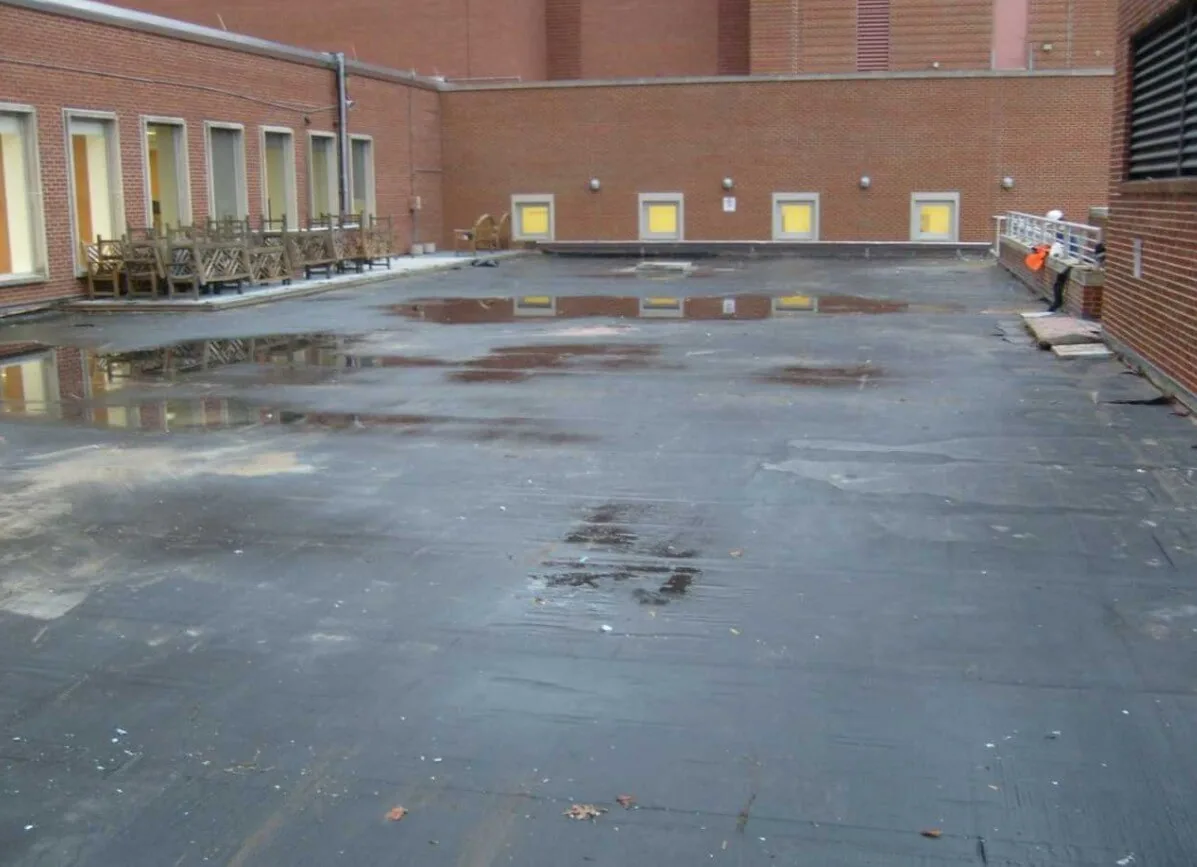
A roof depression that retains water after nearby areas have drained needs a field check, not a surface guess. We map the low area, confirm which drains or scuppers serve it, and inspect the membrane, seams, and insulation for evidence of movement or moisture. The repair depends on why water is holding: debris, a restricted outlet, a compressed assembly, or deck geometry may call for different work. The report separates the observed condition from any concealed cause that still needs testing.
Longview's warm, humid climate and seasonal thunderstorms make drainage maintenance a practical concern, but they do not prove a particular roof has ponding. Commercial buildings around the South Longview I-20 area, Downtown, and the industrial parks have varied roof forms and access conditions. We use the actual roof plan and water path to define the investigation rather than infer slope or assembly from a property's location.
Mark the limits of standing water
We record where the water begins and ends, how far it sits from the nearest outlet, and whether a parapet, curb, expansion joint, or roof transition changes the flow. A photograph with a scale or marked plan helps facilities staff compare the area after the next rain. If a puddle is still present during inspection, we note depth and extent without treating one observation as a long-term ponding measurement. Recent cleaning, rainfall timing, and roof access conditions can affect what is visible.
The drain line may not be directly below the low spot. We inspect the feeding slope, membrane around the bowl, and overflow route, then follow the roof geometry toward each outlet. The inspection also checks whether a nearby curb or rooftop unit redirects runoff, whether a walkway interrupts the path, and whether a prior patch changes the roof plane. A low point may be stable or may be shifting; the report notes observable cracks, displacement, or soft areas and recommends a test only when those signs make it useful. A drain and scupper service visit can clear a blockage or restore a failed drain detail. If the outlet is open but the basin remains, the investigation shifts to the assembly and support beneath it instead of repeating a cleaning that does not address the cause.
Find whether the roof assembly has changed shape
Standing water can follow a blocked drain, but it can also reflect deflection, compressed insulation, a separated board joint, or a roof plane that was never graded to the outlet. We inspect for soft spots, open seams, crushed cover board, displaced fasteners, and evidence that water has migrated below the surface. A test opening may be needed to see the substrate. We explain the location and purpose of that opening before the owner authorizes it.
A correction that needs new slope or structural support requires design input before the crew changes the roof plane. The owner should confirm applicable local review and drainage requirements before authorizing that work. A roofer's surface observation does not determine structural capacity. We can document the existing slope and visible layers to support the next decision. If a drain line is concealed, the owner may need a plumbing contractor to verify downstream flow before roof work is expanded. If material is wet, a moisture survey can help select confirmation locations, while a roof inspection can assess related details around the affected zone.
Correct the cause instead of hiding the basin
When debris restricts a clear outlet, cleaning and confirming flow may be enough. A damaged drain ring, cracked flashing, or separated membrane requires a compatible detail repair. If the low area reflects compression or a deck issue, adding a patch at the drain will not change the roof plane. We identify the probable cause, the evidence supporting it, and what must be opened or measured before recommending a leveling or replacement scope. Any repair should preserve a path to the primary outlet and keep overflow drainage functional.
Longview Business Park lies along US 259 near I-20, while Bar-K Business Park fronts US 80. These industrial settings can include broad roof areas where outlet location and maintenance access need to be mapped carefully. The site facts do not tell us how an individual roof drains. We document each outlet and the surface leading to it. Where seam movement contributes to retained water, seam repair may need to be coordinated with drainage work. If a storm lifts an edge, inspect the fasteners and membrane securement before rebuilding the detail; wind-damage repair can address the displaced section.
Choose between a local correction and broader work
A localized correction is reasonable when the outlet or affected detail can be repaired and the surrounding assembly remains sound. If several basins show the same compression, insulation is wet, or water crosses multiple roof zones, the owner may need a broader investigation. We identify whether the proposed scope includes cleaning, flashing, insulation, cover board, slope work, or structural review. We do not combine those items into one allowance unless the scope explains which quantities are confirmed and which depend on opening the assembly.
A maintenance visit can include an outlet check, debris removal, and documentation of observed flow paths. If the roof plane or assembly has reached the end of a repairable condition, a replacement assessment can compare alternatives. The Longview plan process may apply if project scope changes the building assembly; the owner and its design team confirm those requirements through the City's Building Inspection Division before construction.
Track the low area through a documented follow-up
The closeout should include a roof-zone map, photographs, outlet condition, test results, work performed, and the status of any unresolved basin. If water was present, note the visit date and conditions so later observations can be compared. Facilities staff should know which drains require routine debris checks and which area needs monitoring after repair. If a test opening was not authorized, record that limitation instead of describing the underlying insulation as dry or damaged.
For a roof in South Longview near the I-20 corridor and LeTourneau University, Downtown, or the business parks, share the roof plan, known leak locations, maintenance logs, and safe access route before inspection. We will identify the water path that is visible, the cause that is supported, and the next step needed to resolve what remains uncertain.
Map standing water after enough time has passed for ordinary drainage, then note the boundaries and nearby roof details. Check whether debris, a blocked outlet, a settled substrate, or a perimeter condition contributes to the retained water. Photographs taken from the same roof-zone marks make a later comparison more useful. Do not promise that a surface patch will correct a slope problem. If drainage work is needed, identify the separate detail and the design input required before changing roof elevations or outlets.
Commercial Roofing Questions
Does standing water always require roof replacement?
No. The first step is to identify whether the cause is an obstructed drain, failed flashing, compressed assembly, or another condition. Repair limits depend on what the inspection confirms.
Can you clear a drain during the inspection?
If access is safe and the owner authorizes it, we can address roof-level debris and record flow. A damaged drain connection or persistent low area needs a separate repair scope.
How do you confirm wet insulation below a puddle?
We distinguish surface observations from concealed conditions. A survey can help target a test, and a controlled opening may be required to verify the material below the membrane.
What should the maintenance team track after correction?
Keep the zone map, outlet photographs, work record, and follow-up observations together. Note whether water clears after a later rain and whether any previously blocked path has reopened.