
Rooftop Equipment Curbs and Supports in Longview, TX
Rooftop Equipment Curbs and Supports
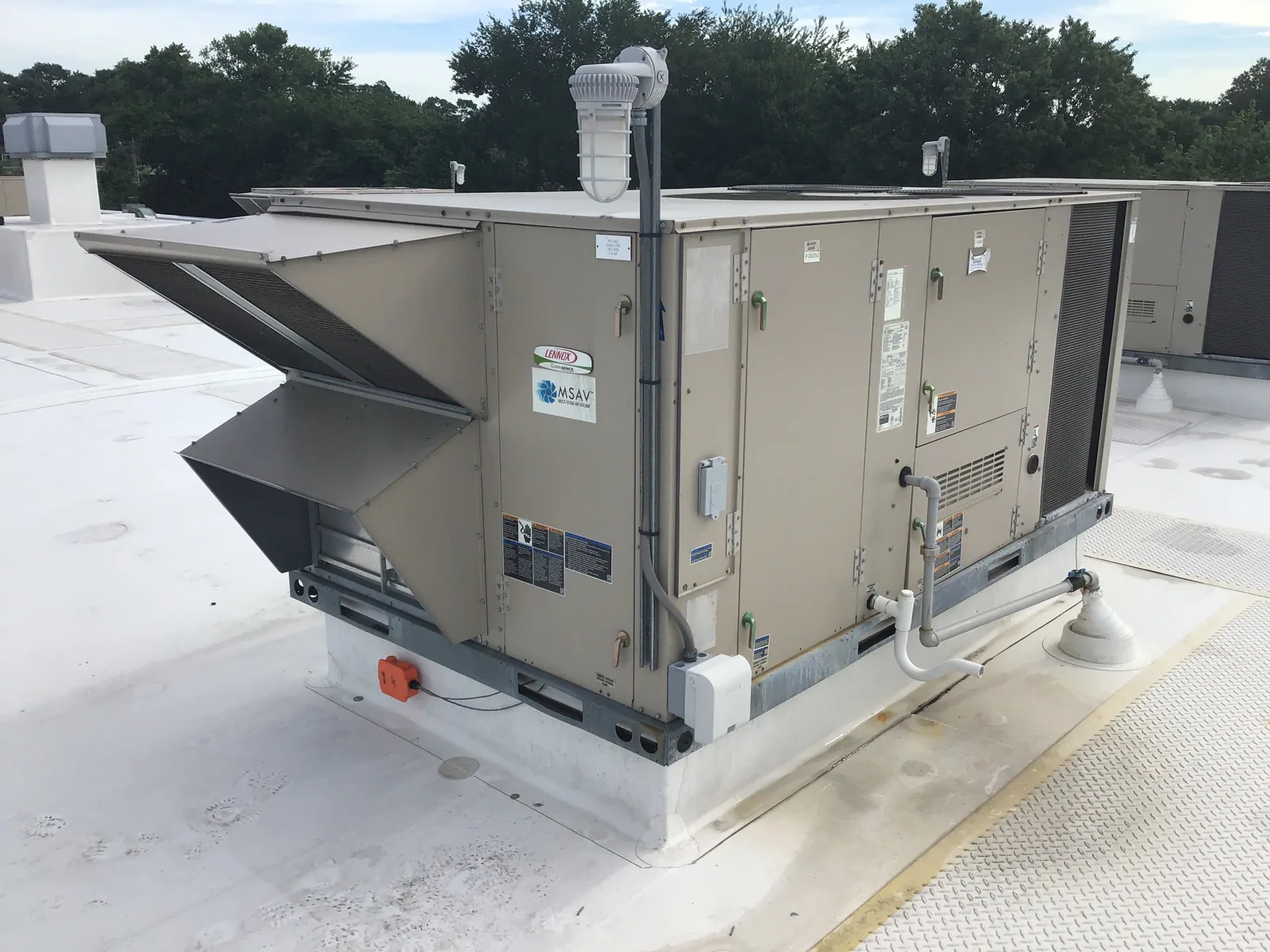
A new HVAC unit can leave an old curb, flashing, or support detail carrying loads it was not built to handle. We inspect the curb assembly, membrane tie-in, fasteners, equipment clearance, and surrounding drainage before repair or replacement begins. If water enters at the base, the path may run under the membrane before it appears on a ceiling below. We establish what moved or failed, what remains sound, and whether the roof opening can be closed with the existing equipment in place.
Longview has industrial, distribution, aviation, office, and retail roofs with different equipment and access needs. A property near Longview Business Park may have rooftop units over active loading areas, while a building near Downtown Longview can require protection for occupants and storefront entrances. East Texas Regional Airport's airpark adds another commercial-industrial setting, but each facility's roof and equipment conditions must be inspected individually. We plan the work around the actual assembly, service clearances, and safe route to the roof.
Check the curb before resealing the perimeter
Water around a unit can come from a split corner, loose flange, open seam, failed counterflashing, or a curb that has shifted. We check the base flashing on all sides, look for fastener movement, and follow nearby seams and penetrations before identifying the repair boundary. A sealant bead over an open edge can trap water or separate from a contaminated surface. If the curb has settled or rusted through, the metal assembly may need replacement instead of another surface patch.
We also note whether the unit's service panel, coil access, and condensate line remain usable after the flashing work. A roofer should not block the technician's route or leave a service panel resting against new membrane. A roof inspection can document adjacent seams, drains, and penetrations that may share the same water path. The report shows the details checked so the owner can connect the repair to the unit and roof zone.
Separate roof supports from flashing work
Equipment rails, dunnage, pipe supports, and vibration isolators transfer loads differently from the roof membrane. We look for bent or loose supports, corrosion, shifted pads, damaged blocking, and movement where piping crosses the roof. If the support bears directly on the membrane, repeated vibration can wear the surface or compress insulation. The repair must address the load path and protect the roof assembly, not merely cover the contact point with a larger patch.
Changes to the unit, curb size, or support location may affect framing and roof structure. We identify that condition and coordinate with the building's mechanical and structural professionals when design review is needed. The roof contractor can make a watertight tie-in, but should not assign structural capacity from a visual check. For Longview industrial facilities, the plan should also preserve access for maintenance crews and avoid routing condensate or service piping across a drainage path.
Trace condensate and rainwater separately
Water near rooftop equipment may be rain entering at the curb, condensate spilling from a drain line, or roof runoff collecting at a low point. We check the unit's drain routing, discharge location, nearby membrane, and slope to the nearest outlet. A condensate line that terminates onto the roof can leave deposits or keep a small area wet. If the equipment drain is blocked, the service technician may need to address the unit before membrane repairs can stay dry.
Longview's July climate normal daily high is about 94 degrees, so exposed curb metal and roof surfaces see substantial heat. Movement at a hot perimeter can stress sealant and flashing transitions. We record visible water paths and persistent ponding, then determine whether a drain and scupper correction belongs in the same work scope. The goal is to prevent runoff from crossing the new curb detail and sending water under a sound repair.
Match flashing to the membrane assembly
Flashing material and attachment must match the existing roof. Heat-welded TPO and PVC details use compatible sheet and welding procedures; EPDM needs its own primers, tapes, and uncured flashing. Coatings, asphaltic residue, and earlier repairs can affect the tie-in, so we identify the surface before selecting a product. A curb repair also needs adequate vertical height, secure termination, and a finished corner detail that will continue to shed water.
Where a unit is replaced, the mechanical contractor may need to disconnect or lift it so the roofer can rebuild the curb and membrane transition. We sequence the work so the opening remains protected and the equipment is not returned to service over an incomplete flashing. A commercial roof repair scope can include a localized curb, support, and membrane correction, while broader assembly issues may call for replacement planning. We state the interface work clearly before mobilization.
Keep equipment service and building access available
Roof work around active equipment needs coordination between the facility contact, mechanical technician, and roofing crew. We identify units that must remain operational, any scheduled shutdown, roof access hours, and the safe route for tools and materials. Downtown Longview buildings can have sidewalk, tenant, and storefront constraints; industrial sites may have loading or production zones below the work. The daily boundary includes interior protection where roofing operations could disturb occupied rooms.
Longview's highway-connected business parks support manufacturing and distribution uses, so equipment work may need to fit delivery windows and production cycles. We can sequence by unit or roof zone and identify which areas need follow-up after mechanical work. A phased work plan can keep unaffected spaces in service while crews complete each tie-in. A roof asset management record can carry curb and unit history into later capital planning. The schedule identifies weather limits and who confirms that a unit may be re-energized.
Record each repaired curb and support
Closeout photos should show the curb before and after repair, the flashing corners, membrane tie-in, supports, and nearby water path. We note materials, preparation, and any condition that required coordination with another trade. If structural review, equipment adjustment, or a separate drain correction remains open, the record names that next step rather than implying the roof detail resolved it. A roof-zone reference helps future technicians locate the repair without relying on memory.
In Longview, share equipment schedules, roof plans, prior leak notes, and service-clearance requirements before the visit. We will inspect the curb and surrounding assembly, then define the roof work and trade coordination needed. A clear record helps property staff plan the next equipment replacement without overlooking the membrane transition or support condition.
For each unit, record the equipment label, curb condition, support locations, flashing perimeter, and the roof zone beneath it. If the mechanical contractor plans to move or replace a unit, agree on who will restore the curb flashing and when the roof can be inspected. A service ticket should identify any temporary cover and the date for final verification. That makes responsibility clear when roofing and mechanical scopes touch the same opening, and prevents the owner from assuming the membrane was checked after the equipment work.
Commercial Roofing Questions
Can you flash a new HVAC unit onto an existing roof?
Yes, when the curb, membrane, and surrounding assembly can accept a compatible tie-in. We inspect curb height, attachment, equipment clearance, and roof condition before defining the work.
Does a leak at an HVAC unit always come from the curb?
No. Water may come from a seam, nearby drain, condensate line, or another penetration. We inspect the route around the unit and compare roof findings with the interior report.
Who coordinates lifting or disconnecting the equipment?
The scope identifies the needed mechanical work and coordinates its timing with the facility contact and service technician. Roofing should begin only when the unit and opening can be handled safely.
Will the repair leave room for future equipment service?
We preserve service clearances and document access around panels, piping, and supports. The roof detail should protect the membrane without blocking routine equipment maintenance.