
Auto Dealership Roofing in Longview, TX
Auto Dealership Roofing
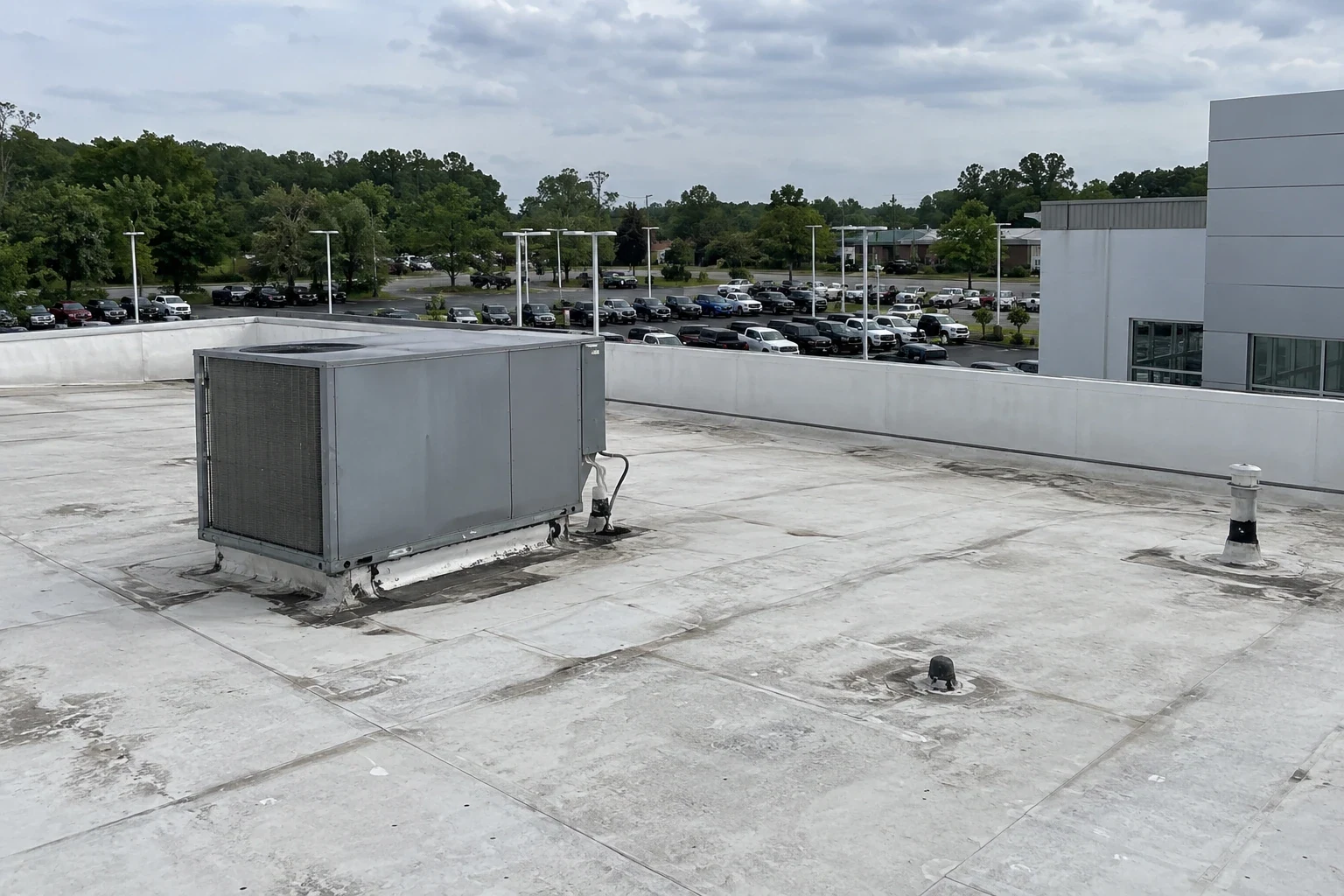
A leak above a service bay can create a safety and scheduling problem before it reaches the showroom. We inspect the roof above the report, trace seams, drains, exhaust curbs, and wall transitions, then set a repair boundary that keeps customer and vehicle routes clear. A dealership may operate sales, service, parts, and detailing under one roof, each with different hours and equipment. The work plan identifies what is affected and which areas remain open.
Longview's auto-oriented business activity is reached through east-west US 80/Marshall Avenue and commercial routes such as Estes Parkway. Those corridors can affect lift delivery and staging, but they do not tell us how a particular dealership is arranged. We confirm the showroom entrances, service-door schedule, vehicle storage, roof system, equipment list, and known leaks with the facilities manager before recommending work.
Keep customer arrivals separate from roof access
Showroom glass, entry canopies, sales desks, and public parking need protection while a crew stages materials overhead. We coordinate lift placement, pedestrian barriers, work hours, and any short-term entrance change with dealership staff. If several roof areas need attention, work can move in a sequence that leaves the main customer path available. The site plan identifies the spotter, the restricted area, and the time when normal access can resume.
Service operations often begin before sales hours and may continue into the evening. We confirm when repair activity can take place near service writers, vehicle lifts, parts counters, or wash bays. A phased occupied-building plan can split a larger reroof into manageable zones. A large-format retail roof plan also considers customer circulation, though dealership work must preserve vehicle movement and service-bay use. We can sequence the work so the parts counter, customer pickup, and technician entrance are not all constrained at once, then return each path when the overhead zone is secure.
Inspect exhausts, curbs, and service penetrations
Service bays may use exhaust extraction, rooftop HVAC, plumbing vents, air lines, and other equipment routes. We inspect curb flashing, supports, pipe boots, conduit, and membrane around each penetration. If the service contractor needs to disconnect a system, that work is coordinated before the roof opening. The roofer protects the opening, restores the roof transition, and confirms that access remains available for future equipment maintenance. Where several lifts sit below one roof zone, we confirm the service manager's lockout and return-to-work steps before tools or debris move overhead.
Movement from roof-mounted equipment can stress a curb or support, while residue around an exhaust may affect nearby surfaces. We record the material and defect instead of applying one repair detail to every opening. A curb and support repair can correct a failed base. If water is reported inside a bay, a leak investigation traces the route before assigning quantities.
Check storm-exposed details after a report
After a storm, visible debris, loose metal, punctures, and open seams deserve a roof-level check. Longview has a documented hail report and a tornado track that entered the city. After a reported event, we inspect the dealership's roof, photograph the condition, and separate impact evidence from prior wear, movement, or old patches. If a roof section remains inaccessible, the report states what needs a second visit.
Longview's hot summer conditions also affect exposed sealants and membrane surfaces. The assessment records the roof material, attachment, and likely repair method before work begins. A storm-damage roof repair addresses confirmed openings or displaced details. For a surface concern that extends across an area, we document its boundaries rather than treating discoloration as proof of a membrane failure. The dealership can also retain dated photos of inventory and service areas below the inspected zone, helping staff connect any later interior report with the roof record.
Keep runoff away from service doors and inventory
Drains and scuppers need a clear path from the roof field to the outlet. We check strainers, drain bowls, overflow routes, gutters, and the membrane around each opening. A blockage may be cleared, but a failed drain collar or low section needs a separate repair plan. We also check roof edges above parts storage and service entrances so runoff does not leave an unresolved path at the perimeter.
Longview's summer thunderstorms can bring concentrated runoff, while July normal highs approach 94 degrees. That combination makes drain condition and heat-exposed seams practical inspection points. A drain and scupper repair can restore the outlet connection; perimeter metal work can close an opening at the edge. Each correction is recorded by roof zone so facilities staff can compare it with the next maintenance visit.
Match the repair scope to the dealership roof
A patch is appropriate when the surrounding assembly is sound, dry, and compatible with the proposed tie-in. Recurring leaks, wet insulation beyond the opening, or failures at several system transitions may call for a broader repair or replacement study. We document what was inspected, what was opened, and any conditions that remain concealed. The manager can compare alternatives while accounting for showroom appearance, service throughput, and the time needed to protect vehicles below.
Longview's Building Inspection Division handles commercial construction review under the City's current adopted building and energy codes. For a roof alteration, the owner can confirm the applicable review steps with City staff before the schedule is set. A replacement assessment separates immediate water control from a capital scope. For a dealership sharing a larger retail property, a shopping-center roof plan adds attention to common-area coordination while keeping the dealership's service schedule distinct.
Return service and sales teams a roof record
Closeout identifies the roof zone, material installed, curb or drain detail, completion photos, and any follow-up needed. We note whether barriers can be removed and when the service contractor can restore equipment. A zone map helps dealership facilities staff connect later reports with a completed repair. It also keeps future work from confusing a showroom leak with a separate issue over the shop or parts area.
For a dealership in Longview, share roof drawings, service-bay schedules, equipment records, vehicle routes, and prior leak notes before inspection. We will coordinate the visit with sales and service managers and return findings organized by area. The record supports quick operational decisions while preserving a longer view of repairs, maintenance, and potential replacement needs.
A showroom, service bay, and parts area can have different roof access and interior protection needs even at one dealership. Confirm which area reported water and whether vehicle lifts, exhaust equipment, or customer hours constrain work. Inspect around rooftop units and exhaust penetrations, then keep vehicle and repair operations out of the drop zone. The work plan should identify temporary cover if an opening is necessary and state when the area can return to normal use.
Commercial Roofing Questions
Can service bays stay open during roof repairs?
Often, with work zones, vehicle routes, equipment access, and noisy tasks scheduled with service management. A bay may need a short restriction while the crew works directly above it.
How do you protect showroom customers during roof work?
We coordinate lift staging, pedestrian barriers, entrances, and work hours with dealership staff. The plan keeps customer paths separate from the active repair area.
What should be inspected after hail or tornado weather?
The roof visit can check reported leaks, seams, metal edges, curbs, and visible impact. Findings come from the dealership roof itself, not from the regional storm report alone.
When is a larger dealership roof scope needed?
Several recurring leaks, wet insulation beyond a patch, or failures across different details may justify comparing broader repair with replacement. We show the observations behind that comparison.