
Storm Damage Roof Repair in Longview, TX
Storm Damage Roof Repair
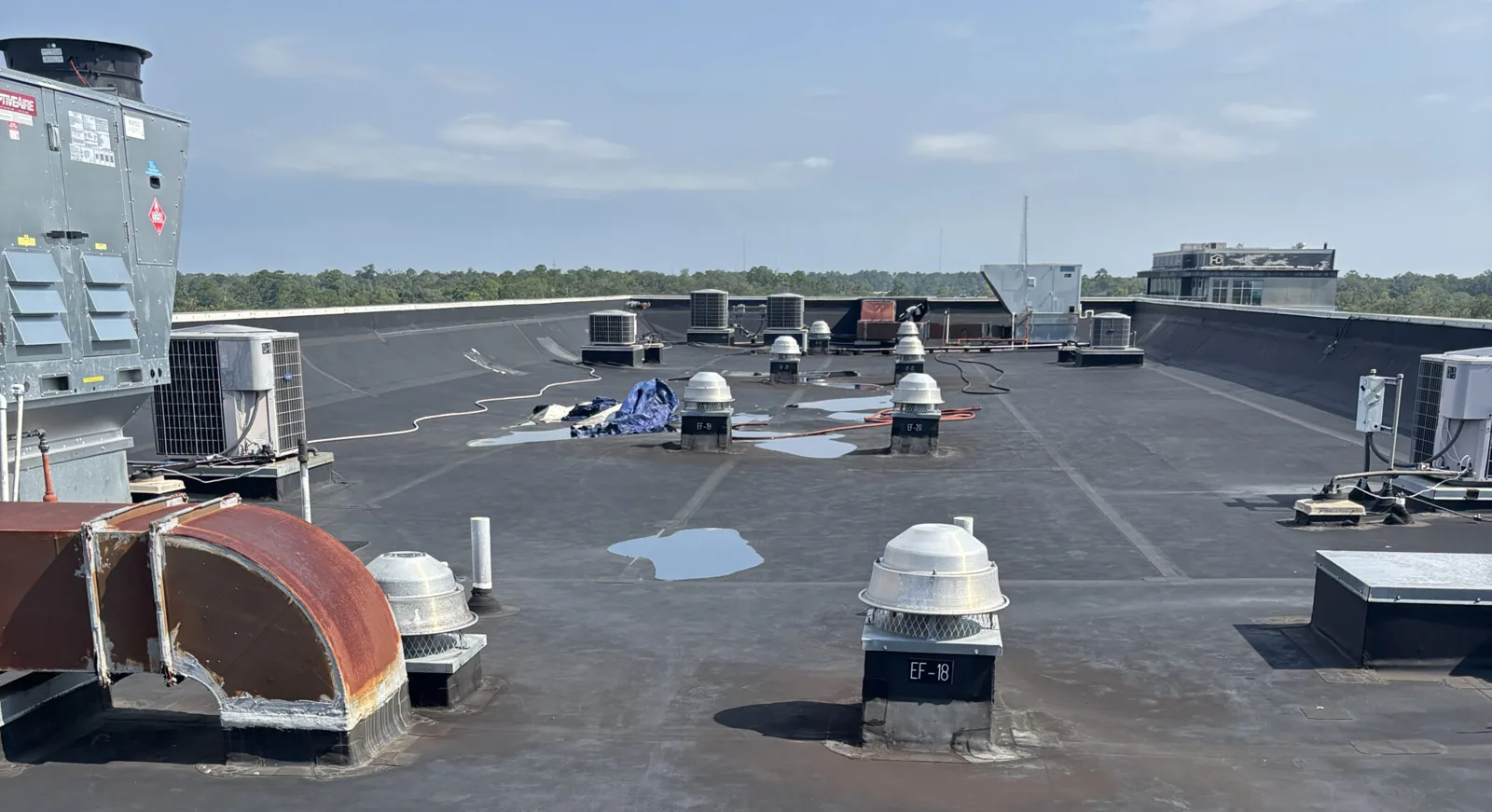
A loose edge, opened seam, or puncture after a storm needs a roof-level check before anyone decides how much material to replace. Storm damage roof repair in Longview, TX begins with safe access, weather protection, and a marked inspection route. We look at perimeter metal, corners, seams, rooftop equipment, penetrations, drains, and interior leak locations, then photograph each observed condition. Longview's storm history includes a 2008 tornado track that caused roof and tree damage, along with a reported hail event. After a new storm, inspect the affected property's edges, seams, penetrations, drains, and rooftop equipment, then document the conditions found.
The first task is to limit water entry without hiding damage needed for a permanent scope. We record displacement, active water entry, and temporary protection. At a Longview Business Park operation, loading routes can limit staging. Near Downtown Longview or along US 80, public circulation can shape roof access. The report ties each recommendation to a checked zone and separates stabilization from permanent repair.
Stop active entry without losing the evidence
When water is entering, we identify the source area, move contents or protect critical equipment beneath it when practical, and apply a temporary measure suited to the roof material and weather conditions. That measure may cover an exposed opening or control a displaced detail until the permanent repair can be completed. We explain what it does and what remains vulnerable, especially if rain could reach adjacent seams or travel under the membrane. Temporary protection is documented with its location, installation date, and follow-up action so it is not mistaken for a completed repair.
Safety and access come before the full survey. Wind, lightning, wet walking surfaces, damaged ladders, or unstable rooftop equipment can make portions of a roof unsafe to enter. We set a stop point and return when conditions allow. For an occupied facility, we coordinate the route with the property contact and protect rooms below the work area. A rapid emergency response can address immediate exposure while the permanent scope waits for a safe work window and adequate evidence.
Map the damage across connected roof details
Storm effects often show at edge securement, coping joints, curb corners, wall transitions, pipe supports, skylights, and membrane seams. A lifted edge can admit water several zones away from an interior stain. For hail, we look for impact marks, fractured membrane or coating, damaged metal, punctures, and compromised accessories. We separate observed impact from general wear where evidence allows. If the layers are unclear, a test opening shows insulation, cover board, and deck condition.
Longview’s July climate normals reach typical highs near 94 degrees Fahrenheit, and heat can affect sealants, membrane movement, and repair scheduling after the storm passes. We note whether a wet surface, high temperature, or forecast rain changes the permanent repair window. At properties along the I-20 corridor, delivery routes and roof access may affect material staging; those are logistics to confirm with the building operator, not assumptions about the property’s roof. A documented roof inspection records the locations examined and any inaccessible or concealed areas that need another step.
Separate storm damage from existing conditions
The scope separates observed damage, prior repairs, weathered material, and conditions that cannot be dated from a walk alone. We mark each repair location, removal area, substrate condition, and tie-in to stable roof. Where insulation is wet, the scope defines removal and protection limits. If deck or attachment needs confirmation, we state the test required instead of treating an assumption as a finding.
At flashing and perimeter details, the repair must restore the path that keeps water outside the building. A field patch cannot compensate for loose coping, a displaced counterflashing, or a curb that moves under load. We describe how the detail will be rebuilt, what surrounding membrane must be prepared, and how finished work will be checked. For a seam or membrane opening, the selected method must fit the existing system and temperature conditions. A commercial roof repair can be localized when the surrounding assembly is dry and able to hold a tie-in; broader failure may call for replacement planning.
Build a defensible photo record
Photos show the defect location, affected detail, water path, and proposed repair boundary. We include a broad orientation view and close views of the seam, metal, penetration, or damaged surface. Notes identify what was opened and what remains hidden, along with temporary protection and any areas not inspected for safety, weather, or access. The resulting record supports facility staff when several zones need work.
If an insurance claim is being considered, the owner may need to preserve photographs, dates, work orders, invoices, and communications alongside the roofer’s report. We document roof conditions and completed repair work, but coverage decisions belong to the insurer and policy terms. A claim documentation review can organize the roof evidence and identify information still needed. We do not replace an adjuster’s determination or promise that a particular repair will be covered.
Sequence permanent repairs around weather and use
Permanent repairs need a dry surface and time for materials to bond, weld, or cure. Before removal, we coordinate deliveries, equipment access, fall protection, and daily dry-in limits. For open facilities, the sequence protects entries, loading lanes, sensitive rooms, and roof zones still in use. A phased occupied-building plan defines work zones and communication. The scope sets how an opening will be secured if rain returns.
After the repair, we inspect the tie-in, flashings, and drainage details and take closeout photographs. The report names any area excluded from the completed scope and explains whether it needs monitoring, another test, or separate work. Longview’s Building Inspection Division reviews commercial building plans under the city’s adopted requirements; if storm repairs become a larger alteration, the owner should coordinate applicable review with the appropriate design and City contacts. We provide the roof observations and repair details needed for that conversation without treating field repair as plan approval.
Know what is temporary and what is complete
At closeout, the owner can see which leaks were stopped, which details were rebuilt, and what remains exposed. Photos, material notes, repair limits, and follow-up items are recorded. The report marks the approved inspection boundary and lists any area not reached or checked separately. Maintenance can compare later symptoms with this repair boundary.
Send the roof plan, affected room locations, known repair history, photos taken after the event, equipment constraints, and access hours. We will inspect the roof when conditions allow, stabilize active entry, and prepare permanent work based on field evidence. For multiple properties or roof zones, a condition report with photos gives the owner a clear basis to stage repairs and distinguish urgent weather protection from planned capital work.
Commercial Roofing Questions
Should we wait for the roof to dry before calling?
Call when the condition can be safely described, especially if water is entering or equipment is at risk. We can arrange immediate protection if roof access is safe, then schedule a complete inspection when surfaces and weather allow. Photos from the ground or indoors help identify the affected zone but do not replace the roof survey.
Can you tell which damage came from the latest storm?
Sometimes, when displacement, impact, or a fresh opening is clear and documented. Aging, prior repairs, and multiple weather events can overlap. We describe what the field evidence supports, separate visible storm-related conditions from general wear, and identify areas that cannot be dated from inspection alone.
What if the roof has active leaks during the inspection?
We prioritize safe temporary protection, document its limits, and identify the permanent repair needed. If wind, lightning, or wet surfaces make access unsafe, we stop at a safe boundary and return when conditions permit. Any open area receives a documented dry-in plan before the crew leaves.
Will the inspection report decide our insurance claim?
No. The report records roof observations, photos, and repairs; the insurer applies the policy and makes the coverage determination. We can organize roof evidence and note what remains to inspect, while keeping documented conditions separate from a coverage opinion.