
Commercial Roof Flashing Failure Repair in Longview, TX
Commercial Roof Flashing Failure Repair
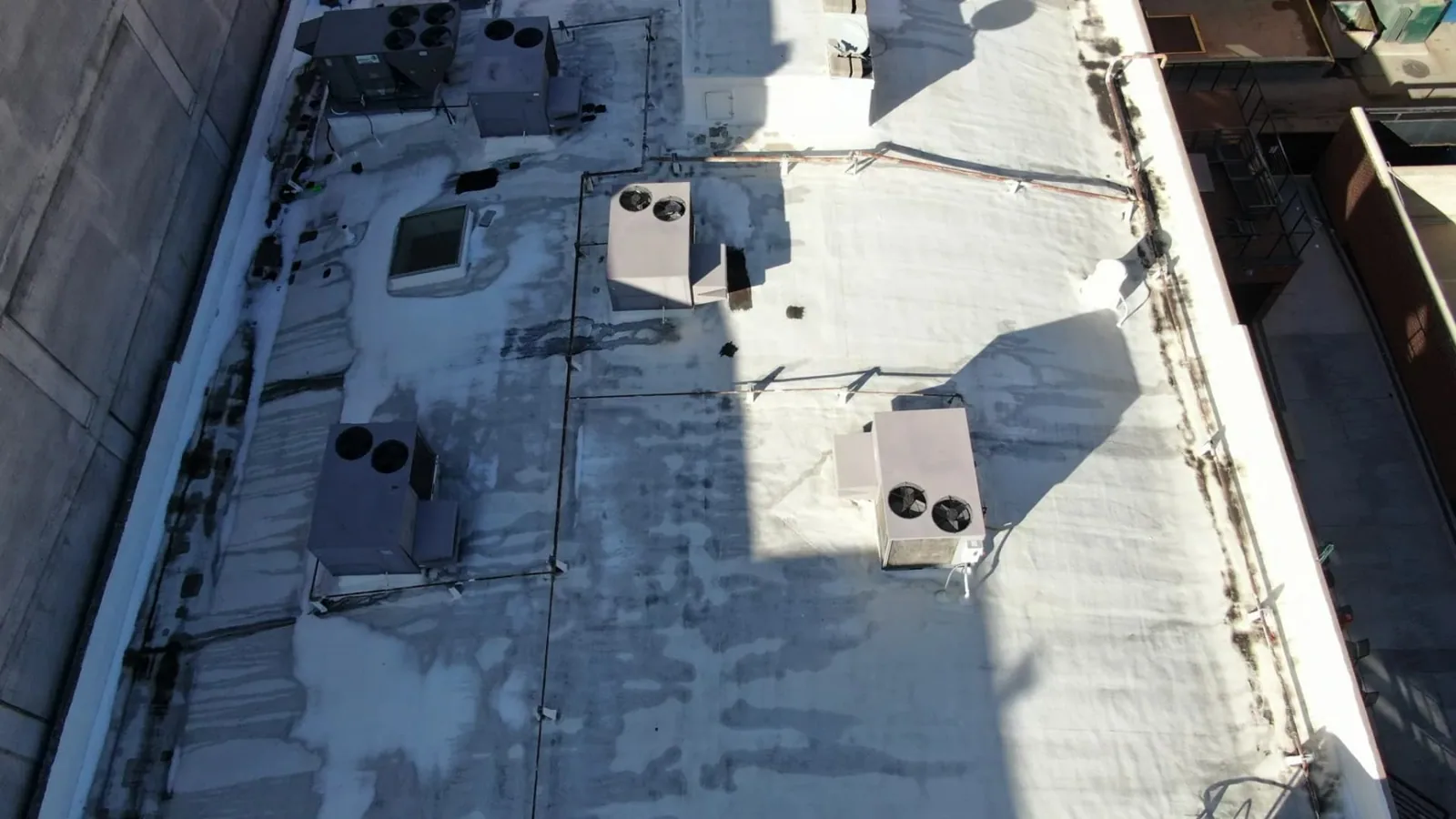
A split corner, open lap, or pulled termination at a wall can admit water even when the surrounding roof field looks sound. We inspect the flashing, counterflashing, substrate, fasteners, and membrane transition, then follow the water path to the reported interior area. The repair boundary depends on where the assembly has lost continuity and whether the material behind the flashing can hold a new attachment. Sealant over a moving or detached detail rarely answers that question.
Longview's commercial stock spans Downtown reuse and infill, south-city sites near the I-20 corridor, and industrial areas connected to US 259. Those buildings can have very different parapets, additions, and wall interfaces. We inspect the actual wall, curb, roof edge, or penetration and review previous repair notes before choosing a detail. The report marks where the flashing turns onto the wall and returns to the roof field.
Inspect the full transition around a wall or curb
Flashing failures often begin at a corner, end dam, change in height, or joint between two materials. We examine whether the base flashing remains attached, whether counterflashing sheds water over it, and whether termination bars or fasteners are secure. At equipment curbs, we look at all four corners and the lower edge where water can collect. At wall transitions, we check whether movement or a crack has opened a path behind the metal or membrane.
Water can enter above the visible stain and travel behind a wall finish or along a deck before appearing inside. We compare the suspected detail with roof slope and adjacent drainage, then mark any part not visible without an opening. A documented roof evaluation can preserve photos of a reported condition, and membrane repair applies when the field itself has a puncture rather than a transition defect.
Match the replacement detail to the materials
Metal counterflashing, roof membrane, masonry, sealant, and fasteners each respond differently to movement and temperature. A durable repair needs a compatible connection between them. We identify the existing assembly where records and visible details allow, remove failed material only within the authorized boundary, and inspect the substrate before installing a new termination. If the backing is wet, cracked, or unable to hold fasteners, the owner should see that finding before the repair expands.
Longview's July normal high is near 94 degrees, so roof surfaces and metal details can be hot during summer inspections. Work timing and surface conditions matter for sealant and membrane installation, but temperature alone does not diagnose failure. A edge-metal and coping scope addresses perimeter metal, while curb support work can coordinate a flashing repair around rooftop equipment. We confirm which trade may move a unit or penetrant before the roof detail is opened. If attachment fasteners pass through metal, the inspection checks whether each penetrant is sealed without restricting required movement. At masonry, the crew checks that counterflashing overlaps the base detail and directs water back onto the roof surface rather than behind the wall finish.
Confirm the leak path before replacing flashing
A building can have more than one potential entry point near the same ceiling report. We inspect seams, fasteners, drains, penetrations, and the edge detail together when they fall within the likely water path. If an interior observation is available, the facilities contact can help compare the timing and location with roof conditions. We state what has been confirmed, what is only a candidate, and whether a controlled test is needed to distinguish the sources. A water test should be designed around the building and performed only when the owner approves; testing one section at a time helps preserve the evidence and limits exposure.
Downtown's commercial area includes historic-structure reuse and infill. We inspect the existing wall, roof transition, and previous flashing layers at each building before selecting a detail. A leak investigation can follow a reported drip; a roof inspection can map nearby transitions and prioritize areas for follow-up.
Keep the correction inside a defensible scope
When flashing has pulled away but the surrounding roof and backing are stable, a localized replacement may be enough. If moisture reaches the insulation, a wall joint is moving, or the metal has failed along a longer run, the scope should explain how far the repair extends and why. We document removed materials, substrate observations, new attachment points, and the tie-in. Unopened sections are identified as untested rather than assumed to match the repaired location.
Longview's Building Inspection Division reviews commercial building and site plans under adopted codes. A project changing wall, edge, or roof assembly details should be coordinated with the owner, designer, and City's review process. Our field scope supports that coordination but does not determine approval. If water damage affects more than the detail, wind-damage repair can address a displaced roof area; seam repair covers a split membrane joint.
Record the detail for the next inspection
Closeout photographs should show the transition before removal, the exposed backing where opened, the installed flashing, and its finished tie-in. We identify metal or membrane materials, roof-zone location, any sealant or fastener maintenance, and the area that remains untested. The facilities team can then compare later movement or water marks against a specific repaired corner rather than a general note that flashing was renewed.
For a property in Longview's US 80 and Marshall Avenue corridor, Downtown, or South Longview near LeTourneau University, provide roof drawings, prior flashing repairs, and access rules before the visit. We return the observation, repair limit, and next step in a format that can be added to the building's maintenance record.
Set access for the flashing inspection
Tell us whether the leak is at a parapet, rooftop unit, skylight, wall, or roof edge, and include the interior location and recent repair history. If the detail is behind equipment, signage, or a tenant-controlled area, identify who can make access available. We will confirm what can be checked from the roof surface and whether the owner needs to arrange another trade or interior observation.
We can then define the inspection limits, document the visible flashing condition, and explain any test or opening needed before permanent work. A clear scope protects both the roof assembly and the project budget from assumptions about concealed backing or adjacent materials.
At a wall or curb transition, photograph the termination from a wide angle and close enough to show the fasteners, sealant, and lap. Note which surface receives runoff and whether the flashing turns behind the adjacent finish. If water appears at the interior wall, inspect the wall-roof intersection before expanding into the field membrane. A repair record should say whether the metal, membrane, or substrate was changed, since a later service call may involve a different part of the same transition.
Commercial Roofing Questions
Can you repair flashing without replacing the whole roof?
Yes, when the surrounding assembly and substrate provide a stable tie-in. We inspect the adjacent material and note any concealed condition that could expand the scope.
Why does a flashing leak appear away from the wall?
Water can move behind the membrane or along the deck before reaching a ceiling. We trace the likely path and distinguish confirmed entry from a candidate detail.
Do you use sealant to close every flashing gap?
The repair depends on how the assembly is designed to shed water and attach. We identify the failed material and choose a detail compatible with the roof and wall transition.
What should we send before the inspection?
Provide roof plans, the interior report location, photographs of prior work, equipment access requirements, and any system or warranty documentation.
Related roofing work.
- Commercial Roof Insurance Claim Assistance
- Commercial Roof Membrane Puncture Repair
- Commercial Edge Metal, Coping, and Gutter Repair
- Rooftop Equipment Curbs and Supports
- Commercial Roof Leak Repair
- Commercial Roof Inspection
- Commercial Wind Damage Roof Repair
- Commercial Roof Seam Failure Repair
- Us 80 Marshall Avenue