
Commercial Roof Membrane Puncture Repair in Longview, TX
Commercial Roof Membrane Puncture Repair
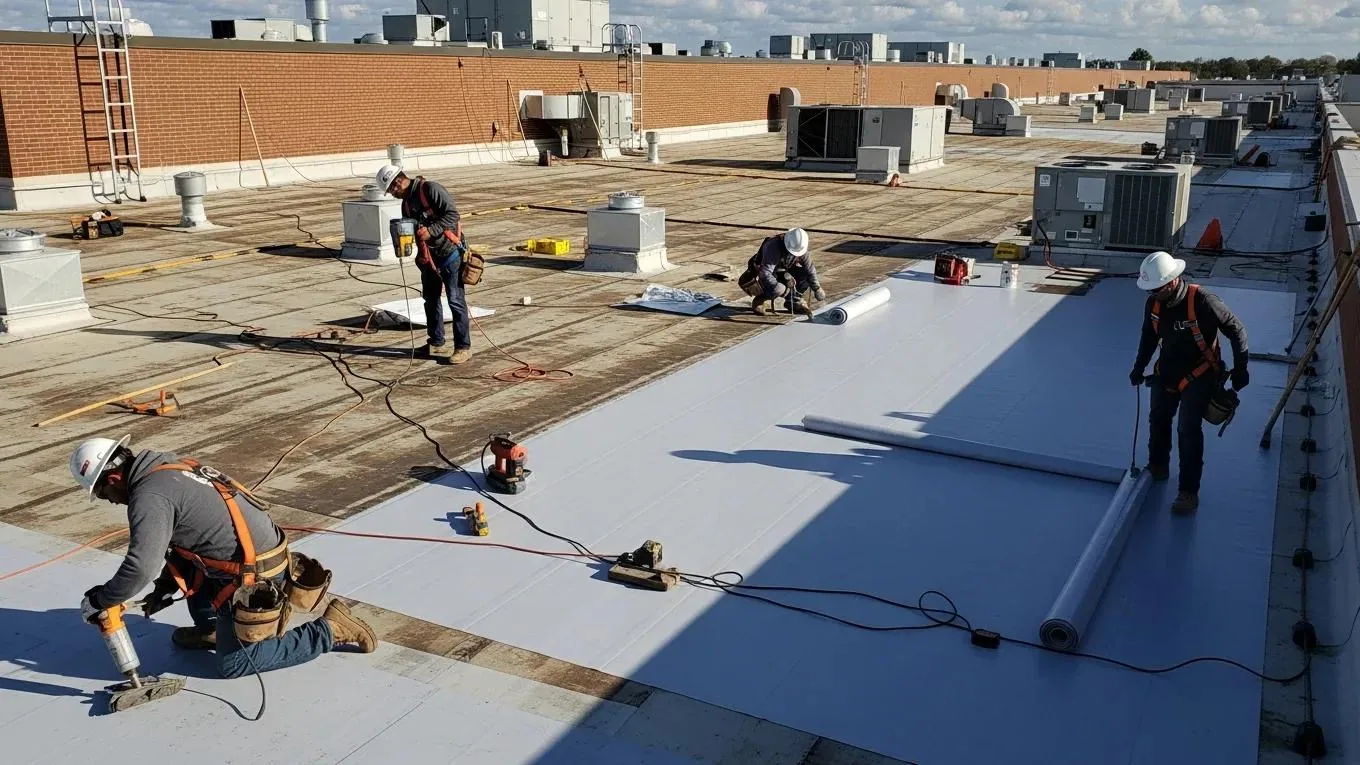
A puncture can be smaller than a coin and still pass water into insulation or a ceiling. We locate the cut, scrape, or impact mark, check the surrounding membrane for stress, and identify whether the substrate below is dry and stable. The repair must cover sound material and remain compatible with the roof system. A patch placed over contaminated, wet, or loose membrane can conceal the damage without restoring the assembly.
Longview's industrial reach includes the Bar-K park fronting US 80 and the aviation-oriented airpark at East Texas Regional Airport. Those industrial and aviation settings can involve frequent rooftop servicing and varied access rules. We ask about recent work, equipment servicing, wind events, and where the leak appeared, then inspect the actual roof zone.
Find the puncture and check its surroundings
We look for cuts, sharp impact points, dropped-tool marks, open fastener holes, damage from carts, and abrasion around access paths. The crew records the size and location and checks nearby seams, curbs, drains, and prior patches for separate defects. A puncture may have a clear point of entry, while water can still travel away from that location before it appears inside. We document both the surface damage and any confirmed interior path without treating the first visible mark as the only issue.
Rooftop work by mechanical, electrical, solar, or communications contractors can change the membrane after a roofing repair. We ask which trades have accessed the roof and whether temporary walk pads or staging were used. A roof inspection can record the wider area and repair history, while seam-failure work addresses a lap that has separated rather than a puncture through the field.
Determine whether water reached the insulation
We inspect for moisture migration, soft cover board, blistering, staining, and membrane movement around the opening. If the substrate looks affected, the report identifies a controlled test location and what the opening can confirm. We do not assume that a dry-looking top surface means the insulation is unaffected, and we do not label concealed material wet without evidence. The owner can approve a test or accept a clearly stated limit on what was verified.
Longview's humid summers can make a puncture time-sensitive when water has entered the roof assembly. A moisture survey can help select a test zone when conditions support interpretation. The survey is a screening tool; direct confirmation may be necessary before insulation is removed or retained. We photograph the sample location and close the test opening so the investigation does not create a second exposure.
Restore the surface without creating a new weak point
The repair method depends on whether the membrane is thermoplastic, rubber, bituminous, or another assembly. We clean and prepare the material, remove incompatible residue where necessary, and attach a patch that reaches sound substrate and meets the system detail. A thermoplastic field may require a welded repair; an EPDM detail may use a compatible adhesive and cover strip. The actual method follows the product and conditions present rather than a universal patch recipe.
We check the finished repair for adhesion or weld quality and document the test appropriate to that system. If punctures cluster around a walkway, equipment route, or maintenance platform, the owner may need a traffic-protection detail after repair. TPO system information and coating restoration describe different assemblies and should not be treated as interchangeable repairs. A coating does not automatically close a puncture when the substrate or membrane needs a patch.
Keep the scope limited to confirmed damage
A single puncture with stable surrounding membrane can often be repaired locally. A broader scope may be justified if the field is brittle, multiple openings appear, insulation is wet, or the deck has been affected. We measure the repair area, photograph the material removed, and note whether the substrate was inspected. If an adjacent area remains covered or inaccessible, it stays outside the confirmed scope until evidence supports extending the work.
After a wind event, a loose item may have struck the roof or a service panel may have shifted. The property record can preserve timing, photos, and other observations, but the roof inspection documents only the conditions visible at the site. A wind-damage evaluation can inspect related edge movement, and commercial roof repair can address a separate failure elsewhere on the building. We keep each repair tied to its roof zone.
Protect the repaired area from repeat traffic
Closeout should state the roof route and any temporary restriction on walking or equipment service. If a recurring service path crosses the repaired zone, the owner can consider compatible walkway pads or a relocated staging point. A mechanical vendor should receive roof access instructions before returning. We do not install a walkway over a drain, seam, or repair without confirming that the detail remains accessible and that attachment will not create another penetration.
Longview's South Longview area includes the I-20 gateway and redevelopment near LeTourneau University, while the US 80 corridor supports commercial activity across the city. Those broad service areas help route a visit; the roof plan and facility access rules determine where the crew can stage. A maintenance inspection can record traffic paths and new impacts on later visits. A roof-zone record in Longview Business Park or another district should identify repair date, material, and photographs for the next contractor.
Leave a repair record that identifies the exact zone
The closeout includes roof system, puncture location, repair material, surface preparation, photographs, and the field check completed. If test material was removed, it states what was observed below the membrane. Any condition that still needs confirmation remains on the recommendation list with a clear next step. Facilities staff can use this record to compare future water calls and confirm whether a new mark is at the same location or another roof zone. Retain the product name and warranty information alongside the work order so later roof traffic can be evaluated against the repair detail.
Send the roof plan, reported leak area, recent rooftop work, and equipment access rules before requesting service. We will coordinate the inspection boundary and return a repair description tied to the assembly. If the roof has an active opening, note the affected space and any temporary protection already applied so the crew can bring the right materials.
Document the puncture with a scale reference and note nearby rooftop traffic, service routes, stored materials, or sharp-edged supports. The suspected cause belongs in the report only when site evidence supports it. Check the membrane around the opening for cuts, displaced material, or a second defect, then determine whether moisture reached lower layers. If access limits prevent that check, preserve the uncertainty in the recommendation and schedule a test rather than stating that the insulation is dry.
Commercial Roofing Questions
Can a small membrane puncture cause a large interior leak?
It can. Water may travel through insulation or along the deck before showing indoors. We inspect the opening and follow the likely path before setting the repair limit.
Will you test the insulation under a puncture?
If evidence suggests moisture below the surface, we propose a controlled opening or other suitable check and explain what it can confirm before proceeding.
Can other contractors use the roof after repair?
Yes, with access instructions and protection around the repair. The owner should share the repair location and avoid placing equipment or staging materials over the restored detail.
Do coatings repair punctures?
A coating may serve a different restoration purpose. A puncture usually needs a system-compatible patch after the opening and substrate are inspected.