
Commercial Edge Metal, Coping, and Gutter Repair in Longview, TX
Commercial Edge Metal, Coping, and Gutter Repair
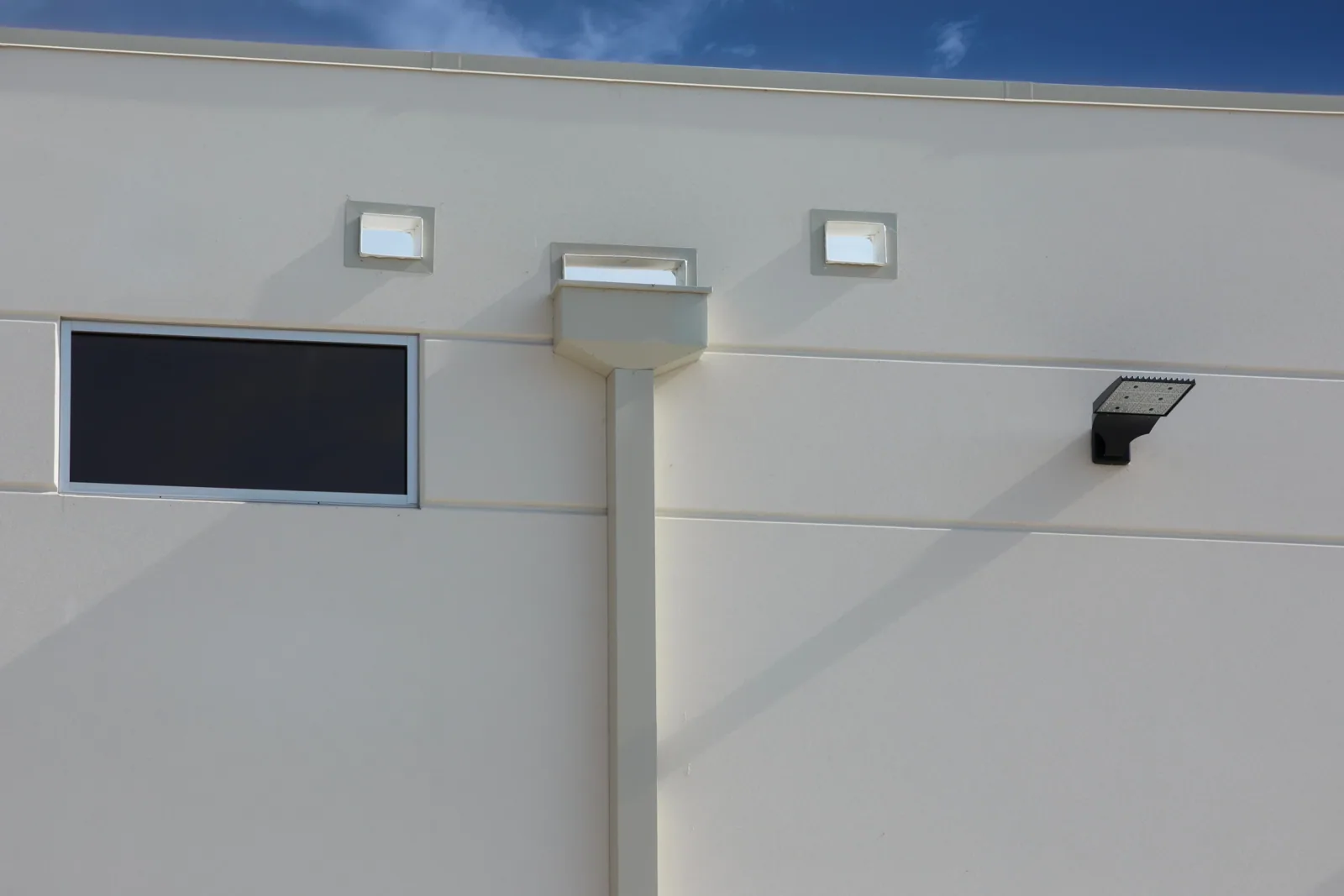
Water can enter a roof perimeter at a lap, corner, or termination even when the metal looks intact from the ground. In Longview, TX, we inspect coping, fascia, gravel stops, gutters, and downspouts as one water and attachment path. A detached cap, open splice, or blocked outlet needs a distinct correction. The repair boundary includes each connection that lets water behind the edge or wall.
Longview includes downtown offices and retail, industrial sites, and properties near US 80 and I-20. We record the parapet, edge profile, and drainage details at the property. Longview has documented hail and tornado activity. After a reported impact, we check the edge, splice, attachment, and membrane connection at the property. Our report states what was observed and whether adjacent membrane or substrate is involved.
Follow the termination into the roof assembly
We start where membrane, metal, and wall meet. The inspection checks cleats, fasteners, splice plates, sealant joints, counterflashing, and the way the roof membrane terminates beneath the edge. Metal can loosen from wind movement, thermal expansion, corrosion, poor attachment, or repeated service traffic. A bead of sealant over a moving joint is not a substitute for secure metal and a compatible flashing connection. We photograph corners and transitions because those are where straight runs, parapets, and elevation changes meet.
Inside, we compare the edge location with stains, wet insulation, or deterioration near exterior walls. Water entering behind coping can travel before it appears, and a façade leak may have more than one route. We inspect the upper wall and exposed metal, then mark any area where opening the assembly is needed to confirm the substrate. A roof inspection can connect edge conditions with seams, drains, and nearby penetrations when several symptoms occur in one roof zone.
Rebuild corners and coping joints as connected details
Coping protects a parapet top, and its joints must shed water while allowing movement. We check cap width, cleats, splice plates, end dams, corners, and attachment. A loose cover may need removal to inspect the blocking; top-fastening without checking the system can create new entry points. The scope names the profile and interface being rebuilt.
Parapet conditions also affect roof flashing height and termination. If the existing metal is removed, the membrane edge needs a secure tie-in before new coping is installed. We coordinate that work with roof membrane repairs and any counterflashing that overlaps the termination. Where rust or repeated separation extends along a long run, we map the affected segments and compare targeted repair with replacement of the connected metal system. The work should keep water outside the parapet and preserve access for later inspections.
Check gutters and downspouts as a continuous outlet
Gutters must receive roof runoff and carry it to a functioning downspout. We look for sagging hangers, open seams, corrosion, debris, outlet leaks, disconnected elbows, and discharge that returns water toward the wall. Flow can overshoot when edge slope directs it past the gutter. We identify whether the failure begins at the roof edge, gutter, outlet, or discharge route. A nearby drain or scupper is recorded separately in the drainage scope.
Longview’s warm season places repeated heat on exposed metal and sealant, so a joint that has opened may move as temperatures change. We check fastener condition and lap alignment before choosing a sealant or mechanical repair. Gutters should not be used to hide failed fascia or a loose edge cleat. If water has entered insulation or the deck near the perimeter, we describe that condition and define whether an opening is needed. The completed scope shows how water leaves the roof, rather than stopping at the first visible drip from the gutter.
Check exposed metal after a severe-weather event
After wind or hail, we inspect corners and perimeter, then follow the edge around curbs, equipment, and transitions. We look for lifted caps, displaced gravel stop, open joints, bent fascia, impact marks, exposed fasteners, and new water paths. Longview’s tornado record includes roof and tree damage. A post-event check is reasonable when weather has affected a property, but the past report cannot confirm current damage. Photos distinguish observed displacement from older corrosion where evidence allows.
Temporary protection may be needed if an open joint is admitting water before replacement metal can be fabricated. We mark the protected area and the limits of that measure, then schedule permanent work after safe access and material details are confirmed. A storm damage inspection can document the full roof zone where perimeter movement is accompanied by open seams or punctures. Repairs follow the actual membrane and edge assembly, not a generic detail that may not fit the existing roof.
Coordinate fabrication, attachment, and access
Metal profile, substrate, and attachment affect the repair. We confirm dimensions and note transitions where new sections meet old material. Custom coping fabrication can govern the schedule. The field plan explains how exposed edges stay protected during removal and how membrane remains secure at each shift boundary. For a larger change to edge geometry or roof drainage, the owner and design team can coordinate any required commercial plan review with Longview’s Building Inspection Division.
Work at the perimeter can affect sidewalks, loading lanes, parking, landscaping, and entrances below. Near Downtown Longview, we confirm pedestrian routes and any access limits before staging ladders or lifts. A facility in Longview’s industrial areas may have deliveries or equipment movement to protect. We set an exclusion area, agree on roof access, and identify what must remain operational. At closeout, photographs show the finished corner, splice, attachment, membrane tie-in, and outlet so the maintenance team can inspect the same points later.
Write the edge repair around a defined water path
A clear proposal identifies the affected perimeter run, metal profile, attachment method, membrane work, and connections to gutters or downspouts. It lists whether adjacent blocking, fascia, sheathing, or roof layers can be confirmed and calls out items that require opening. We separate temporary sealing from permanent metal replacement and state what happens if concealed deterioration extends beyond the initial repair. This helps the owner compare scopes by the details rebuilt and the water path restored.
Share roof plans, photos from the ground, leak locations, prior metal repairs, loading or sidewalk restrictions, and access hours. We will inspect the termination, trace runoff, and document which connection is allowing water or movement. For a building near US 80 or the I-20 corridor, the work plan still follows the roof’s actual edge and discharge route. A metal roof system review can help when the perimeter repair is part of broader metal roof work.
Commercial Roofing Questions
Can a loose coping cap be fastened back down?
Sometimes, if the cleat, blocking, substrate, and cap remain suitable. We inspect the attachment and the metal joints first. If a cleat has failed, the cap is distorted, or corrosion has weakened the run, simply adding fasteners may leave the water path and movement problem unresolved.
Why is water leaking below a gutter that looks intact?
The outlet, end cap, lap, hanger, or downspout connection may be open, or roof runoff may be moving behind the gutter. We trace the path from membrane edge to discharge and check for water staining at the fascia and wall. The repair follows the first failed connection confirmed on site.
Do you replace all edge metal after storm damage?
Not automatically. We map displaced and impacted areas, inspect attachment, and compare them with sound adjacent sections. A local replacement can work when stable tie-ins exist; longer runs may need broader work if movement or corrosion continues past the visible defect.
Can you repair the membrane at the same time?
Yes, when the scope includes the membrane tie-in and the system can be prepared with compatible materials. We define how the membrane termination connects to new metal and how the work is protected while that interface is open. Hidden wet insulation or damaged substrate may expand the repair boundary.