
Commercial Wind Damage Roof Repair in Longview, TX
Commercial Wind Damage Roof Repair
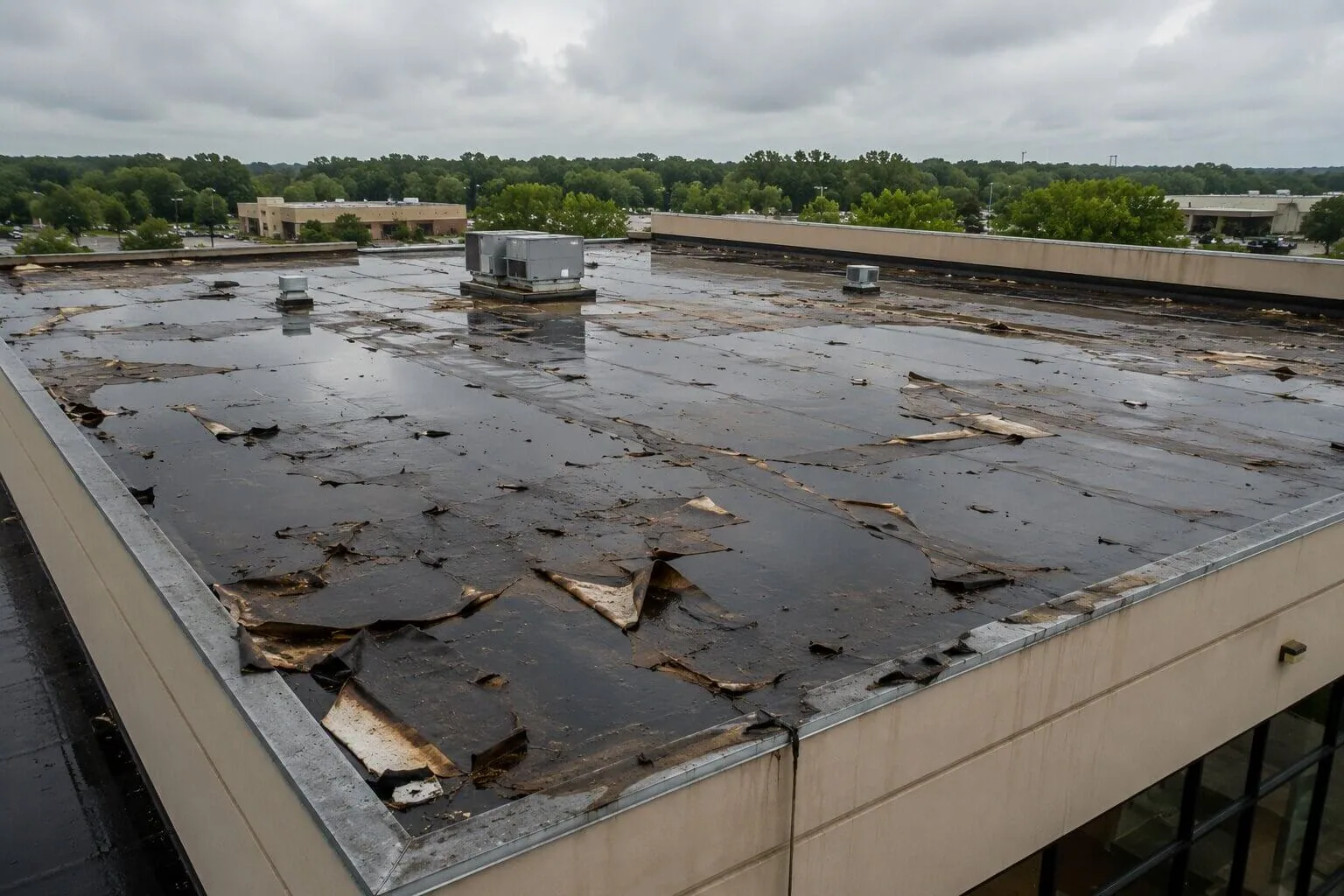
A lifted edge, displaced coping, or peeled membrane can let wind-driven rain enter before a leak appears indoors. We inspect the roof perimeter, transitions, seams, penetrations, and nearby drainage, then mark the area that requires immediate protection. The report separates visible movement from suspected damage beneath the surface. A broad interior stain is not a repair quantity by itself; field evidence must show where the assembly lost continuity and what remains secure.
Longview has recorded tornado and hail activity, including a 2008 tornado track reaching the city and a historic hail report in Gregg County. That history makes a prompt roof check sensible after a reported event, but only a site inspection can document current damage. Downtown Longview's varied commercial blocks and the US 80 and Marshall Avenue corridor present different access conditions than an industrial building near Longview Business Park. We confirm the building's roof plan, safe approach, and repair history before scoping work.
Secure loose material before the next rain
After wind, the first visit checks whether membrane, edge metal, flashing, or rooftop equipment presents an immediate hazard or an opening for water. We mark loose material, identify safe roof access, and use temporary protection only where it can be secured to the assembly. A temporary patch is recorded as stabilization, not permanent repair. The owner should keep staff and tenants clear of an unsafe roof edge and follow its procedures for wet interiors or electrical concerns.
We limit the exposed area and close the day with a tie-in that can resist expected weather. If the field condition requires a larger area to be lifted, the supervisor identifies the next opening and requests approval before proceeding. An emergency roof response can control an active opening, while tornado-related roof evaluation addresses a more extensive event footprint. The closeout tells the facility contact what was protected, what remains open, and when another check is needed.
Check the perimeter where wind loads concentrate
Wind can start a failure at a corner, parapet, roof edge, or loose termination and then pull at adjacent material. We inspect edge-metal attachment, cleats, coping joints, fasteners, sealant, and the membrane termination. If a component has moved, the report notes its position and whether substrate or blocking can be seen. A repair should restore the connection to a sound base rather than simply press the piece back into place.
We also look at transitions where a lower roof meets a taller wall or canopy. The wind path and water path may differ: a lifted corner can admit rain that travels laterally before reaching a ceiling. If the perimeter detail is stable but the membrane field shows an opening, the repair boundary should reflect that separate condition. Edge-metal and coping repair can address a failed termination, and flashing failure work handles a breached wall or penetration detail.
Separate the roof opening from the interior symptom
We compare a reported drip with roof slopes, nearby seams, curbs, drains, and past repairs. Water can follow a deck flute or structural member before it appears in an office, production space, or storage aisle. The inspection names the likely path and labels any area that needs direct confirmation. When the roof surface looks intact but moisture may be below it, a controlled test opening can answer whether insulation or deck is affected.
Longview's July normal high reaches about 94 degrees, so surface conditions matter when preparing an exposed roof for repair. A thermal pattern can help select a test area; we compare it with visible uplift, displaced metal, and an approved opening before including a wind repair. Leak investigation follows a specific interior report; moisture mapping can guide further inspection. We record confirmed entry separately from suspected damage so the owner can make a reasoned repair decision.
Tie the repair into stable roof material
A wind repair must account for the actual system, attachment, insulation, and edge condition. We remove loose or compromised material only within the approved boundary, check what is exposed, and extend the work if the substrate cannot support a reliable tie-in. The selected detail should follow assembly requirements and remain compatible with adjoining materials. If components are not identified, we note what documentation or opening is required before selecting a permanent method.
Where the surrounding roof is stable, a localized repair may restore the area. If inspection finds movement across several edges, recurring seam separation, or widespread deterioration, the owner may need a broader review. Commercial roof repair can address a defined failure, while replacement evaluation should follow evidence that reaches beyond one repair zone. We show photographs, measured limits, and untested areas so a provisional scope is not confused with confirmed quantity.
Preserve evidence for the property and repair file
The service record identifies when the roof was inspected, which zones were viewed, what moved or opened, temporary protection applied, and which details were repaired. Photographs show the condition before and after work. If an opening exposes wet insulation, damaged deck, or an earlier patch, we document it and pause for direction when the finding changes scope. The report distinguishes a roof observation from an event-cause conclusion when the evidence cannot establish timing.
For permanent work that changes the roof assembly or edge design, the owner and design team should coordinate the applicable Longview review before construction. For an asset file, condition reporting can retain measurements and repair history by roof zone. Include the person who verified roof access and any trade responsible for unfinished equipment restoration. For a commercial property in Downtown Longview, US 80/Marshall Avenue, or the business parks, send access rules and roof drawings before the visit.
Leave the building ready for the next weather window
Before leaving, the supervisor checks that the permanent or temporary tie-in is secure, loose material is removed, nearby drains remain open, and roof access is locked. The owner receives the repair limit and any remaining recommendation. If a separate contractor must restore equipment or interior finishes, the report names that handoff. After additional weather, we can return to inspect temporary protection and schedule permanent repair when conditions allow.
For service in Longview Business Park or elsewhere in the city, share event timing, interior reports, roof plan, prior repairs, and site contact. We will state what the crew observed, what work can be completed safely, and what evidence is needed before a broader project is considered.
Wind inspection should include corners, perimeters, transitions, and equipment supports, with each condition tied to a roof zone. Record whether the edge metal moved, fasteners backed out, or membrane separation is visible; do not infer concealed uplift from a loose accessory alone. If the roof is actively exposed, state which temporary cover protects the interior and when it should be rechecked. The permanent scope can then address the verified attachment and flashing conditions rather than relying on a broad storm label.
Commercial Roofing Questions
What should we do first after wind lifts roof material?
Keep people away from an unsafe edge, report active water entry, and arrange an inspection. Temporary protection should be secured and documented until a permanent scope is approved.
Can wind damage be repaired with a local patch?
Yes, when surrounding material and substrate can support a compatible tie-in. We inspect nearby details and show any evidence that points to broader work.
Will you identify the cause of the damage?
We document roof conditions and distinguish observation from inference. If field evidence cannot establish when or why a component moved, the report states that limit.
What records should we have ready?
Provide roof plans, maintenance history, prior repair photographs, the reported leak location, and any access or equipment restrictions.
Related roofing work.
- Emergency Commercial Roof Repair
- Commercial Tornado Damage Roof Repair
- Commercial Edge Metal, Coping, and Gutter Repair
- Commercial Roof Flashing Failure Repair
- Commercial Roof Leak Repair
- Infrared Roof Moisture Survey
- Commercial Roof Repair
- Commercial Roof Replacement
- Commercial Roofing in Longview Business Park, Longview, TX