
Commercial Roof Seam Failure Repair in Longview, TX
Commercial Roof Seam Failure Repair
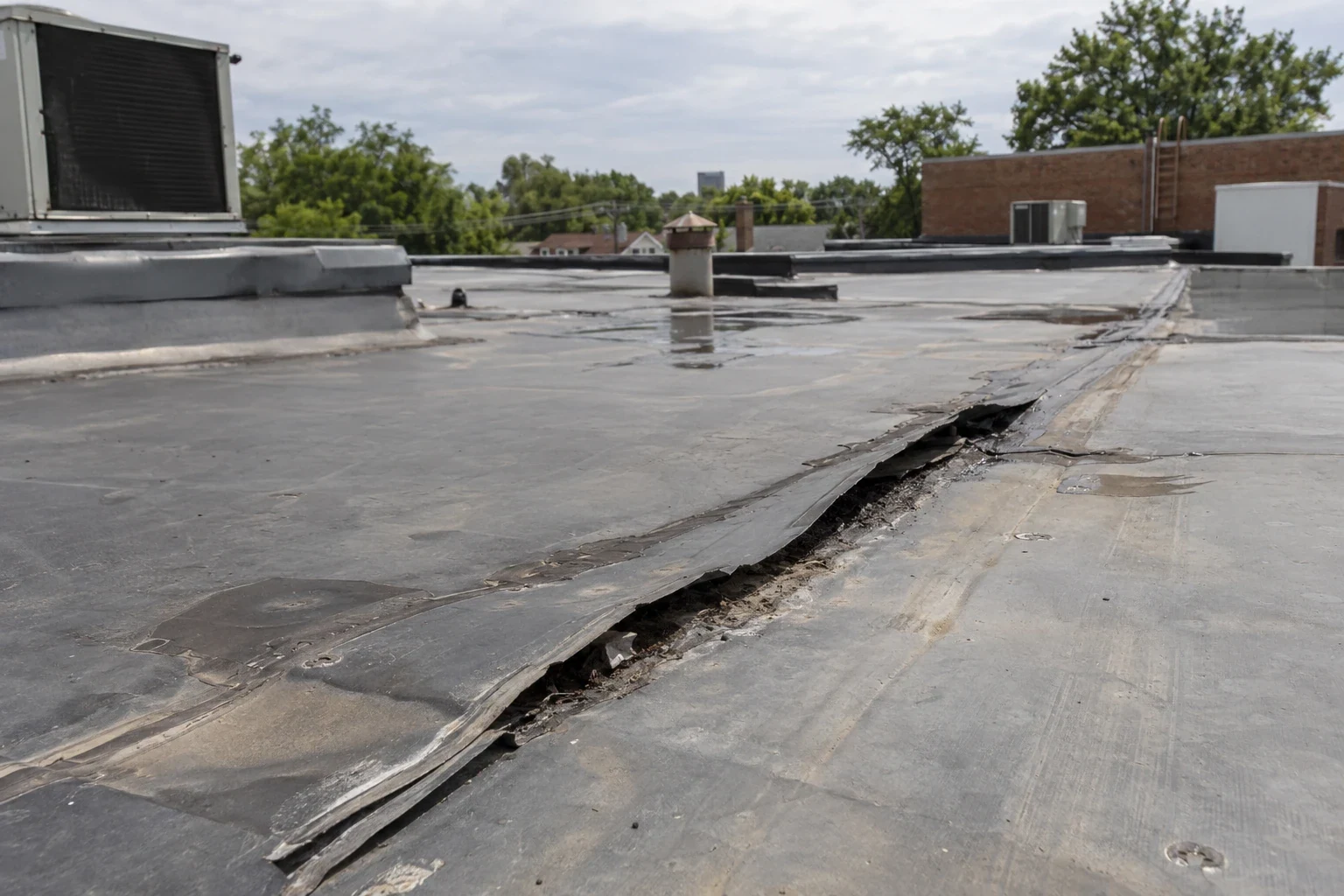
An open roof seam creates a direct path into the assembly, but the visible split may be only one part of the failure. We inspect the separated edge, adjacent membrane, substrate, and prior repairs to learn whether the seam lost adhesion, weld strength, or support. The repair boundary should reach material that can accept a sound tie-in. We document what is exposed and avoid treating a bead of sealant as a permanent fix when the seam itself needs restoration.
Longview's hot season brings sustained roof-surface heat, while thunderstorms can test a compromised joint with wind-driven rain. That climate shapes work timing; it does not identify which roof has a seam defect. A building in the US 259 industrial corridor, Downtown, or South Longview still needs an assembly-specific inspection. We confirm membrane type and installation details from records or field observation before choosing a repair method.
Determine why the seam opened
We inspect the full length of the split, including the beginning and end points, adjacent laps, corners, penetrations, and any change in roof plane. A seam may have poor bond, contamination, excessive movement, incompatible prior repair, or a substrate that has shifted. The report notes what can be seen and whether the surface is dry enough to evaluate. If water has reached beneath the membrane, we mark the likely area for confirmation rather than assume the visible split defines the wet boundary.
Mechanical stress can make a short separation continue to grow. We look for repeated openings along the same line, wrinkles that pull at the lap, edge movement, and fastener patterns where visible. A roof inspection can map nearby conditions, while puncture repair is a separate scope when the membrane field has been cut or struck rather than separated along a joint.
Use a repair method that fits the roof system
Thermoplastic seams, adhered membrane laps, mechanically attached systems, and built-up roof seams do not share one repair procedure. We identify the system and check the manufacturer's detail requirements before selecting heat welding, adhesive, cover strip, or another approved method. The surface may need cleaning, drying, or removal of incompatible material. If the roof records are incomplete, we state how the system can be confirmed without guessing from color alone.
A hot-air weld needs clean, suitable material and controlled temperature; an adhesive lap needs compatible surfaces and cure conditions. We verify the finished bond using the appropriate field check and record any area that could not be tested. A TPO system review addresses heat-welded seam considerations, while EPDM assembly guidance covers a different seam approach. The manufacturer's instructions govern the actual assembly, and the property team should retain those requirements with the repair record. A probe check is performed at multiple points along the repaired section when the method permits, including the start and end of the new bond. If an edge cannot be tested without damaging the lap, we document that limit and use the approved field verification instead.
Check beneath the split before closing it
Water may have moved along the insulation or deck from the seam before reaching an interior finish. We compare reported locations with roof slope, adjacent laps, drains, and the direction of the membrane's support. If the material is visibly wet or soft, we document that finding and propose an opening at a location likely to answer the remaining question. A repair that covers wet insulation without addressing it can leave the owner with an unresolved condition.
Longview has humid summers, so an opening is protected and closed carefully while work proceeds. We note whether the test confirmed dry or wet material and where the result applies. A moisture survey can guide test placement when surface conditions permit, and leak tracing can connect a ceiling report to a seam or another detail. Screening and field confirmation are recorded separately.
Extend the repair only as far as the evidence supports
A localized seam repair is appropriate when the adjacent membrane, substrate, and bond remain serviceable. If separation continues, the sheet is brittle, or multiple laps have lost attachment, we measure the affected area and explain whether a wider recover or replacement review is justified. The report differentiates a known repair quantity from an allowance for concealed material. The property owner can approve a focused correction, additional test, or larger evaluation based on that evidence.
If the scope extends into assembly, insulation, or drainage changes, have the design team confirm the required Longview review before committing material or construction dates. For repeated openings after a wind event, wind-damage assessment can examine the wider edge and field. A planned maintenance inspection can check repaired seams and document movement after the next service interval.
Record the seam repair and its test
Closeout should identify the system, seam location, approximate repair length, method, materials, surface preparation, photographs, and field check performed. We note weather or access limits that affected the work and identify any segment left for a later test. If another trade crosses the seam or installs equipment nearby, the facility record should mark that detail for coordination. A future leak call can then be compared with the exact repair rather than treated as a repeat of the original defect. Keep the record with warranty and maintenance files so a later roofer can confirm which system and repair method are present before applying another material.
For buildings near Longview Business Park, the US 80 corridor, or Downtown, share roof plans, repair history, system documentation, and interior reports. We will use those records to locate the joint, inspect its support, and provide the next action in terms the facility team can verify.
Arrange access for a seam evaluation
Tell us the roof system if known, the seam location, when separation was first seen, any active leak, and whether prior work covered the same joint. Let the site contact identify roof access, rooftop equipment restrictions, and areas that cannot be opened during normal operations. If the seam is near a drain or wall, include that in the request so the field review can include adjacent details.
We will inspect the joint, confirm the material where possible, and explain what the repair can address. If more evidence is needed below the membrane, the estimate will show that test separately and state how it changes the next decision.
Where a seam runs past several roof zones, inspect the full affected length and note where the bond or weld changes. A short opening at one point can be tied to movement or a nearby penetration, so the report should show the adjacent field and not just the isolated close-up. Confirm the repair preparation and field check under the system instructions. If several separated areas fail in the same zone, map each one before deciding whether a localized repair still fits the observed pattern.
Commercial Roofing Questions
Can an open seam be repaired without replacing the roof?
Often, when the membrane and substrate beyond the split remain suitable. We inspect the full separation and adjacent laps before setting a repair boundary.
How do you choose between welding and adhesive?
The roof system and manufacturer detail control the method. We identify the assembly, prepare the surface, and use a repair approach compatible with its material.
Could water from a seam appear far away indoors?
Yes. Water can move through the assembly before reaching a ceiling. We compare the interior report with roof slope and nearby details, then identify any test needed.
What should we keep after the repair?
Retain the system name, repair location, method, photographs, test result, and any follow-up recommendation with the facility's roof plan.