
Commercial Roof Coating Restoration in Longview, TX
Commercial Roof Coating Restoration
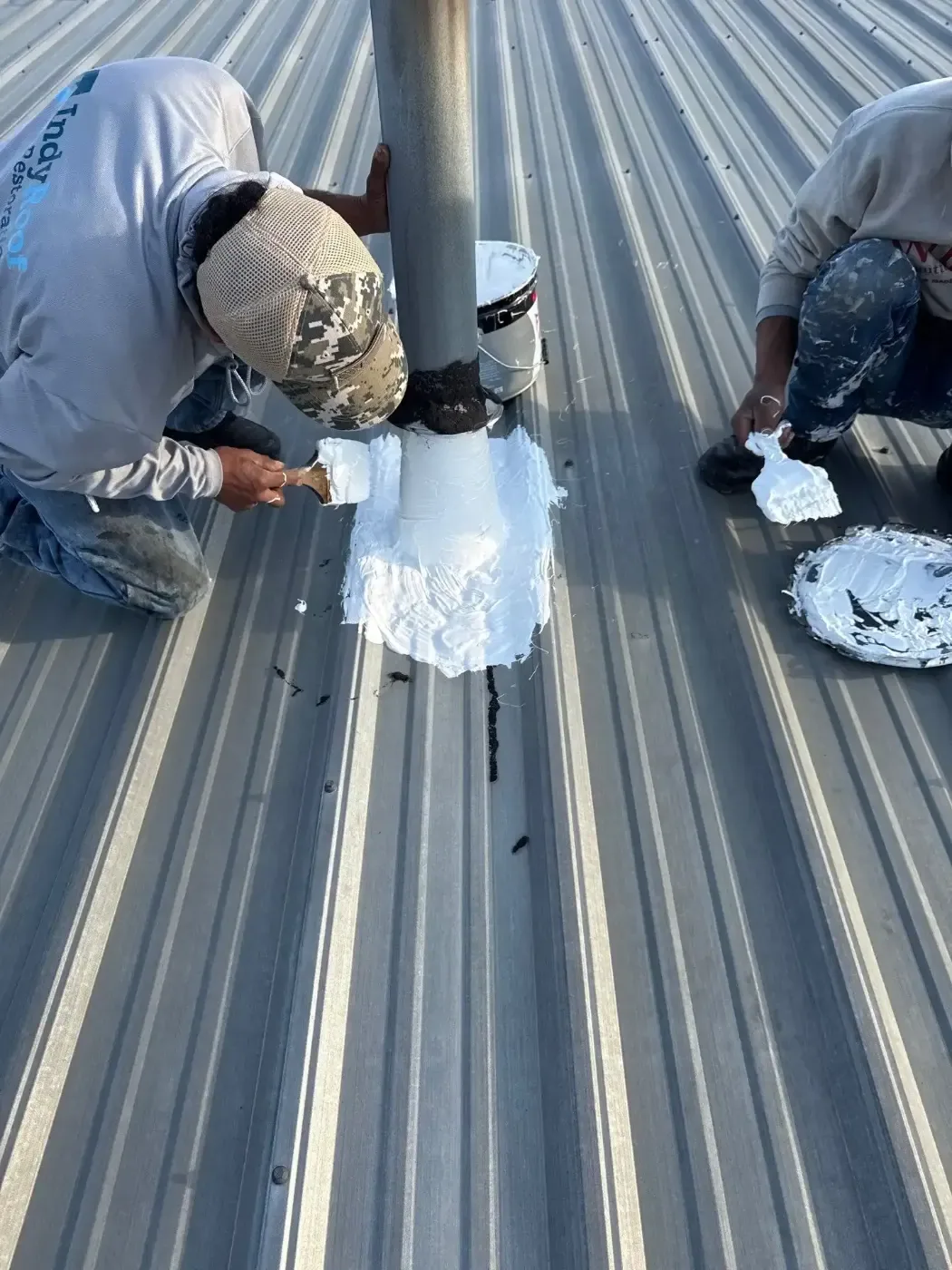
A roof coating is a finish over an existing assembly, not a substitute for repair. In Longview, TX, we first determine whether the membrane, insulation, and details below it are dry and stable. We inspect seams, ponding, chalking, contamination, and prior repairs, then open areas where the layers are uncertain. Trapped moisture or a moving substrate rules out coating until corrected.
Longview’s hot summers make surface temperature, adhesion, and cure timing central to the work window. A Longview Business Park warehouse may have dense equipment and service paths; a roof near the I-20 corridor may have different access and drainage. We evaluate each zone and list preparation, repairs, coating system, application requirements, and weather limits.
Confirm the membrane and substrate are ready
The roof must provide a stable base. We check attachment, open seams, wet insulation, deck movement, and cover board condition. Oils, loose granules, old coatings, algae, and embedded dirt can weaken adhesion. We identify the membrane and coating history, then run the system’s preparation and adhesion checks. A test area that releases, blisters, or exposes moisture changes the plan before broad application.
Infrared patterns can point toward wet insulation, but weather and construction affect their meaning. We confirm decision-changing areas with test cuts and record each opening and repair. A moisture survey can map candidate zones; a hands-on roof inspection checks details a scan cannot evaluate. Neither replaces physical confirmation when the roof layers determine whether coating is suitable.
Repair first, then prepare the surface
Details must be watertight before the roof field is coated. We repair open seams, flashing, loose edge metal, cracked pitch pockets, and punctures with materials compatible with the assembly. At drains and scuppers, we check the membrane connection and keep the water opening clear. Low insulation or a blocked path causing ponding needs correction first. The scope states how the surface will be washed, dried, and protected.
Edges, walls, curbs, skylights, and pipes need coating details that match their movement and material. Reinforcement cannot stabilize a moving curb or replace damaged metal. A penetration and skylight flashing repair may precede field application. If prior patches are incompatible or failure is widespread, we compare restoration with replacement rather than coating uncertain layers.
Match the coating to the roof and exposure
Silicone and acrylic coatings do not behave the same way. Silicone can be considered where persistent water exposure is a concern, while acrylic systems depend on drainage and suitable weather windows for application and cure. Product chemistry, substrate compatibility, surface preparation, reinforcement, and specified application thickness all affect performance. We identify the proposed system and show where each material is used, including at seams and penetrations. The coating should not be selected by color or a broad claim about reflectivity without checking the roof assembly, drainage, and intended maintenance.
Longview’s climate has hot summers and documented severe-weather events. We plan application around surface temperature, humidity, wind, and rain timing, and we define what conditions require the crew to stop. A fresh coating exposed to rain before cure can be damaged; direct heat can affect handling and work windows. After a documented tornado or hail event, we inspect the roof before coating so concealed impact or uplift is not sealed over. Our silicone coating work or acrylic coating work follows the selected system’s preparation and application requirements.
Protect occupied operations during restoration
Restoration still involves washing, staging, roof traffic, odors, and access limits. We coordinate roof entry, live equipment, overspray and runoff protection, and public routes. In Longview's industrial business parks, loading and production windows can shape staging; Downtown Longview may require tighter public-area controls. The sequence identifies each work zone and how a partial application is secured at day’s end.
We confirm equipment limits and protect air intakes, vehicles, landscaping, and walkways. If the forecast changes, work pauses before moisture is trapped or material is applied outside its limits. A phased occupied-building plan sets daily access and protection. The facility team receives notice of work areas and temporary restrictions.
Write the restoration boundary clearly
A sound proposal distinguishes coating preparation from roof repair. It lists the field area, test locations, surface preparation, repair details, coating type, reinforcement, application thickness, and the conditions required for installation. It also identifies excluded areas, such as damaged metal or saturated insulation that cannot be restored by coating. If concealed conditions appear after cleaning or test cuts, we photograph the finding and review the added work before changing the scope. This keeps the work connected to actual roof conditions and avoids calling an incomplete repair a restoration.
Some systems require reinforcement at seams, changes in plane, or penetrations. We identify those locations and the preparation each one needs before field coating begins. The scope also gives the crew a hold point if cleaning exposes a split, delamination, or wet substrate that was not visible during the first walk. That condition is photographed and reviewed before coating continues over the affected zone.
The City routes commercial project and site-plan review through Building Inspection, under its currently adopted construction codes. We document the proposed roof assembly for coordination with City reviewers and the design team when required. A coating project should also address maintenance after installation, including how the surface will be inspected and how future repairs will be made with compatible materials. A photo-backed condition record documents preparation, completed repairs, and the finished film so the owner can compare the roof at later inspections.
Decide whether restoration fits the service horizon
Coating can extend the usable service of a sound assembly when the field and details can be prepared and repaired, but it does not reset every component to new condition. We explain the remaining risks, what the work addresses, and which areas remain outside the restoration boundary. If roof access will be difficult later or equipment plans may change, those constraints belong in the decision. We compare restoration with a recover or tear-off based on substrate condition, roof height, drainage, operating needs, and the owner’s planning horizon.
Closeout photographs show surface preparation, repaired details, coated areas, and exclusions needing follow-up. We record product and application information for the roof file. Share the roof plan, coating history, leaks, equipment restrictions, and work hours. We will verify whether the surface can accept coating and mark what is ready, what needs repair, and what should be removed.
Commercial Roofing Questions
Can a coating stop leaks on a roof that is already wet?
A coating cannot dry wet insulation or correct a deteriorated deck. We locate moisture, open the assembly where needed, and remove or replace affected material before evaluating the remaining surface. If moisture is widespread, a recover or replacement may be more suitable than covering the field.
How do you know whether the coating will adhere?
We identify the existing roof and any prior coating, prepare representative areas, and run the compatibility or adhesion checks required for the proposed system. A test that releases or blisters changes the plan. The proposal records surface preparation and the result that allowed work to proceed.
Will the coating fix ponding water?
It will not correct a settled roof, blocked drain, or poorly placed overflow. We trace the drainage path, inspect the drain connection, and determine whether slope correction or repair is needed first. The coating goes on only after water-management defects are addressed in the scope.
What weather conditions can delay coating work?
Surface temperature, humidity, wind, and rain timing can affect preparation, application, and cure. We set daily work limits from the selected system requirements and current roof conditions. If rain could reach uncured material or moisture remains on the surface, application waits until the roof is ready.