
Commercial Skylight and Penetration Flashing in Longview, TX
Commercial Skylight and Penetration Flashing
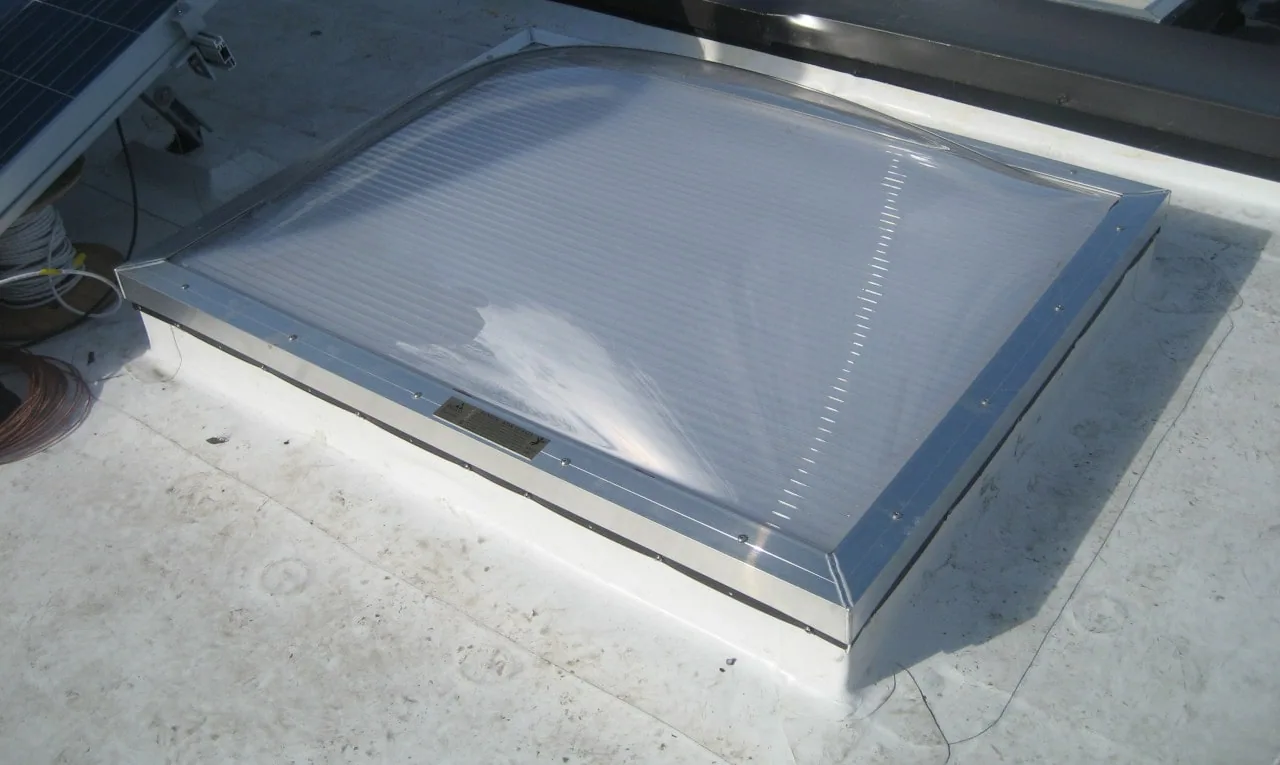
A wet ceiling below a skylight does not always mean the glazing itself has failed. Water may enter at the curb corner, fastener, counterflashing, nearby seam, or a separate penetration uphill. In Longview, TX, we inspect the full transition from roof membrane to curb or pipe, then compare it with the interior symptom and drainage path. The repair needs to reach the point where water crosses the assembly. Sealing only the visible crack can leave a lifted flashing leg, wet insulation, or a second opening untouched.
Longview’s hot summer conditions place regular movement and heat exposure on sealants, boots, and metal around rooftop equipment. The city also has industrial and distribution properties, healthcare facilities, offices, and retail buildings, each with a different mix of roof penetrations and access controls. At a Longview Business Park facility, equipment service paths may cross a dense roof field; in Downtown Longview, skylight and wall transitions may occur near occupied spaces. We inspect the actual curb, boot, or support before choosing a repair material.
Trace the entry point around the whole detail
We inspect every side of the skylight or penetration, checking glazing, curb corners, fasteners, counterflashing, boots, clamps, and nearby membrane. Water can travel beneath the surface or along the deck, so we compare roof slope, drain direction, and wet insulation. A leak-focused roof inspection can include nearby seams and transitions when the visible detail does not explain the entry path.
Previous sealant matters. We look for incompatible layers, cracks, poor adhesion, open corners, and repairs that bridge a moving joint. A new bead on top of loose material may fail with the next cycle of expansion and contraction. If moisture may extend beneath the field, we mark a test area and explain what opening will confirm. The report separates the defect observed at the surface from any concealed insulation or deck condition that has not yet been verified.
Repair the curb, glazing, and membrane connection
Skylight repairs start by determining which component is leaking. The glazing may need attention, but the roof work often centers on the curb corners, metal flashing, or membrane termination. We inspect whether the curb is stable, whether the flashing rises to the required height, and whether water can pass behind a counterflashing or along fasteners. A loose frame or damaged curb cannot be corrected by stretching membrane across a moving joint. We define the repair based on the component that failed and the material interfaces around it.
Where membrane must be opened, we remove enough material to reach a sound tie-in and confirm substrate condition. Wet insulation is removed to the documented repair boundary, then the curb or flashing is rebuilt before the field is closed. If the existing system is TPO or PVC, seams require compatible welded details; EPDM and other systems use their own flashing methods. A TPO roof assembly and EPDM assembly cannot share one generic patch detail. We show the system and tie-in in the scope.
Build pipe and equipment flashing for movement
Pipe boots, conduit, supports, and equipment curbs move differently from the roof membrane. We check for cracked boots, loose clamps, split pitch pockets, unsupported piping, and sharp edges pressing into the surface. If a penetration is close to a walkway or service route, repeated foot traffic may have damaged the surrounding membrane. We locate the entry path and determine whether the existing boot can be replaced or whether the support arrangement also needs correction. A curb and equipment support repair can address attachments that keep stressing the flashing.
New penetrations need coordination before cutting the roof. Set the opening, curb height, support, service clearance, and flashing detail before installation. A trade’s sealant or sleeve does not complete the roof connection. The proposal defines interface responsibility and protection if installation spans visits. Where City plan review applies, we provide roof details for owner coordination.
Account for heat, rain, and access
Longview’s July normals reach daily highs near 94 degrees Fahrenheit. Surface temperature affects sealant handling and membrane movement, while rain can interrupt preparation or expose an opened curb. We work when the roof can be cleaned and dried as required, protecting any opening if conditions change. After severe weather, we inspect for impact, lifted covers, loose flashing, and attachments before defining a leak repair.
Access must also protect the occupants and the roof. A skylight can present a fall hazard even when it is not part of the leak, so we identify a safe walking route and keep materials clear of glazing. At occupied buildings around Downtown Longview, we coordinate any work above public paths or sensitive rooms. At industrial properties, equipment shutdown and service access may be restricted. A work sequence for an occupied building can define daily limits, roof routes, and interior protection for the repair area.
Set repair limits around confirmed conditions
The flashing scope identifies the skylight, pipe, curb, or support and the layer needing repair. It lists removal limits, substrate checks, compatible materials, and the tie-in. If moisture extends beyond the visible detail, we state how to confirm the boundary and review concealed findings. Each repair start and stop is marked for the owner.
At closeout, we photograph the prepared surface, corners, clamps, curb flashing, finished seams, and surrounding roof zone. The written record names any excluded condition requiring follow-up. For recurring leaks, a roof inspection can compare the repaired detail with nearby penetrations and prior leak notes. A condition report with photos gives maintenance staff a reference for future visits and helps locate the same roof feature without relying on an interior ceiling mark.
Bring the roof detail and interior evidence together
The roof plan and interior leak location help us compare likely transitions and select any needed test opening. Existing system drawings can help match the repair to the installed assembly. If the roof record is incomplete, we document what is visible and identify the remaining question.
Share leak locations, skylight or equipment details, photos, previous repair notes, access limits, and operating hours. We will trace the water path and repair the curb, boot, or membrane tie-in that is confirmed to be failing. For commercial buildings in Longview or Downtown Longview, the scope remains specific to the property’s roof assembly and operations.
Commercial Roofing Questions
Does a leak beside a skylight mean the glazing needs replacement?
Not necessarily. Water may enter through the curb, flashing, membrane termination, nearby seam, or another roof detail. We inspect the complete perimeter and compare it with the interior symptom before deciding which component needs work.
Can a pipe boot be resealed instead of replaced?
That depends on the boot material, cracking, clamp condition, pipe movement, and membrane around it. We check whether the existing boot can accept a compatible repair. If it is brittle, split, or pulling away, replacing and flashing the boot provides a clearer tie-in than layering sealant over it.
What if insulation is wet beneath the curb?
We document the opening, remove wet material to a stable boundary, and rebuild the curb flashing over a dry substrate. If moisture extends beyond the first test area, we show the additional zone and get direction before expanding removal. Photographs record both the exposed condition and the completed tie-in.
Can you flash around equipment without shutting it down?
Often the roof detail can be repaired while equipment remains in service, but safe clearance and the flashing sequence must be checked. We confirm which units cannot be moved or shut down and protect their service paths. If the curb or support needs alteration, we coordinate that work before opening the roof.