
Acrylic Roof Coatings in Longview, TX
Acrylic Roof Coatings
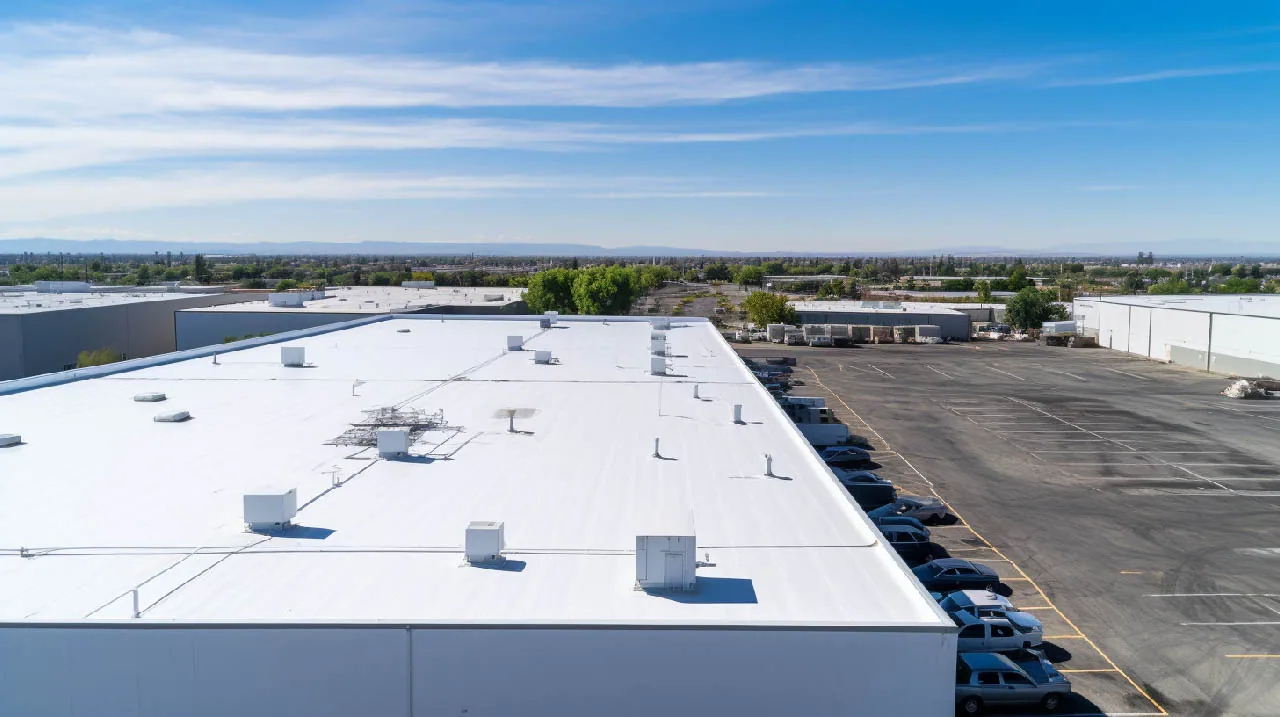
A water-based acrylic coating needs a prepared roof and enough dry time for the film to form before rain reaches it. In Longview, TX, we inspect the membrane, previous coatings, seams, flashings, and drainage before scheduling application. If water remains in a low area or the substrate is wet, coating over it can leave the underlying failure untouched. We identify what can be cleaned and recoated, what needs repair, and what requires a test opening before the owner commits to restoration.
Longview’s hot summers shorten or shift the practical work window because roof-surface temperature can differ from the air. Downtown properties may have public paths or occupied rooms to protect, while a Longview Business Park building may have loading and equipment routes to coordinate. Those settings shape access, not coating suitability. We inspect the individual roof, check the system requirements, and make sure the proposed coating fits the existing material and its water exposure.
Test the roof surface before selecting acrylic
Acrylic adhesion depends on a compatible, clean surface. We identify the existing membrane or coating and check for chalk, loose granules, oils, dirt, algae, trapped debris, and prior patches. Representative preparation and adhesion tests show whether the new coating bonds to the substrate. If the film peels or blisters, we change the plan before applying it across the roof. Multiple coating layers can conceal incompatible materials, so we document the exposed sequence and determine whether removal or a different coating is needed.
Moisture testing is also part of the coating decision. Thermal patterns can help locate suspect roof zones, but a test opening confirms whether insulation is wet. We map the test, inspect the layers, and repair the opening after it is closed. A moisture survey can help choose sampling points, and a roof inspection checks the seams, penetrations, and surface details around them. The coating boundary stops where substrate condition or adhesion no longer supports the proposed system.
Repair seams, penetrations, and metal first
Loose seams, punctures, open flashing, and failed metal joints need repair before the field is coated. We prepare those details with compatible materials, reinforce them where the coating system calls for it, and verify that they do not move under normal service. Fabric embedded in a coating cannot stabilize a loose curb or replace a damaged roof edge. The scope marks which defects are repaired and how the coating transitions to a drain, skylight, pipe, wall, or parapet.
At drains, we clear accessible debris and inspect the bowl, clamping ring, membrane termination, and overflow path. An added coating can narrow an opening if material is allowed to build up at the bowl. A drain and scupper review identifies whether clearing, membrane repair, or a separate slope correction is needed. We also check areas where coating may run into an expansion joint or cover a service detail. Each transition gets a defined finish rather than a single field instruction to “coat the roof.”
Respect drainage and ponding limits
Acrylic systems often depend on positive drainage and may not be suitable for prolonged ponding. We map where water collects, inspect outlet and overflow details, and determine whether the low area comes from a blocked path, settled insulation, or roof geometry. A new coating can protect the surface but does not change the roof slope. If ponding remains, the proposal should address drain repair or slope correction before the coating application. We record the expected path toward each drain and note where runoff could reach a curb or wall transition.
Longview’s climate record shows typical July highs near 94 degrees Fahrenheit. Heat, surface moisture, and forecast rain affect cleaning, drying, application, and cure. We check current surface conditions and the system’s permitted work window each day. If rain arrives before the coating has dried, it may damage the film or require further preparation. For roofs along US 80 or the I-20 corridor, delivery and staging routes may affect when materials reach the roof, but application still waits for a suitable surface and weather window.
Compare acrylic with other protective coatings
Acrylic coatings are water-based and can be selected for appropriate substrates and drainage conditions. We check the existing membrane, prior coating chemistry, adhesion, surface texture, and intended roof exposure before recommending the system. The proposal states preparation, repairs, reinforcement, coat sequence, and application limits. If a test area does not bond or the roof retains moisture, another layer is not the answer. A restoration scope shows the repair work that must occur before the field receives coating.
Silicone systems have different exposure and ponding considerations, while a spray-foam roof depends on foam condition beneath its protective finish. We compare these options against the actual substrate, roof slope, maintenance access, and local application conditions. If the membrane or insulation is broadly compromised, a replacement scope may address the assembly more directly. A coating decision should include drainage, adhesion, and repair boundaries rather than material name alone.
Control the application area and dry-in
Cleaning and coating can affect roof access, air intakes, vehicles, landscaping, and occupied spaces. We agree on protection zones and work hours before mobilization. A commercial property near Downtown Longview may need pedestrian and tenant routes kept clear, while an industrial building may have loading windows or exhaust systems that remain active. We confirm roof entry, equipment shutdown restrictions, staging, and any surfaces that must be masked. The facility contact knows which areas are being cleaned, repaired, and coated.
Daily sequencing follows the time needed for the prepared surface to dry and the new film to cure. We define the section completed each shift and the protection required if rain threatens. If a wet area or loose layer appears during cleaning, we stop at that roof zone, photograph it, and review the additional repair before continuing. A phased occupied-building sequence can keep unaffected areas accessible while the coating cures.
Record the coating limits and future checks
Closeout images show the cleaned substrate, repairs, reinforced details, coat coverage, drains, and excluded areas. We record the coating product and application conditions for the building file. If an area could not be coated because of moisture, adhesion, or access, the report marks its location and next step. This record helps maintenance staff tell the difference between surface wear and an underlying seam, substrate, or drainage problem when the roof is checked again.
Share the roof plan, coating history, leak locations, ponding photos, equipment limits, and access hours. We will test the surface, define preparation and repair work, and confirm whether acrylic is suitable for the roof’s drainage and weather window. On a Downtown Longview roof, pedestrian access and tenant routes may set the protection boundary. Longview Business Park facilities can have loading and equipment paths to coordinate. We confirm each route with the property contact before starting. A photo-backed condition report preserves the coating boundaries and follow-up items.
Commercial Roofing Questions
Can acrylic coating be applied to any flat commercial roof?
No. The existing membrane, coating history, surface condition, moisture, and drainage all affect suitability. We identify the substrate, prepare a test area, and confirm adhesion before setting the scope. A roof with wet insulation or failed seams needs repair or removal first.
How does rain affect an acrylic roof coating?
The surface must be dry and the coating needs the system’s required time to dry and cure. Rain during that window can damage the film or require added preparation. We check the forecast and roof conditions before each application stage and stop at a protected boundary when needed.
Will acrylic correct an area where water stands?
Acrylic coating does not change slope or clear a blocked drain. We inspect the low point, outlet, and overflow to identify the cause. If ponding remains outside system limits, drainage or slope correction must be addressed before a coating is selected.
What does an adhesion test tell you?
It shows how the prepared substrate bonds with the proposed coating in the test area. The result can rule out a coating or require different preparation. The assembly inspection separately checks moisture, deck condition, drainage, and flashing before a coating scope is set.
Related roofing work.
- Infrared Roof Moisture Survey
- Commercial Roof Inspection
- Commercial Roof Coating Restoration
- Silicone Roof Coatings
- Spray Polyurethane Foam Roofing
- Commercial Roof Replacement
- Commercial Roofing in Downtown Longview, TX
- Commercial Roofing in Longview Business Park, Longview, TX
- Commercial Roof Condition Reports