
Silicone Roof Coatings in Longview, TX
Silicone Roof Coatings
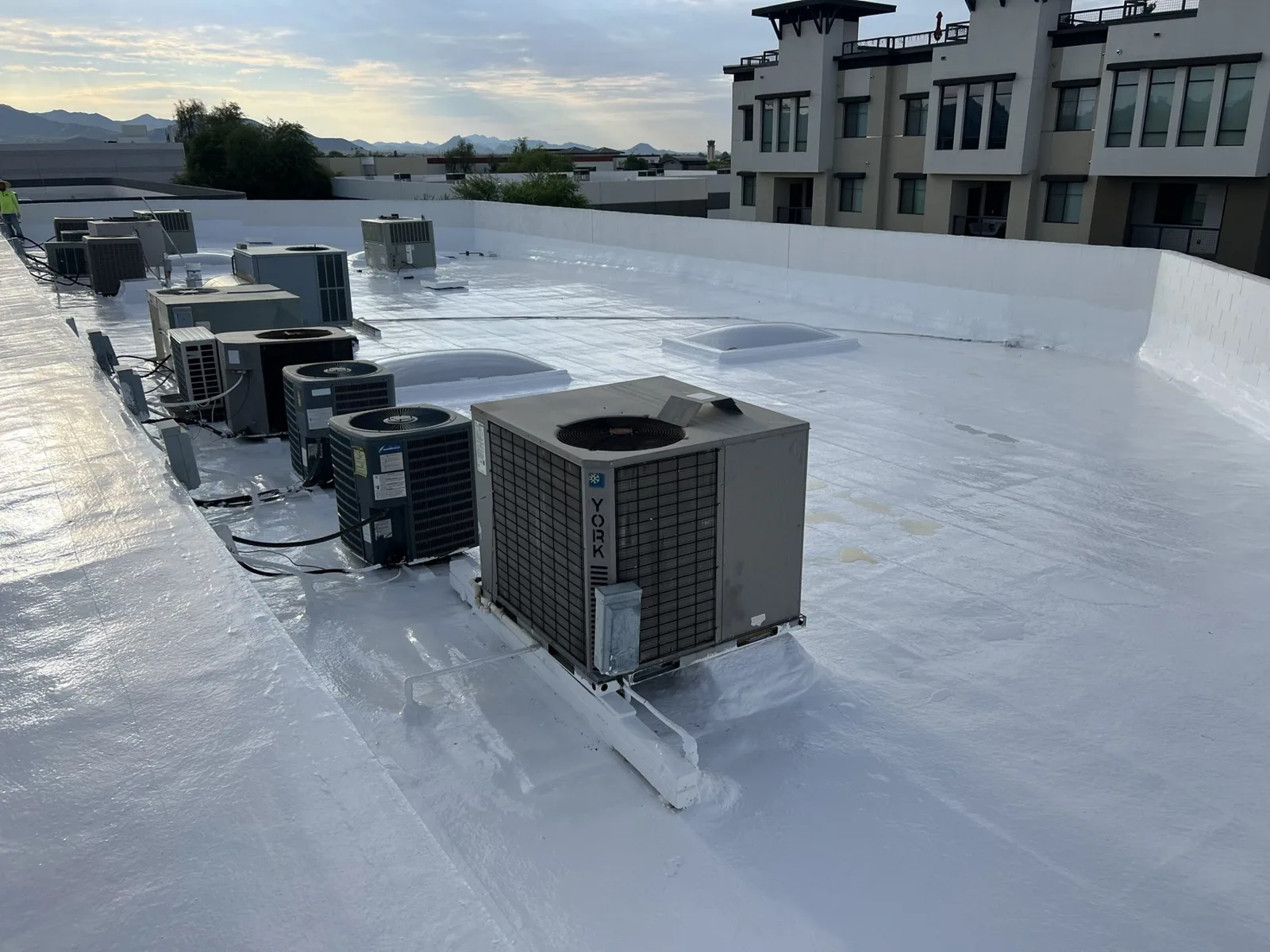
A silicone coating can form a new weathering surface over an existing roof, but it cannot make wet insulation dry or stabilize a loose membrane. In Longview, TX, we inspect the substrate, seams, flashing, drains, and prior coating before deciding whether the surface can accept another layer. The repair boundary needs to reach material that is clean, dry, and secure. If the coating is placed over moisture, failed seams, or moving metal, the defect can continue beneath the new finish.
Longview’s hot summer climate affects surface temperature, preparation, and the work window. Downtown commercial buildings and industrial properties near the I-20 corridor can have different rooftop access and operating limits. We confirm what system is present at each property, whether the membrane is compatible, and which transitions need repair before application. The recommendation describes coating preparation, repairs, drainage, and excluded areas instead of assuming that every roof can be restored with the same film.
Test the existing roof before applying silicone
Silicone adhesion depends on the substrate and preparation. We identify the existing membrane or coating, then inspect for chalking, loose granules, oils, dirt, algae, prior repair compounds, and areas where the surface has released. Representative adhesion tests show whether the system bonds after the required cleaning and preparation. If a test area blisters, peels, or exposes wet material, the coating plan changes. A roof with several incompatible coatings may need removal or a different system rather than another layer.
Infrared patterns can point toward wet insulation, but they do not confirm the layer condition. We select test openings where moisture would change the decision and record what each cut shows. A hands-on roof inspection checks seams, penetrations, and metal transitions, while a moisture survey can help map candidate areas. We confirm wet insulation by opening the assembly and continue removal to a dry, stable edge before the coating is applied.
Repair details before coating the field
Open seams, failed flashing, loose edge metal, punctures, and unstable curbs need correction first. We clean and prepare each repair using material compatible with the existing roof and the selected silicone system. A coating may require reinforcement at seams, penetrations, or changes in plane, but reinforcement cannot secure a moving curb or repair damaged decking. We identify which details are rebuilt, how they tie into the field, and what remains beyond the coating boundary.
Drains and scuppers need special attention because added coating can change the membrane connection or reduce an opening. We clear accessible debris, inspect the bowl and clamping ring, and check whether the roof surface directs water to the outlet. Persistent ponding may need slope or drain correction before application. Drainage repair should be scoped as a separate detail when a bowl, scupper, or low area contributes to water accumulation. Coating alone cannot correct a blocked pipe or settled roof zone.
Check standing water and the drainage path
Silicone systems are often selected for roofs where prolonged water exposure is a concern, but the system must be approved for the actual substrate and application conditions. We map where water stands, check the duration and likely cause, and review the product requirements before proposing a coating. A low area caused by insulation settlement or deck deflection remains after the film is applied. Water can also pond because of a blocked drain, raised patch, or incorrectly placed equipment support. The scope separates coating work from drainage or structural corrections.
Longview’s July climate normals include daily highs around 94 degrees Fahrenheit. Heat can affect surface temperature and preparation, while forecast rain can interrupt cleaning, drying, or cure. We schedule work only when the roof condition and selected system requirements align. At a Longview Business Park facility, service routes and equipment may shape staging; that affects logistics but does not identify the roof’s water path. We inspect the actual elevations and outlets and photograph conditions after the area has drained where possible.
Control preparation, coverage, and access
Before coating begins, the scope identifies wash or cleaning methods, dry-time requirements, repaired details, reinforcement, application coverage, and the surface conditions that stop work. We protect air intakes, rooftop equipment, vehicles, landscaping, and pedestrian areas from overspray or runoff. At industrial properties, production and loading schedules may limit where materials can be staged. Near Downtown Longview, public routes and occupied rooms below can require a controlled work area. The facility contact knows which roof zones are being treated and what access limits apply.
We check the roof surface rather than relying on air temperature alone. If moisture remains, wind carries debris, or rain threatens the application window, the crew pauses before coating. Each day ends at a defined dry-in boundary, with open repairs protected and materials secured. A roof coating restoration scope states how concealed conditions will be documented and how added work is approved. This sequence is especially important where coatings cross different membrane materials or roof zones with separate drainage behavior.
Choose silicone only when the assembly supports it
Silicone may fit a sound roof when the substrate is compatible, the existing details can be repaired, and drainage conditions meet system requirements. It is not a replacement for removing wet insulation or rebuilding failed edges. We compare the coating option with a new membrane or tear-off based on roof condition, repair frequency, equipment layout, access, and the owner’s planning horizon. If the existing system cannot pass adhesion tests, continuing with coating may create another layer that has to be removed later.
Acrylic coating systems have different water and weather limits, while SPF roofs pair a foam layer with protective coating and require their own substrate checks. We identify the proposed system and the surface it will cover. A replacement scope may be preferable where broad moisture or failed attachment is confirmed. The decision includes test results, repair limits, and drainage details, not just the coating chemistry.
Record what the coating protects and what it does not
Closeout photographs show the prepared surface, completed repairs, reinforced details, coated areas, and excluded conditions. We record product identification and application information for the building’s roof file. If wet insulation, failed metal, or a blocked drain remains outside the scope, the report labels the location and next action. A later inspection can then distinguish coating wear from a deeper substrate or drainage issue.
Share roof plans, membrane and coating history, leak locations, ponding areas, equipment limits, and access hours. We will test adhesion, inspect concealed conditions where needed, and define whether silicone is suitable for the surface. At Downtown Longview, public routes and occupied spaces below can affect staging. A roof visit at Longview Business Park may need coordination with equipment and loading paths. We confirm those limits with the building operator. A photo-backed condition report keeps the application limits available for maintenance.
Commercial Roofing Questions
Can silicone be applied over an existing roof coating?
Only after the existing coating is identified, cleaned, and shown to accept the proposed system. Adhesion testing helps confirm the bond. If the old layer is loose, contaminated, or incompatible, we specify removal or another repair path before coating proceeds.
Will silicone stop water from ponding on the roof?
It can protect a suitable substrate where standing water is allowed by the selected system, but it does not change roof slope. We check drains, overflows, low areas, and the cause of ponding. A settled area or blocked outlet needs a separate correction.
Do you coat over wet insulation?
No. We test areas where moisture would change the scope and remove wet insulation to a stable boundary. The opening is repaired and photographed. Applying silicone over trapped moisture would leave the underlying roof condition unresolved.
What weather conditions postpone silicone application?
Surface moisture, rain timing, temperature, wind, and preparation requirements affect application and cure. We check the selected system conditions each day. If the roof cannot be cleaned and dried or rain may reach uncured material, work pauses at a protected boundary.
Related roofing work.
- Commercial Roof Inspection
- Infrared Roof Moisture Survey
- Commercial Roof Coating Restoration
- Acrylic Roof Coatings
- Spray Polyurethane Foam Roofing
- Commercial Roof Replacement
- Commercial Roofing in Downtown Longview, TX
- Commercial Roofing in Longview Business Park, Longview, TX
- Commercial Roof Condition Reports