
Standing Seam Metal Roofing in Longview, TX
Standing Seam Metal Roofing
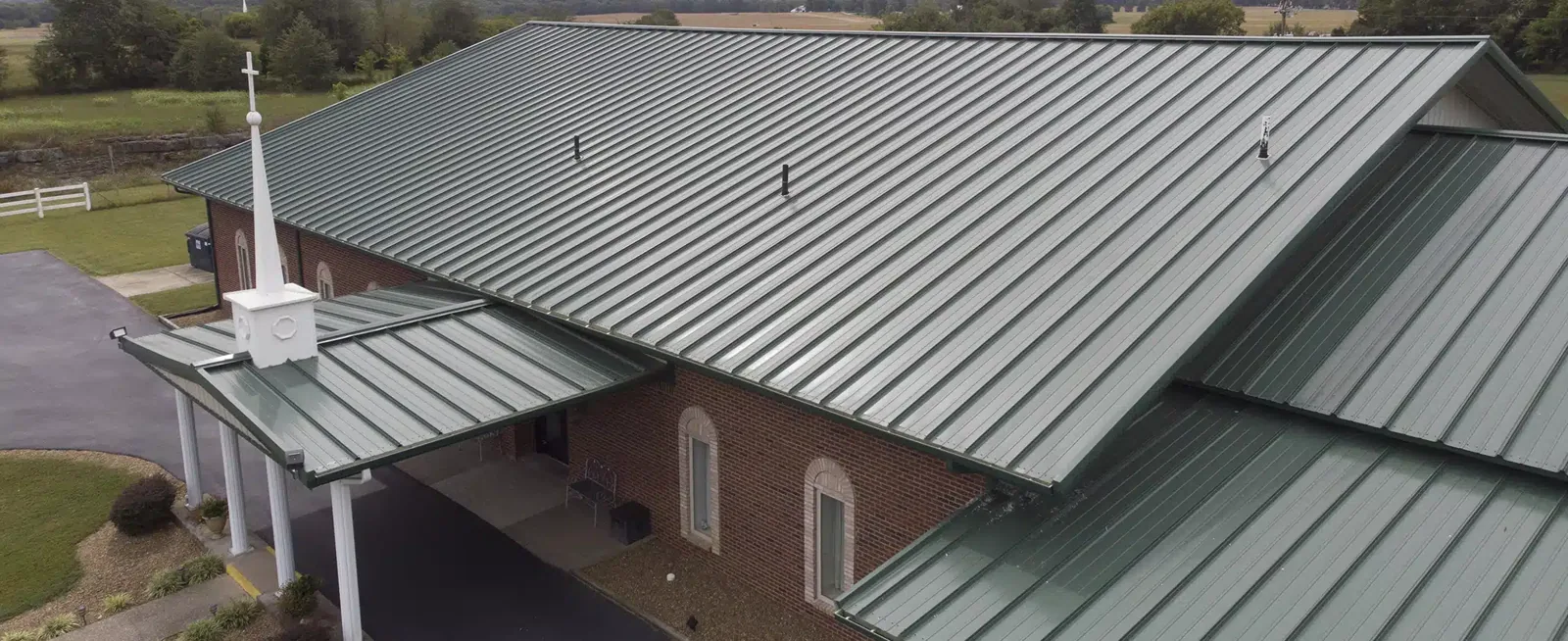
A standing-seam panel can move with temperature changes, but a clip that binds or a seam that opens can push stress into the roof detail. In Longview, TX, we inspect panel runs, clips, ridge and eave terminations, and penetrations before deciding whether a leak is local or structural to the assembly. To diagnose a leak, we connect a panel dent with an open seam, failed clip, or compromised underlayment and trace the path toward the interior symptom before proposing repair.
Longview’s climate combines hot summers with documented hail and tornado exposure. The local commercial stock includes industrial parks, aviation-related sites, downtown offices, and retail corridors. At the property, identify the panel profile, slope, material, and attachment before selecting the repair detail. For a building along US 80 or near East Texas Regional Airport, access and material handling may differ, while inspection still centers on the actual seam, clip, and water path.
Follow panel movement into the clips
Standing seam panels use concealed clips or attachments that allow the metal to move while holding the roof in place. We inspect the seam engagement, panel alignment, clip conditions where accessible, and any signs of oil-canning, buckling, or fastener pull-through. A panel that cannot slide as designed may load the eave, ridge, or penetration. If a clip has loosened or corroded, the repair must account for the supporting purlin or deck and not simply seal the seam above it. We identify what can be seen and what needs access beneath the panel.
Panel length and movement also affect trim. We check eave closures, rake edges, ridge caps, valleys, end laps, and wall transitions for open joints or displaced closures. A metal edge and flashing repair may need to be coordinated where roof panels meet coping or gutter systems. If movement has pulled a panel from its termination, we record the point of restraint and how the repair will accommodate future expansion rather than locking the entire run in place.
Inspect seams, laps, and concealed water paths
Mechanical seams can loosen, flatten, or separate, and sealant inside a seam can age or lose contact. We look for an open joint, disturbed seam geometry, water staining, and residue that may signal repeated moisture. Roof pitch and panel direction determine how water reaches the eave, valley, or penetration. A leak near an end lap may travel along the panel ribs before entering below. We follow that route and compare it with the interior location, then use a controlled test when a concealed seam condition cannot be confirmed from the surface.
Corrosion needs context. Scratches, cut edges, dissimilar metals, trapped debris, or standing water can damage a coating or panel over time. We document the surface loss and determine whether the metal remains sound enough to clean and repair. Hail dents may be visible without puncture, so we check coating, seams, and attachment before describing damage. Longview’s weather history supports post-event inspection, but only observed conditions at the property belong in the repair scope.
Flash pipes and equipment without pinning the panel
Skylights, pipes, curbs, and conduit interrupt the panel run and can restrict movement. We inspect the curb or boot, metal flashing, closures, and nearby seams for cracks, loose fasteners, and water entry. A detail that spans a moving rib may fail when the panel expands and contracts. We check whether flashing connects to the panel profile and whether support brackets transfer load into the roof. If an equipment base is unstable, new sealant will not correct the movement. The repair must address the mechanical support and the water seal as related but separate conditions.
Interior stains can be difficult to trace because water may follow a purlin or underlayment before appearing. We inspect the area upslope and around adjacent fasteners, then identify any access needed from below. A penetration-flashing repair can rebuild a curb or pipe detail, while a roof inspection checks the surrounding seam and drainage path. The report marks confirmed leak points and any concealed areas that remain untested.
Check hail and heat without mistaking appearance for failure
Longview’s July climate normals approach 94 degrees Fahrenheit for daily highs. Repeated heating moves the panels and can expose a binding clip, loose seam, or poorly detailed transition. We inspect attachment and terminations where the metal meets parapets, curbs, gutters, and walls. After hail or a tornado warning that affected the property, we check panel surfaces, seams, clips, ridge details, and penetrations for specific damage. Longview's 2008 tornado track caused roof and tree damage in the city. At another building, an inspection after severe weather should document the affected roof zone, panel attachment, seams, and perimeter details.
The record separates dents from punctures, coating loss, open seams, or displaced attachments. We photograph the affected panel and note whether water has entered the assembly. A storm damage assessment can document the connected roof zones after severe weather. If metal is corroded or the seam cannot be returned to its profile, the scope identifies the affected run rather than treating every panel as failed. This helps the owner choose repair, panel replacement, or a broader retrofit.
Choose between panel repair and a retrofit
A local repair may work where the panel, clip, and supporting structure remain sound and a compatible detail can restore the seam. If corrosion is widespread, fasteners have failed across multiple runs, or the roof has repeated leaks at many transitions, isolated repairs may not address the system condition. We inspect exposed fasteners, purlins where accessible, underlayment, and panel laps before setting the work boundary. A targeted repair scope identifies the detail and material to be replaced.
Where an exposed-fastener roof is nearing its limits, a metal roof retrofit may add a new assembly over the existing panels if structure, moisture, and geometry allow it. A complete replacement may be needed when the deck or supporting members are unsuitable. Longview’s Building Inspection Division reviews commercial plans under adopted building and energy requirements, so substantial assembly changes need appropriate coordination. The scope states what is confirmed and which design questions remain. A coating is considered only after the metal details are stable; a silicone coating system cannot correct a loose clip or open seam.
Record panel runs and repair boundaries
Closeout photos show repaired seams, exposed clips, terminations, and rebuilt flashing. We identify panel run and roof zone, plus the limits of work. If a corroded area or suspected concealed leak falls outside the approved boundary, we note it separately. This record helps maintenance staff check the same seams and terminations later and compare future movement against the repair.
Share panel drawings, leak locations, previous metal work, interior photos, equipment restrictions, and roof access hours. We will identify the panel profile and attachment, inspect the water path, and define a repair or retrofit scope. For a property near US 80 / Marshall Avenue or East Texas Regional Airport Airpark, staging is coordinated around that building’s operations. A photo-backed report keeps the inspected panel locations available for follow-up.
Commercial Roofing Questions
Can a standing-seam roof leak even when the panels look intact?
Yes. Water can enter at a seam, clip, end lap, ridge, or penetration and travel along the panel ribs or underlayment. We inspect upslope details and compare them with the interior location. If the entry point remains concealed, a controlled test or access from below may be needed.
Do hail dents mean the standing-seam roof must be replaced?
Not by themselves. We check for puncture, coating loss, seam distortion, displaced clips, and water entry. The report identifies which conditions were observed and whether panel performance is affected. We set a replacement boundary when the inspection finds compromised seams, attachments, underlayment, or other conditions beyond a repairable detail.
Why are clips important on a metal roof?
Clips hold the panel while allowing designed movement. A binding or loose clip can strain seams, terminations, and penetrations. We inspect accessible attachments and note where the panel movement has damaged the supporting detail or needs access from beneath.
Can a standing-seam roof be coated instead of repaired?
Coating cannot correct a loose clip, open seam, failed termination, or corroded-through panel. We first repair metal and confirm the substrate is suitable. Any coating proposal needs its own surface preparation, compatibility, drainage, and detail review after the metal assembly is stable.