
Spray Polyurethane Foam Roofing in Longview, TX
Spray Polyurethane Foam Roofing
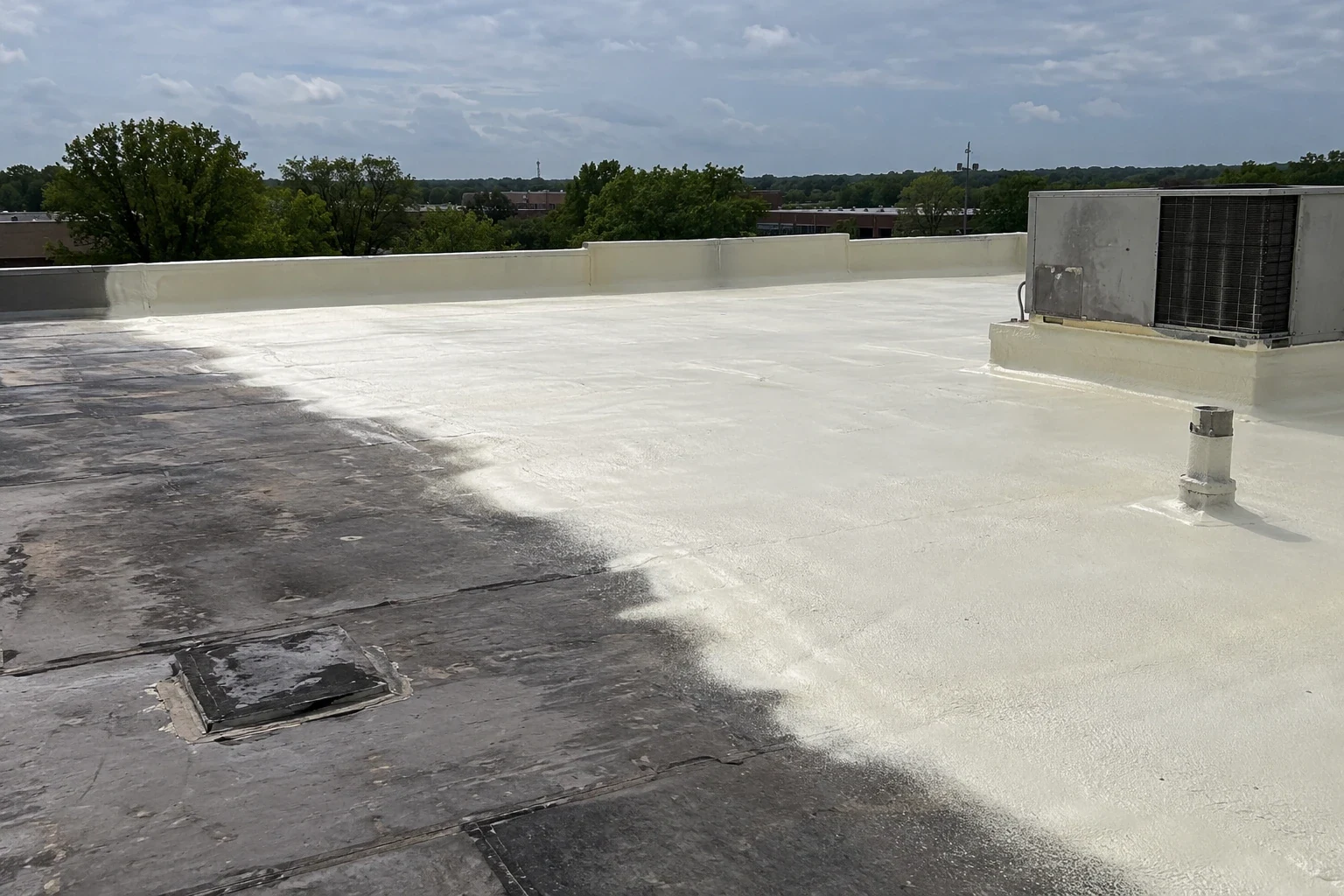
A blister in the protective coating over a spray-foam roof can expose foam to weather even when the field below still looks continuous. In Longview, TX, we inspect the coating, foam profile, transitions, and substrate before deciding whether to recoat, remove damaged foam, or replace a larger area. The roof must be dry and secure before new material is applied. We check for soft foam, cracks, punctures, poor adhesion, standing water, and exposed substrate, then mark a repair boundary that connects to sound material.
Longview summer highs near 94 degrees Fahrenheit make surface temperature and application timing important for spray foam and its protective finish. The city’s industrial parks and East Texas Regional Airport Airpark serve commercial and aviation-related activity. At each building, confirm the installed roof system, access and overspray limits, and protection at drains, curbs, and wall edges before planning SPF work. The application plan follows existing conditions and the chosen system requirements.
Confirm the foam remains bonded to the substrate
Spray foam relies on a prepared substrate and consistent application. We inspect for cracks, voids, delamination, crushed areas, water intrusion, and changes in foam depth that may affect drainage. At representative locations, we test adhesion or open the coating where the roof condition calls for it. The exposed foam should be dry and firmly attached; covering a loose section can trap moisture or leave the weak interface in place. We also examine the deck and old roof layers where access allows, especially where recurring leaks or movement appear.
Foam thickness can vary at transitions and low points. We compare the surface profile with drainage direction, curb height, and roof plans, then note areas that could hold water. If a moisture survey indicates a suspect zone, we confirm it with a test opening before making a removal decision. An infrared moisture survey can help select areas to inspect, while a hands-on roof inspection checks attachment, transitions, and protective coating. The report states what was measured and what remains concealed.
Treat the topcoat as the foam’s weather barrier
SPF needs a protective coating to shield it from ultraviolet exposure and weather. We inspect coating thickness where records allow, surface erosion, cracks, exposed foam, adhesion, and previous repairs. A worn topcoat may need preparation and reapplication, while wet or deteriorated foam needs removal and replacement before coating. We do not treat a fresh coat as a cure for trapped moisture or poor bonding. At seams and transitions, the protective layer must connect to flashing and remain continuous across changes in plane.
Silicone and acrylic coating systems have different water and weather characteristics. A silicone roof coating may suit a particular prepared substrate and drainage condition; an acrylic coating system has its own application and weather limits. We identify which material is proposed and how it meets the exposed foam, metal, and existing coating. A roof coating restoration scope lists preparation, foam repairs, reinforcement, application limits, and the details excluded from the field coating.
Correct ponding and transitions before spraying
Foam can be shaped to form slope, but new application over a settled roof does not automatically create a working drainage path. We check drains, scuppers, crickets, equipment bases, parapets, and overflow routes before adding material. Ponding may come from blocked outlets, a depressed deck, inconsistent foam depth, or a curb that interrupts flow. The scope identifies whether the correction belongs in foam, drain repair, or a design review. New material must not bury a drain bowl, lower flashing height, or close an overflow opening.
Longview has adopted current building and energy requirements for commercial projects. Changes to insulation, drainage, or roof assembly may call for review by City staff and the design team. We record foam depth, existing elevations, and proposed details so those questions can be resolved before application. Drain and scupper details also need closeout checks after application. If water keeps standing at the roof edge, the coating alone will not fix the flow path, and the report should identify that separate work.
Set the spray and recoat window around the site
SPF application requires controlled access, material handling, ventilation, and protection from overspray. We agree on roof entry, work-zone limits, wind conditions, air intakes, vehicles, landscaping, and occupied areas below. An active manufacturing or distribution operation may need clear loading lanes and a planned equipment window. Properties near Longview’s US 80 corridor can have customer and pedestrian paths to protect. The daily plan identifies where spraying occurs, how adjacent surfaces are masked, and how the foam or topcoat is protected if the weather changes.
Heat and moisture affect preparation, foam rise, coating adhesion, and cure. We check the surface and forecast against the selected materials rather than relying on air temperature alone. If rain threatens before the system has cured, work stops at a defined dry-in boundary. The facility team receives notice of access restrictions and return timing. A phased work plan can coordinate roof zones with ongoing operations when a full field cannot be treated in one sequence.
Repair foam locally or replace the assembly
A local SPF repair may fit when damaged foam is limited, the surrounding surface remains bonded, and the coating can be tied into sound material. Crushed foam, widespread delamination, active moisture, or recurring failure at several transitions can require broader removal. We mark the foam depth and substrate at test areas, then compare localized removal with a larger reroof. A replacement scope may be more appropriate when the existing deck or assembly cannot support a reliable spray application.
We also consider whether the foam profile preserves drainage and equipment clearance. A new coating adds a layer but cannot restore a damaged deck or loose curb. The written proposal shows removal, substrate prep, foam replacement, coating, reinforcement, and limits at metal edges and penetrations. A metal roof retrofit may be another path for an existing metal roof, but it uses a different support and water-management design. The recommendation follows the property’s actual roof and operating needs.
Keep application records with the roof plan
Closeout photographs show substrate preparation, foam repairs, coating coverage, drains, curbs, and terminations. We record product identification, application areas, weather conditions when relevant, and any excluded condition that still needs attention. If the crew found moisture or weak adhesion beneath the surface, the report identifies the test location and final repair boundary. Those records help the next maintenance visit distinguish normal surface wear from a deeper bond or drainage issue.
Share the roof plan, SPF or coating records, leak locations, equipment limits, overspray restrictions, and access hours. We will inspect the foam, substrate, drainage, and protective layer before choosing local repair or a broader application. A photo-backed condition report can preserve these details for a Longview property near East Texas Regional Airport Airpark or elsewhere in the market.
Commercial Roofing Questions
Can new foam be sprayed over an existing SPF roof?
Only after adhesion, moisture, surface preparation, and drainage are checked. We remove loose coating and damaged foam, prepare the substrate, and test the system where needed. Wet or delaminated areas must be corrected before new foam and protective coating are applied.
Why does spray foam need a coating?
The coating protects the foam from ultraviolet exposure and weather. We inspect it for erosion, cracking, exposed foam, and lost adhesion. When the topcoat fails, preparation and reapplication may be enough; damaged or wet foam below needs separate repair first.
Can SPF fix ponding water on our roof?
Foam can be designed to improve slope, but the existing deck, drain elevations, and overflow routes need review. We measure the low area and check the outlet before specifying added material. Structural deflection or a blocked pipe requires separate correction.
What site restrictions affect a spray-foam project?
Wind, air intakes, nearby vehicles, landscaping, occupied spaces, and equipment operations affect where spraying can proceed. We agree on protection zones and roof access before work. The sequence also accounts for cure time and a safe boundary if rain interrupts application.