
Commercial Roof Maintenance in Longview, TX
Commercial Roof Maintenance
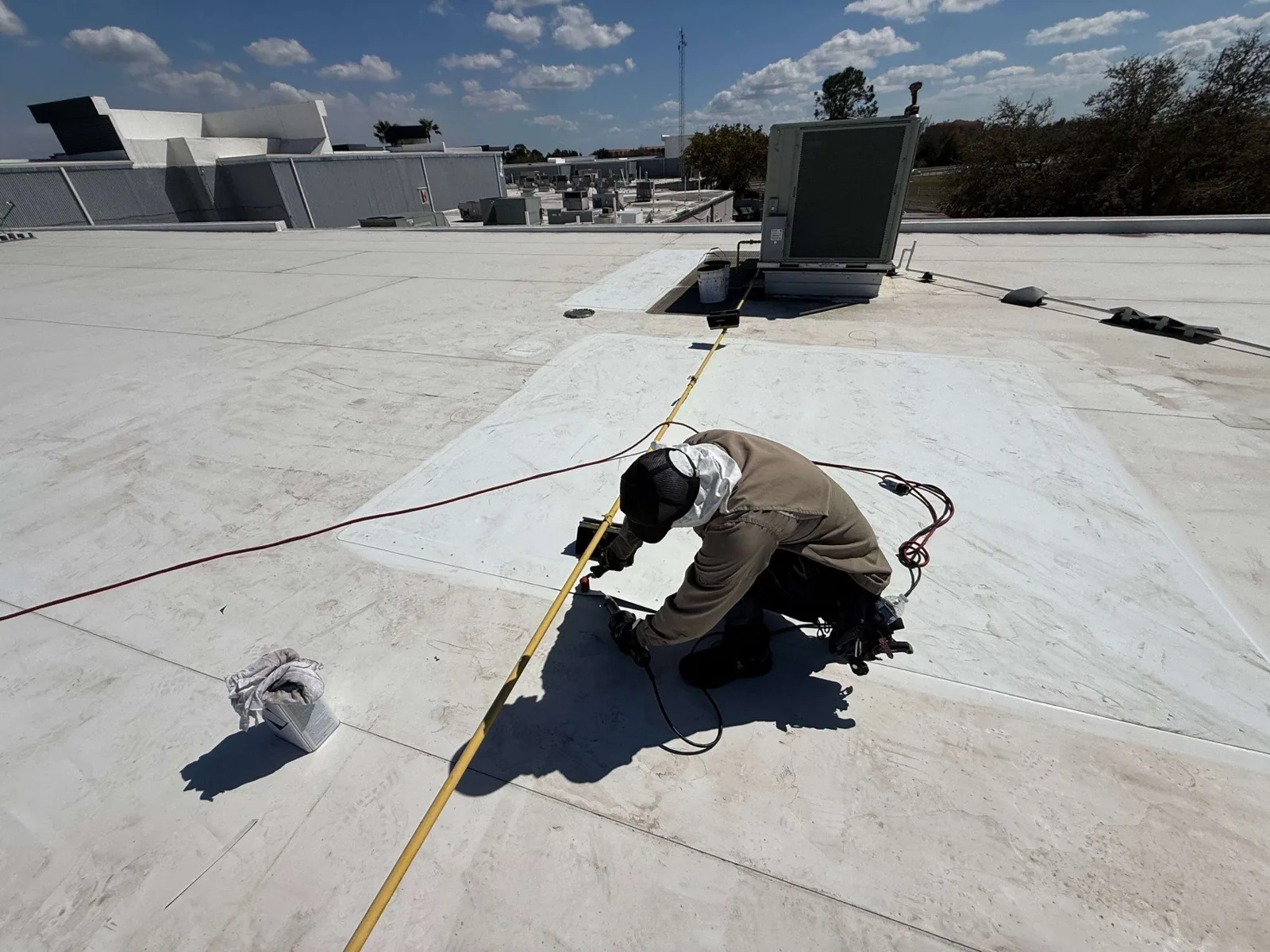
A drain that slows after every hard rain can load a roof with water long before a ceiling stain appears. Commercial roof maintenance in Longview, TX starts by tracing where water should travel, then checking the seams and transitions exposed to that flow. We inspect drains, scuppers, perimeter metal, penetrations, rooftop equipment, and prior repairs, recording what is sound and what needs work. That gives a facility director a usable picture of the roof zone rather than a checklist with no connection to the building.
July climate normals near Longview show typical highs near 94 degrees Fahrenheit. Longview Business Park includes industrial and distribution sites, while Downtown Longview has commercial buildings with different access needs. We tailor each visit to the assembly, layout, leak history, and operating schedule, then compare findings with prior records.
What the roof walk needs to establish
A useful inspection follows the water path from high points to each drain or scupper. We look for debris, standing water, loose strainers, failed clamping rings, displaced insulation, open seams, membrane punctures, and ponding that persists after drainage should have occurred. At curbs and pipes, we check corners, boots, sealant, pitch pockets, and nearby membrane movement. At edges and walls, we review metal laps, securement, termination bars, and flashing height. The notes identify roof zone and location so a maintenance team can return to the same detail without guessing which part of the roof was meant.
Interior reports help prioritize the roof walk but do not replace it. A recurring stain could reflect a failed penetration, water traveling under the membrane, condensation, or a problem outside the roof assembly. We compare it with the nearest roof details, recent weather, and any previous patch record. When the surface does not show whether insulation is wet, we mark a test area for further investigation instead of writing “monitor” without a reason. A focused roof inspection can add test openings or a more detailed condition report where the decision requires that evidence.
Separate housekeeping from repair
Maintenance includes simple tasks such as removing loose debris and clearing accessible drain strainers, but it also requires identifying defects that need a roofer’s repair. A blocked drain can be cleared; a split membrane at the bowl, loose clamping ring, or failed connection needs a compatible repair. We do not treat a temporary sealant smear as correction when the underlying metal, flashing, or membrane has separated. Each item is labeled as housekeeping, a defined repair, or a condition that requires opening the assembly. The owner sees the observed issue, its roof location, what happens if it is deferred, and the next action that would answer an unresolved question.
Equipment curbs deserve attention because service visits can bring tool traffic, shifted conduit, and changes to the flashing. We check whether service paths protect the membrane, whether supports bear evenly, and whether new work has left an unsealed penetration. If a curb detail needs rebuilding, the scope should address corners and tie-in surfaces as well as the visible crack. A curb and support correction can be scheduled with other planned work so one area is not repeatedly disturbed by separate visits. The maintenance record should note any change made by other trades between inspections.
Use Longview exposure to set priorities
Longview's storm history includes an April 1996 hail report and an EF1 tornado path across the city in 2008. After severe weather, check perimeter securement, rooftop attachments, impact marks, open seams, and metal details, then photograph the roof zones that need action. We photograph what is observed and distinguish fresh impact or displacement from older wear when the evidence supports that distinction. For a building near the I-20 corridor, wind-driven rain and storm debris can make drainage paths and edge conditions especially important to review after a severe-weather alert.
Between storms, summer heat can harden sealants and windblown debris can collect at drains. We inspect low points, expansion joints, equipment areas, and moving edges by roof zone. If a defect appears widespread, we map its extent rather than treating each symptom as a separate ticket. That record distinguishes scheduled maintenance from a condition needing immediate protection.
Keep a roof record that supports decisions
Each visit produces dated photographs, roof zones inspected, observed defects, completed repairs, and follow-up items. If equipment, unsafe access, or an operating restriction prevented inspection, we record that limit. Drain conditions and recurring ponding are noted with context, so one post-rain photograph does not stand in for a drainage diagnosis.
A photo-backed condition report gives facility staff a reference for work orders and budget discussions. Maintenance findings may support a capital plan when repairs cluster in one zone. We separate current conditions from future projections.
Fit maintenance to the building schedule
Roof access must work with daily operations. A distribution site may need docks and fire lanes clear; a medical office or school may need quiet hours and defined paths away from visitors. We agree on entry, escort, fall-protection requirements, equipment shutdown limits, and areas that cannot be crossed. If the roof is wet, hot, or affected by forecast storms, the visit may need to shift so inspection and repair can be performed safely. Where a repair is found during the walk, we mark its location, explain whether it can wait, and arrange approval before expanding the work beyond the agreed scope.
Longview’s Building Inspection Division reviews commercial building and site plans under the adopted codes. Planned alterations may need project-specific review. We document roof observations and repair details for the owner to coordinate with the City and design team; a maintenance visit does not replace plan review.
Turn findings into a workable next visit
A maintenance scope is useful when it says exactly what the next visit will accomplish. We can clear accessible debris, complete a defined seam or flashing repair, make a temporary weatherproofing measure, or open a limited test area to confirm moisture. The written scope identifies materials, limits, access requirements, and the condition that would trigger a change. If a repair cannot be completed in the same visit, we state what protection remains in place and when the permanent work should occur. That sequence is important during wet periods because a temporary measure can reduce immediate exposure without resolving the underlying assembly condition.
Share the roof plan, leak locations, maintenance reports, equipment limits, and operating hours. We will use them to focus the next roof walk. After severe weather, arrange a separate inspection instead of waiting for a routine cycle. The report will show what was checked, repaired, or left for follow-up.
Commercial Roofing Questions
How should the maintenance interval be set for our building?
We set it from the roof assembly, drainage behavior, repair history, access, and exposure rather than applying one calendar interval to every property. A recurring defect or a recently repaired detail may need a closer return visit. The written plan lists the roof zones and conditions that determine the next inspection.
Will a maintenance visit include small repairs?
It can, when the repair is within the agreed scope, the surface is suitable, and compatible materials are available. We separate included work from newly discovered conditions that require added authorization. Photographs show the prepared area and finished detail, so the repair is part of the roof record.
What should we do after hail or strong wind?
Arrange an inspection of the perimeter, seams, rooftop attachments, metal details, and drainage paths once access is safe. We photograph observed damage and note the roof zones checked. A weather report alone cannot confirm that a specific building has damage, so the recommendation follows field evidence.
Can the roof be maintained while the facility is operating?
Usually the visit can be sequenced around access and operating limits, but the route and work window need to be agreed in advance. We identify equipment that must remain live, rooms beneath work areas, and routes that cannot be blocked. A repair requiring an opening also needs a same-day dry-in limit.