
Duro-Last Commercial Roof Service in Longview, TX
Duro-Last Commercial Roof Service
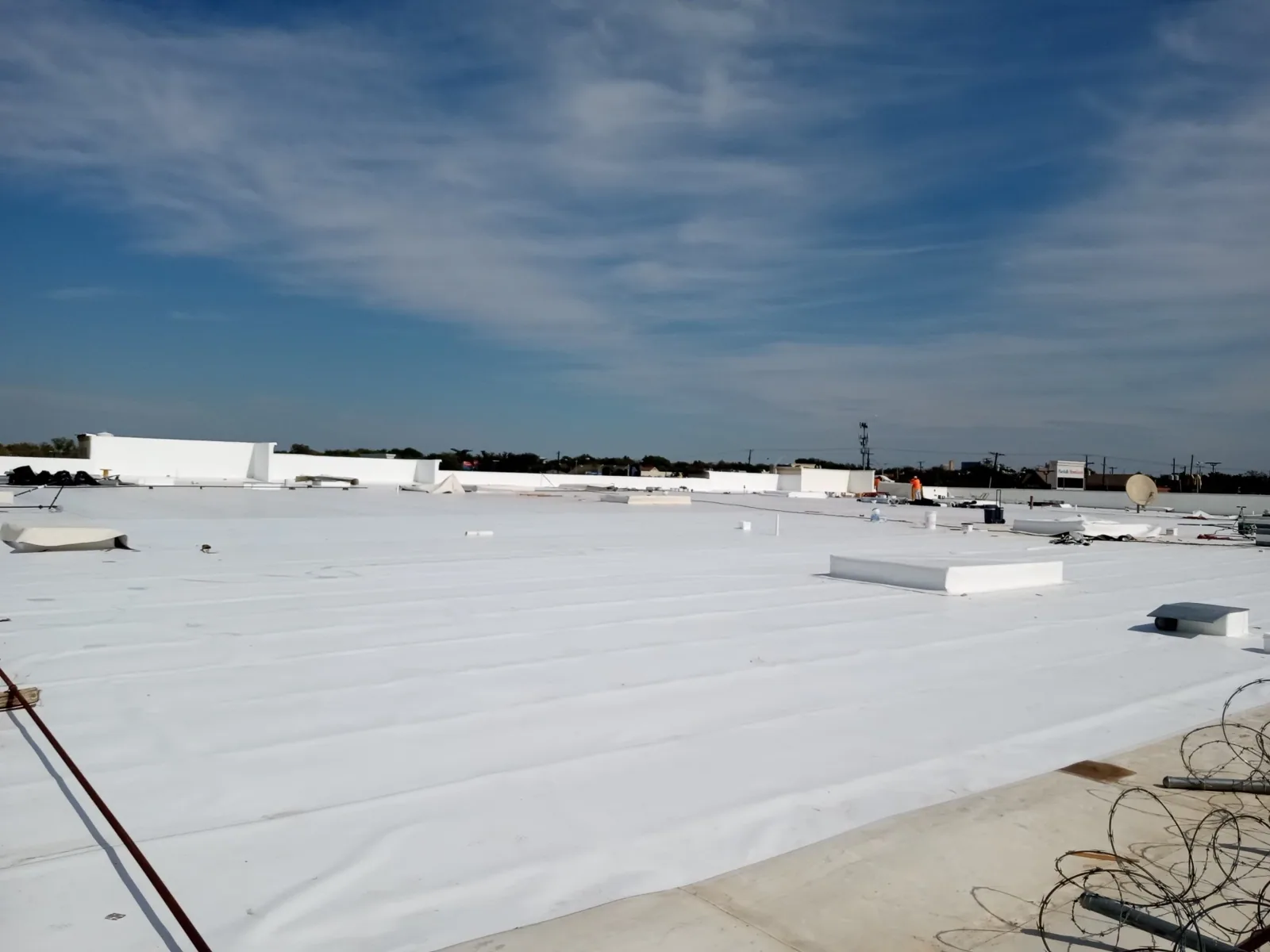
A separated seam, damaged corner, or roof opening beside a Duro-Last label needs a precise field review before repair material is chosen. We inspect the affected zone, compare visible construction with the project file, and mark the defect separately from any nearby wear. The crew checks whether the membrane is attached, whether the substrate is stable, and whether an earlier patch changes the tie-in. The owner gets a boundary based on what the inspection can support.
Longview’s industrial, healthcare, education, and retail properties operate across downtown, highway corridors, and business parks. Their roof access and work windows vary, but the building’s own installation records remain the basis for a system-specific scope. We compare the invoice entry with the current roof markings, exposed edge, assembly records, and warranty file before choosing a repair detail.
Inspect the seam and its surrounding details
At the reported zone, inspect the seam direction, edge condition, adjacent flashing, field attachment, and drainage route. A seam may look open because the surrounding surface has shifted, or a leak may enter at a curb or wall nearby. We record the visible condition, take photographs with a roof-zone label, and note which side of the seam shows separation. If the detail is concealed by equipment or a prior cover, state what access is needed before assigning a cause.
The project file should include approved product information, closeout photographs, warranty papers, service tickets, and any later work order. Compare dates with visible changes in the roof. If the building has separate additions, mark each section independently. A Carlisle SynTec roof record or Holcim Elevate file may be relevant to another asset, but it should not be used to fill a missing Duro-Last detail. We follow the instructions that match the material confirmed at this location.
Use the indoor report to guide, not limit, the inspection
Ask when the leak began, whether it follows rain or equipment use, and which rooms are affected. Then inspect from the roof surface toward the likely entry, checking seams, penetrations, curbs, drains, and transitions along the way. The water can move under the membrane before reaching the interior, so the visible ceiling area is not automatically the repair location. The report separates a confirmed opening from a route that remains uncertain.
Longview's July normal high is near 94 degrees, and the city has documented hail and tornado exposure. When water is reported, we check drainage and the affected roof zone. A leak tracing visit can focus on the water path, while drain inspection can record nearby outlets and scuppers. If moisture below the membrane is a concern, infrared screening may help identify a test zone. We label that result as a screening observation until a suitable opening or other verification confirms the condition.
Tie the repair into verified material
Before work, identify the surface to which the repair will connect. Check for loose membrane, contamination, old coating, adhesive residue, wet insulation, and a soft or damaged substrate. If an opening is needed to see the assembly, agree on its location and restoration detail first. The work order should show how far the crew will remove material and what condition would require owner approval for a larger scope. A patch should not hide an unresolved substrate issue.
Manufacturer instructions and the installed assembly determine the preparation and field check. We do not assume that every roof with the same label has identical details or remains under the same warranty. The crew checks the roof's actual surface temperature and the selected product instructions before setting the daily work window. For a larger decision, a replacement evaluation compares repair limits with the broader field condition, while a coating review tests whether a suitable surface exists before renewal is considered.
After the repair, check the completed edge and nearby field under the conditions allowed by the material instructions. Record the test method and result, then photograph the full tie-in and a closer view of the seam termination. If the work cannot be tested during the visit, state that plainly and schedule the appropriate follow-up rather than implying verification occurred. A future inspection can compare the same section against this closeout and identify whether the repair stayed intact or a new condition developed beside it.
Review coverage before modifying a covered roof
The building owner should inspect the executed Duro-Last warranty for notice, inspection, maintenance, and repair requirements. We can prepare dated photos, Diligence Notes, and a proposed work description for the owner’s communication with the warranty provider. That party determines whether terms apply and whether the repair is acceptable. If the document covers only a particular roof phase, keep that limitation with the zone record and request clarification for any addition.
Longview’s Building Inspection Division reviews commercial plans under current adopted requirements. Changes to the roof assembly, equipment, or drainage may call for design and municipal coordination. The field report supports that work with observations; it does not make a permit or engineering determination. A warranty tracking file can preserve notices and completed repairs, and capital planning can keep condition-based work visible across budget cycles.
Close the call with evidence the facility can reuse
Include the roof zone, documents reviewed, seam or flashing condition, preparation, material installed, photographs, and any test completed. Record whether the crew saw wet insulation or deck damage, and say when a concern remains unconfirmed. List any area that could not be accessed and the action needed to inspect it. The closeout records the repaired zone, materials, photos, and any remaining item so maintenance staff can find the exact work area.
South Longview includes redevelopment near LeTourneau University, and East Texas Regional Airport has an aviation-oriented commercial area. Those different local settings may affect how the building team arranges access or phases work. The record still belongs to the property’s own roof plan. At a site in South Longview near LeTourneau, label the specific zone and preserve the same identifier in photos and maintenance tickets.
Make the first visit productive
Send the roof plan, Duro-Last closeout file, warranty, repair history, leak report, and recent mechanical work orders before scheduling. Identify who can open roof access, approve testing, coordinate a lift, or arrange an equipment shutdown. If the operation has loading windows or areas that cannot be crossed, specify those limits. A crew that knows the route and decision contact can spend the visit inspecting the affected detail instead of resolving access after arrival.
We will return the field observations, photos, repair boundary, and any unanswered question that could alter the work. The owner can then approve a localized repair, request a test, or budget a broader project with the evidence in hand. If the documents do not match the roof, the scope will identify that gap rather than hiding it under a manufacturer label.
Keep the closeout with both roofing and mechanical records when a curb was disturbed. The next team can see where its responsibility begins and which contact should arrange access.
Commercial Roofing Questions
Does a Duro-Last invoice prove the current roof has the same assembly?
No. We compare the file with visible seams, transitions, and later service records, then identify any section that needs more evidence.
Can you repair a separated seam?
We first check the seam, substrate, surrounding details, and applicable system instructions. The work boundary depends on what is stable and confirmed in the field.
Will infrared testing show exactly where water enters?
It can help select an area for verification, but the report distinguishes screening from a confirmed roof opening or defect.
What information should accompany a service request?
Send the roof map, warranty and product file, repair history, interior leak location, recent equipment work, and access restrictions.