
Commercial Tornado Damage Roof Repair in Longview, TX
Commercial Tornado Damage Roof Repair
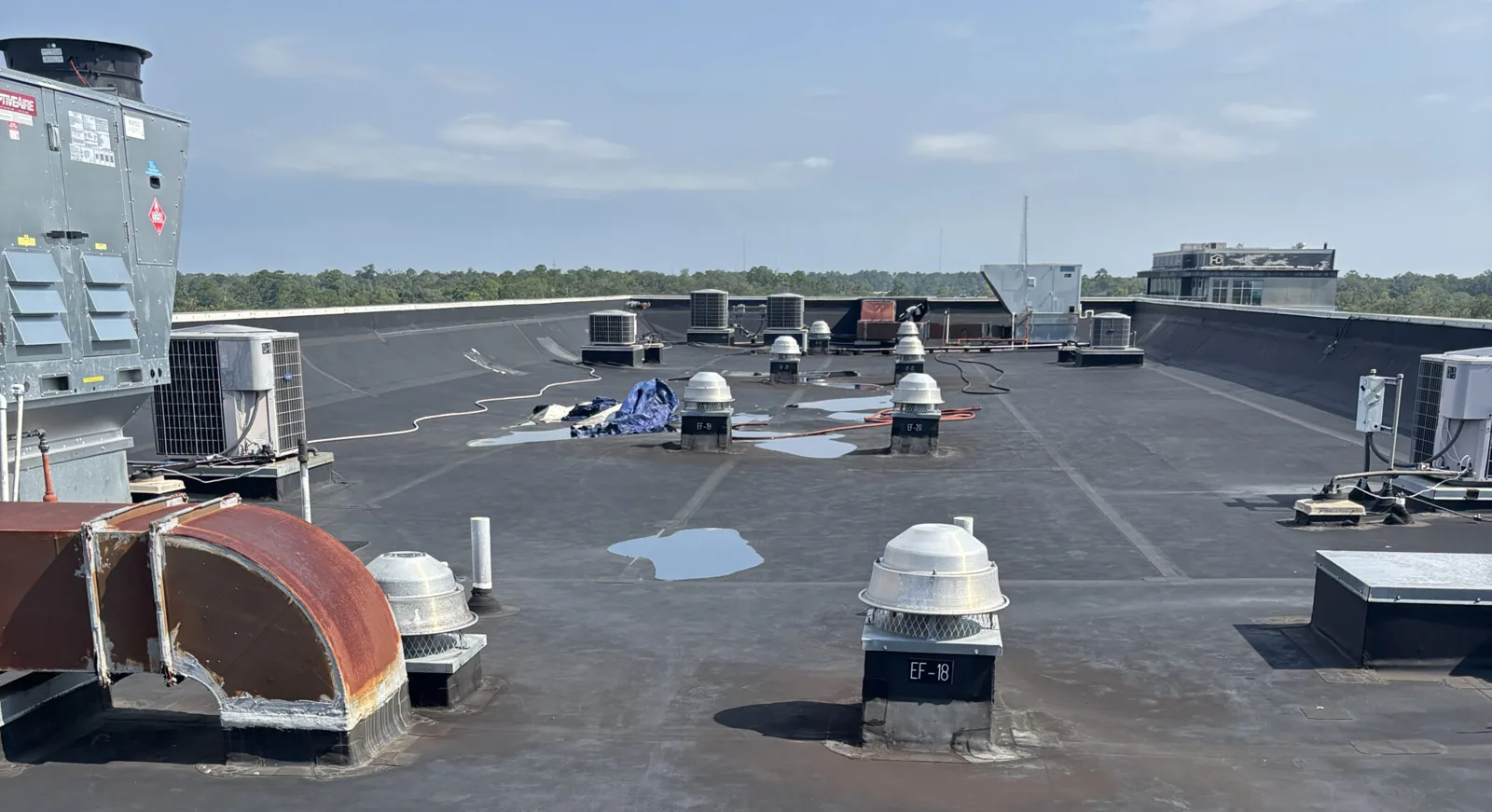
Tornado damage to a commercial roof raises an immediate question: can the building be accessed safely, and can the remaining assembly be protected? We inspect from an authorized route, mark displaced membrane or metal, identify open penetrations, and separate temporary dry-in from permanent reconstruction. The affected area may extend beyond the visible roof opening, so the field record maps each zone and shows what remains untested. Roof plans, interior reports, and the owner's incident boundary help the team avoid overlooking a damaged transition beyond the main opening.
A 2008 tornado track crossed into Longview and produced roof and tree damage along its path. After a new event, the owner identifies affected areas, and we coordinate entry with the site contact and incident authority before inspecting the roof plan and visible conditions. Downtown Longview, the I-20 corridor, and nearby industrial parks have different access and staging constraints that must be verified on site. The site contact can identify priority rooms, safe equipment shutoffs, and any structural review needed before roofing access. After entry opens, mark each inspected roof section, record temporary protection, and coordinate a return check after permanent repairs.
Wait for the site release before entering the roof
After a tornado, a roof may have loose sheet metal, unstable decking, damaged electrical equipment, broken glazing, standing water, or debris. We enter only when the property representative or relevant authority permits access and identifies hazards. The access plan covers ladders, fall protection, weak or blocked areas, lift placement, and the route for moving materials. We do not disturb areas controlled by investigators or another restoration trade.
Once the roof is released, the crew identifies which parts can be inspected safely and which must remain closed. A temporary cover needs an attachment point that can hold without loading a weakened deck, and runoff must not be diverted into another opening. An emergency dry-in visit can protect an exposed area after safe access is confirmed. If impact marks appear alongside wind displacement, a separate hail-damage review keeps those observations distinct in the repair record.
Map separate openings and affected roof zones
A tornado can lift edge metal, tear membrane, move rooftop units, puncture the field, and carry debris across a property. We document each condition by roof zone instead of describing the entire roof as damaged. Photographs show the condition before loose material is removed. The site contact can mark interior water locations, but those points do not always sit directly below the roof opening. We compare them with the roof slope, seams, curbs, and drainage paths.
If material is torn away, we record the exposed layers and any visible deck condition. If a roof panel or unit has shifted, a qualified structural or mechanical professional may need to evaluate it before roofing proceeds. The report identifies the structural or mechanical review needed before roofing proceeds. A roof inspection can document the remaining assembly; claim-support documentation can organize photos and work performed without making a coverage decision.
Protect open areas without hiding conditions
Temporary protection aims to control water while permanent scope is evaluated. We define the area covered, material used, attachment method, drainage route, and inspection interval. If a cover hides part of the roof, the report shows what cannot be assessed beneath it. Temporary work is not represented as a final repair, and any remaining water risk is communicated to the facility lead. The owner coordinates interior protection and keeps occupants away from a restricted area.
Longview's hot season and thunderstorms can make exposed roof time a scheduling concern. We plan limited removal and close each work period at a stable tie-in. If the deck or edge is uncertain, the crew pauses rather than fastening into material that may not hold. A perimeter repair scope can restore a displaced edge after its backing is suitable. For an isolated opening in an otherwise stable field, commercial roof repair can address the confirmed area.
Set permanent work from the exposed layers
Permanent restoration can involve membrane, cover board, insulation, vapor control, flashing, edge metal, fasteners, or deck replacement. The proper scope follows the assembly exposed at the opening and the materials that remain sound. We photograph the layers before they are covered and list the detail that must be matched. If drawings conflict with field conditions, the owner and design professional resolve the assembly before material installation continues.
Longview's Building Inspection Division reviews commercial building and site plans under adopted codes. A reconstruction that changes the assembly or structural details may require design and City review. We provide field measurements and repair observations, but do not determine structural capacity or permit requirements. A wind-damage repair plan focuses on uplift and perimeter conditions; tornado work may need a wider safety release and multiple trade handoffs before the roof is closed.
Keep roofing decisions aligned with other trades
Restoration may include electrical service, HVAC equipment, rooftop communications, interior ceilings, insulation, and temporary building closure. The project lead should identify which trade removes or reconnects each unit and who releases roof access between steps. We protect each opening when another contractor must work through it and inspect the flashing after the final installation. If a work zone is not ready, the roof crew records the hold point rather than closing around an incomplete penetration.
For an industrial property near Longview Business Park or the East Texas Regional Airport airpark, site traffic and equipment staging may be part of the restoration sequence. Downtown streets and public entrances bring other access controls. These conditions are verified at the property, not assumed from a location label. A phased building plan can help when portions of the facility return to service before the full project is complete.
Close the emergency file with verified next steps
Closeout separates emergency protection, permanent repairs, test openings, and items awaiting another trade. It identifies roof zones, materials removed and installed, photographs, dates, and the limit of the inspection. If a temporary cover remains, the report names the responsible contact and when it should be checked. If an area could not be inspected, it remains an open item. These distinctions help the owner organize contractor, insurance, and facility records without turning a roof report into a cause or coverage determination.
For a commercial site in Longview, send the access release, roof plan, incident boundary, active water reports, utility status, and restoration schedule. We can then inspect the cleared zones and return a permanent scope tied to what the crew observed.
After severe wind, document displaced metal, damaged edge securement, lifted flashing, and any debris strike as separate findings. Photograph the perimeter and interior conditions before moving loose material when it is safe to do so. A roof section that remains attached should not be described as damaged merely because another section lost material. If temporary water control is needed, show its location and expected next inspection. That gives the owner a clear distinction between immediate stabilization and permanent restoration.
Commercial Roofing Questions
How quickly can you inspect a tornado-damaged roof?
We can coordinate a response once the owner or authority releases safe roof access. Timing depends on hazards, site restrictions, and the information needed to stage the inspection.
Can you cover the roof before permanent reconstruction is designed?
A temporary dry-in can be evaluated after access is released and identify its limits, attachment points, and follow-up needs. Permanent work is scoped separately from stabilization.
Will you decide whether the building structure is safe?
No. We document visible roofing conditions. Structural clearance and access release remain with the qualified professional or authority responsible for the site.
What should we send before mobilization?
Provide site-release information, roof plans, incident boundaries, utility status, active leak reports, known hazards, and restoration contacts.