
Commercial Hail Damage Roof Repair in Longview, TX
Commercial Hail Damage Roof Repair
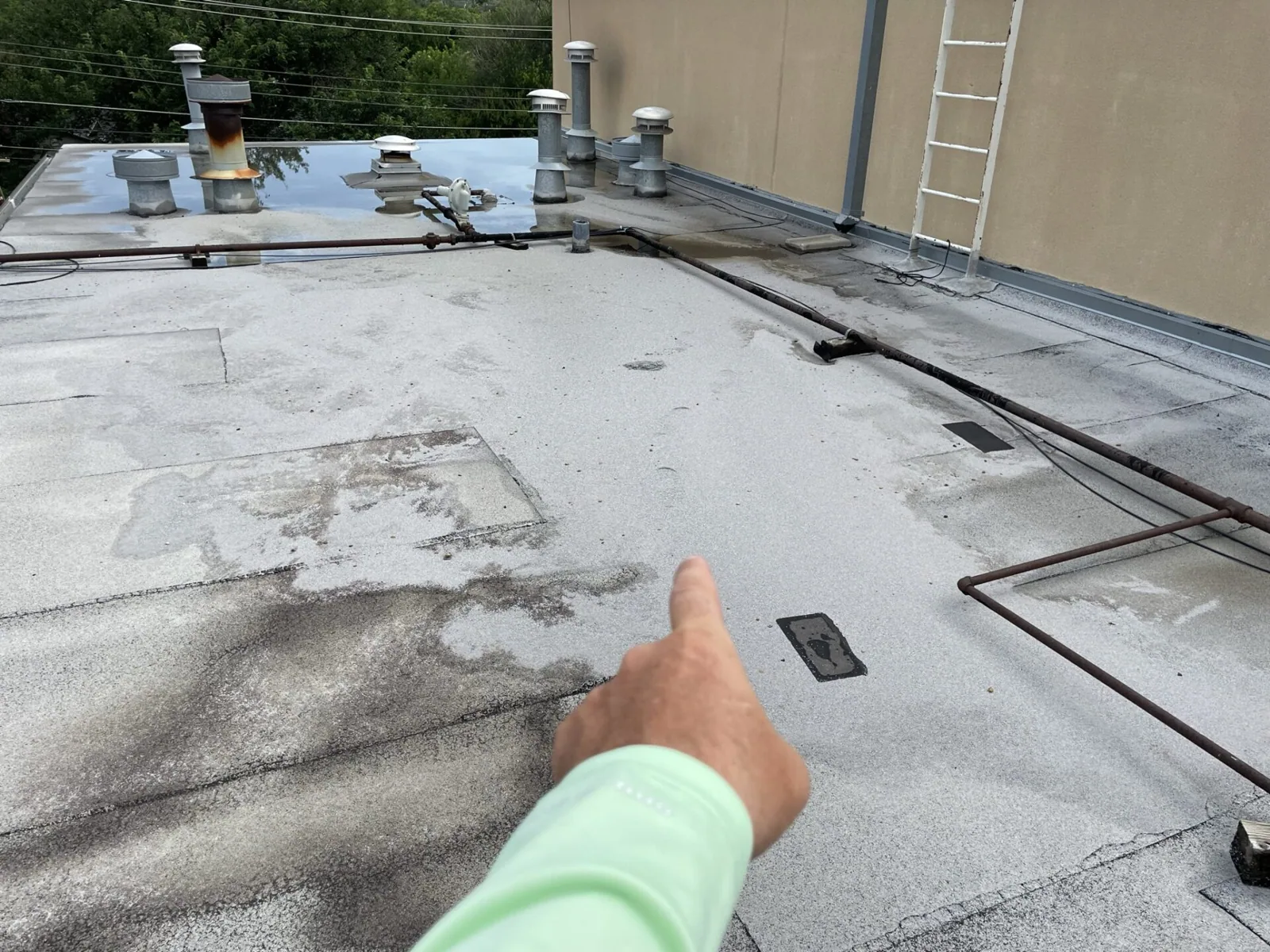
After hail, a roof can show bruised metal, damaged edge details, punctures, or marks that require a closer inspection before repair decisions are made. We check the roof system, penetrations, flashings, drains, and rooftop equipment, then photograph the conditions that can be seen. The report distinguishes impact evidence from age-related wear or prior repairs where the field supports that distinction. It avoids labeling every surface mark as functional damage.
Longview has a recorded hail report in Gregg County and a history of other severe weather, including a tornado track that reached the city in 2008. These events make a planned inspection response useful after a new storm. They do not establish current damage at an individual property. We use the building's roof plan and service history to locate the areas to inspect, whether the site is near Downtown, the US 80 corridor, or Longview Business Park.
Record the roof before repair work changes it
We photograph the roof surface, edges, curbs, rooftop units, and any reported leak zone before moving loose material or applying a patch. Each image is tied to a roof zone and described in plain terms: dented metal, puncture, displaced flashing, split seam, or no visible change. If the roof is wet or unsafe, we defer the affected observation until conditions permit. A clean record helps the owner distinguish inspection findings from temporary protection and permanent repair.
Hail can affect exposed metal differently from a flexible membrane or a coated surface. We identify the assembly where records and visible details allow and consider whether a mark penetrates, fractures, opens, or only changes appearance. A commercial roof inspection can create a wider condition record, and tornado damage review addresses components displaced by uplift or debris rather than impact marks alone.
Check seams, metal, and penetrations for functional damage
On a membrane roof, we look for cuts, punctures, displaced seams, cracked coating, or damage around a curb. Metal systems need an inspection of panel seams, fasteners, clips, flashing, gutters, and edge attachment. A dent does not always mean a leak path, while a small split at a seam can admit water even when the surrounding field looks intact. The report connects a proposed repair to the particular detail that lost continuity.
Rooftop equipment can hide damage at the base or leave a shadow that changes what can be observed. We coordinate any equipment lift or shutdown with the authorized mechanical contractor. If water is entering, leak tracing follows the reported interior location to the roof path. A separate flashing repair can address a damaged equipment transition without assigning a membrane repair where the evidence points elsewhere.
Determine whether concealed materials need testing
Impact can crack or compress a cover board, damage insulation, or leave a surface opening that is not obvious from a distance. We look for soft or depressed areas, displaced fasteners, membrane deformation, and evidence of water beneath the field. If a test opening would help decide whether material can stay, we mark the proposed location and explain the question it answers. The owner can authorize testing before the crew removes material beyond the visible mark.
Longview's July normal high near 94 degrees can heat a roof surface for sustained periods. We inspect for trapped moisture and document any opening before defining removal. A moisture survey can prioritize likely wet zones, while a test opening confirms the layers that need removal. Moisture mapping can help prioritize locations under suitable conditions, and temporary roof protection can reduce exposure where an opening is active. Survey observations and physical findings stay separate in the report.
Set a repair boundary tied to the observed impact
A localized patch can be appropriate when the damaged area is isolated and surrounding materials can accept a compatible tie-in. If several roof zones show punctures, seams have opened, or insulation is wet, the scope should explain how the work changes. We identify the quantity measured in the field and label any hidden material as unconfirmed until opened. The repair plan lists preparation, replacement layers, edge treatment, and the field check that will be used after installation.
A storm scope that changes assembly or drainage may require municipal review. For a permanent project, the owner and design team can coordinate any required plan review with Longview's Building Inspection Division. Edge-metal repair addresses a displaced perimeter detail; a broader replacement review is based on condition across the roof, not a single hail mark. We can keep any insurer or adjuster documentation tied to observed roofing work without making a coverage determination. On a broad membrane roof, mark each tested zone and the point where material was removed. On metal, photograph panel laps and fastener rows in sequence so the reviewer can see whether impact changed the panel or attachment. That level of detail makes later repairs easier to compare with the initial inspection.
Keep the damage record useful after the storm
The closeout includes inspection date, roof zones viewed, photographs, surface conditions, test results, temporary measures, materials installed, and any recommendation still open. If a roof area could not be safely accessed, it is identified as uninspected. If evidence cannot establish when a condition occurred, the report describes the condition without assigning a date. The owner can retain the record with roof plans, maintenance files, and any claim correspondence.
For commercial buildings in Longview, including Downtown, US 80/Marshall Avenue, and the business parks, share the event timing, known leak areas, roof assembly records, and access restrictions before the visit. We will identify the next inspection or repair step and distinguish confirmed work from optional testing.
Coordinate access for a post-hail inspection
Let the site contact know which rooms have reported leaks, whether equipment is running, and whether the roof is accessible by hatch, ladder, or lift. If temporary work is already in place, document where it was installed and whether water continued afterward. Tell us if an interior space must remain open or if roof access crosses a tenant or production area. The inspection can then focus on the affected zones without disrupting unrelated operations. The site representative can also identify a safe staging point and any area that requires a spotter. Preserve the site contact and inspection date with the photo sequence for later review.
We return a concise report with photographs, roof detail, and supported repair limits. If additional testing or design input is needed, the recommendation will identify the unanswered question and the evidence required to resolve it.
After a storm report, separate impact marks from loose aggregate, old foot traffic, and damage from rooftop service. A consistent photo set across representative roof zones helps show whether the observed pattern is isolated or widespread. Note the date and areas inspected, plus any surface that could not be reached safely. If an opening is needed to assess hidden layers, identify its location and restoration plan before testing. That evidence supports a measured repair scope without treating every mark as a membrane failure.
Commercial Roofing Questions
Does a hail mark on metal mean the roof is leaking?
Not necessarily. We inspect the coating, seams, fasteners, flashing, and substrate to determine whether the mark affects water shedding or system performance.
Can you inspect after a storm before we open a claim?
Yes. We can document observable roofing conditions and repair needs. The insurer or adjuster determines coverage and claim outcomes.
Should we repair an opening before the inspection is complete?
If water is entering, arrange safe temporary protection and photograph the condition first when practical. We document the temporary work separately from permanent repairs.
What should the roof report include?
It should identify roof zones, visible conditions, photographs, test results, temporary protection, repair materials, and any area that could not be inspected.