
Cool Roof Installation in Longview, TX
Cool Roof Installation
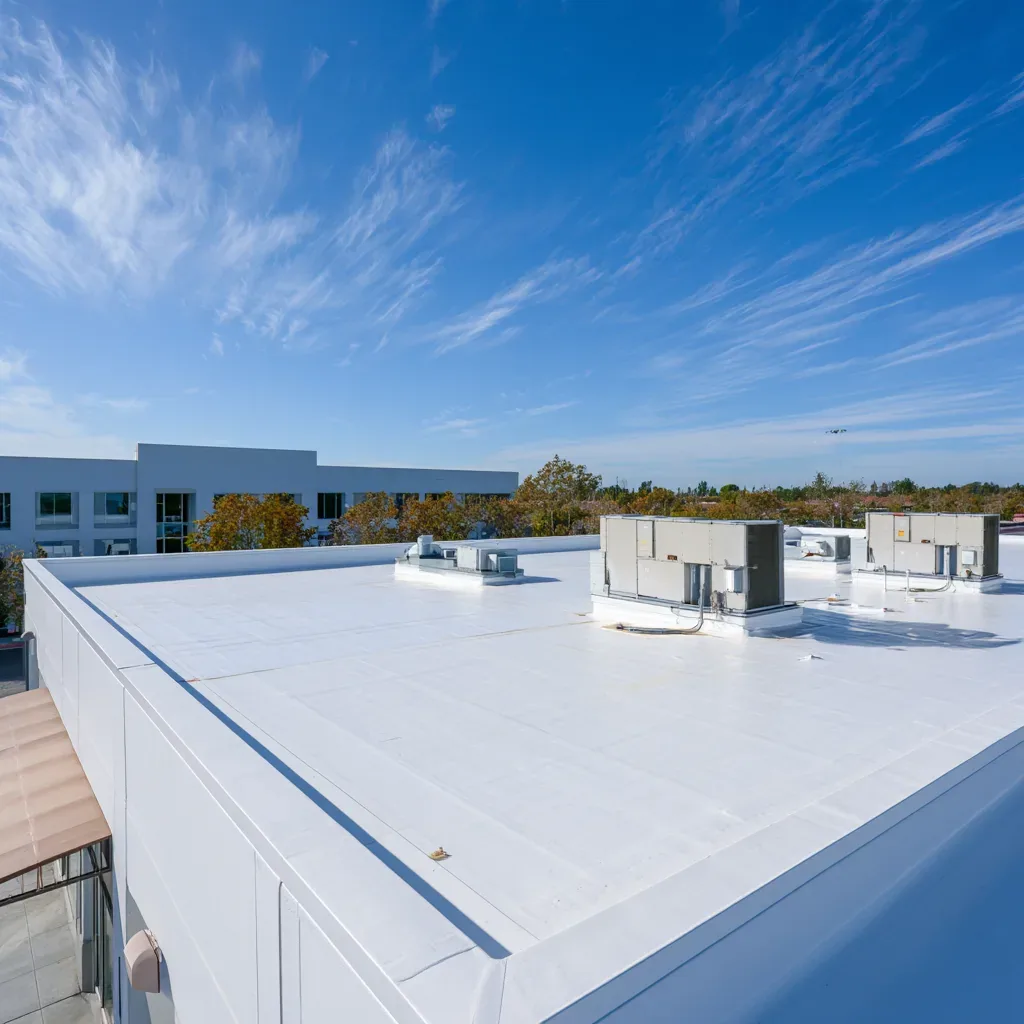
A reflective roof can reduce solar heat absorption at the surface, but it cannot correct wet insulation, poor drainage, or a failed deck. We first check the existing assembly, slope, attachment, and condition before recommending a cool-roof system. The roof's use and exposure matter too: a large industrial field, a downtown office roof, and a metal canopy do not call for the same preparation or coating approach. We define the system, tie-in details, and maintenance needs before installation.
Longview's July climate normal daily high is about 94 degrees, so hot-season roof exposure belongs in an owner's energy and maintenance discussion. The temperature fact is not a forecast of savings for any one building. We inspect roof condition, existing insulation, rooftop equipment, and ventilation before discussing what a reflective surface can change. Longview Business Park and Downtown Longview can have different equipment and access demands; at the East Texas Regional Airport Airpark, scheduling may need to account for aviation-related uses. The recommendation follows the assembly found at the property.
Start with a roof that can accept the system
Loose coating, exposed reinforcement, open seams, ponding, and wet insulation need attention before a new reflective surface goes down. We inspect the membrane, test repairs where needed, and identify areas that need replacement or preparation. A coating may be appropriate for a sound substrate; it is not a way to seal over movement, trapped moisture, or a deteriorated deck. The scope identifies where cleaning, priming, fabric, flashing, or localized repair is needed and where the substrate should not receive the proposed finish.
Longview's seasonal storms can leave debris or impact damage that changes the preparation. We check seams, penetrations, drains, and perimeter edges for failure, then separate those repairs from the cool-roof work. A commercial roof inspection can document the condition and define tests before the owner commits to coating or membrane replacement. If moisture is suspected, an infrared moisture survey can help choose test locations, with openings confirming the assembly.
Select a reflective assembly that fits the roof
Cool-roof work may involve a reflective membrane, a compatible coating system, or a new assembly that combines cover board and insulation. We evaluate the existing surface, slope, attachment, and roof use before selecting a path. TPO and PVC are white membrane options with heat-welded seams; coatings need a compatible substrate and correct application conditions. The chosen system must accommodate penetrations, roof edges, drains, and equipment bases without leaving weak transitions.
Longview's commercial stock includes industrial, distribution, aviation-related, retail, and office uses, and each roof can have different equipment or access demands. East Texas Regional Airport airpark supports aviation-related and commercial-industrial uses, so access and scheduling may shape work there. We avoid assuming a building's roof type from its location. The proposal names the actual product class, preparation, seam or coating method, tie-ins, and quality checks. A TPO roof system or coating restoration may suit some assemblies; inspection findings determine which one can be installed responsibly.
Set realistic expectations for heat performance
A reflective surface changes how much solar energy the roof absorbs, but indoor temperature and utility use also depend on insulation, air leakage, rooftop equipment, HVAC control, building hours, and internal loads. We do not promise a specific savings result without building-level performance data. Before installation, the owner should review current insulation and ventilation and decide whether those improvements belong in the same capital project. The roof proposal should state the system scope rather than treat reflectance as a substitute for envelope work.
Longview's heat can make work timing and material handling important. We follow product installation requirements for temperature, moisture, cure, and dry-in so the assembly is not exposed before it is ready. When insulation or tapered components are part of the project, a roof insulation and cover-board scope can address thermal continuity and drainage together. The finished roof should be inspected for complete seams, uniform application where specified, and transitions at every penetration.
Preserve drainage and roof access
Reflective membrane or coating adds material at drains, curbs, wall flashings, and expansion joints. We check finished elevations so outlets remain open and edge details retain the required flashing height. Ponding should be mapped and discussed before installation; simply covering a low area can preserve the same water condition beneath the new surface. A drain and scupper review can define corrections where bowls, overflow paths, or slope need attention.
Roof access also needs to remain practical after the project. We identify equipment service lanes, walk pads, hatch routes, and areas where technicians may cross the new surface. Downtown properties may need work staged away from pedestrian entries, while industrial roofs may require clear paths around unit clusters and process equipment. The proposal notes protection and access needs so future maintenance does not cut, abrade, or contaminate the reflective system.
Coordinate installation with occupied operations
Before mobilization, we confirm roof access, staging, tenant schedules, equipment shutdowns, and interior protection. Longview's business parks support manufacturing and distribution activity, which may require material deliveries to fit site traffic. Downtown office and retail buildings can have narrow staging areas and active entrances. We divide the roof into sections that can be prepared and made weather-tight within the planned work window. If weather interrupts the sequence, open edges and penetrations need protection before crews leave.
Work around HVAC units, exhausts, solar equipment, and communication lines requires coordination with the building contact and service trades. We identify what may be disconnected or moved and who approves that work. An occupied-building sequence can phase roof areas to keep unaffected operations open. The schedule also states how the crew will maintain access to drains, hatches, and emergency exits during installation.
Inspect the finished cool-roof work
Closeout includes photographs of the finished field, seams or coated zones, penetrations, edges, drains, and repaired areas. We record preparation, materials, and any condition that changed the planned scope. The owner receives a roof-zone map and maintenance notes for cleaning, inspections, and equipment service. If the selected system has product-specific care requirements, those instructions should accompany the closeout record.
In Longview, share roof plans, recent leak history, energy or comfort concerns, and equipment constraints. We will inspect the assembly and compare cool-roof options with the condition found. A practical recommendation identifies what reflective work can address and what insulation, drainage, or mechanical issues need separate attention.
Before selecting a reflective surface, confirm what the existing roof can support and whether a coating or new membrane is appropriate for that assembly. Document insulation, drainage, current surface, and any prior coating that may affect adhesion. The property owner should compare the proposed change with equipment, rooftop access, and maintenance needs. A color or reflectance choice does not correct trapped water, poor attachment, or a damaged substrate, so those conditions belong in the scope before installation is priced.
Commercial Roofing Questions
Will a reflective roof lower our energy bills by a set amount?
Not from roof reflectance alone. Utility results also depend on insulation, HVAC operation, building use, and internal loads. We can define the roof work, but a savings estimate needs building-specific performance information.
Can a cool roof be installed over an older membrane?
Only when the retained surface and assembly are suitable. We check moisture, adhesion, drainage, and repair history, then determine whether preparation, a coating, or replacement is the appropriate path.
Does a white coating fix ponding water?
No. A reflective finish does not change the roof's slope by itself. We map low areas and inspect drain elevations, then include slope or outlet correction when the field condition supports it.
How do rooftop units affect installation?
Equipment bases and service routes interrupt the roof field. We coordinate clearances, flashing, work sequence, and trade access so the finished system remains maintainable around each unit.