
Restaurant Roofing in Longview, TX
Restaurant Roofing
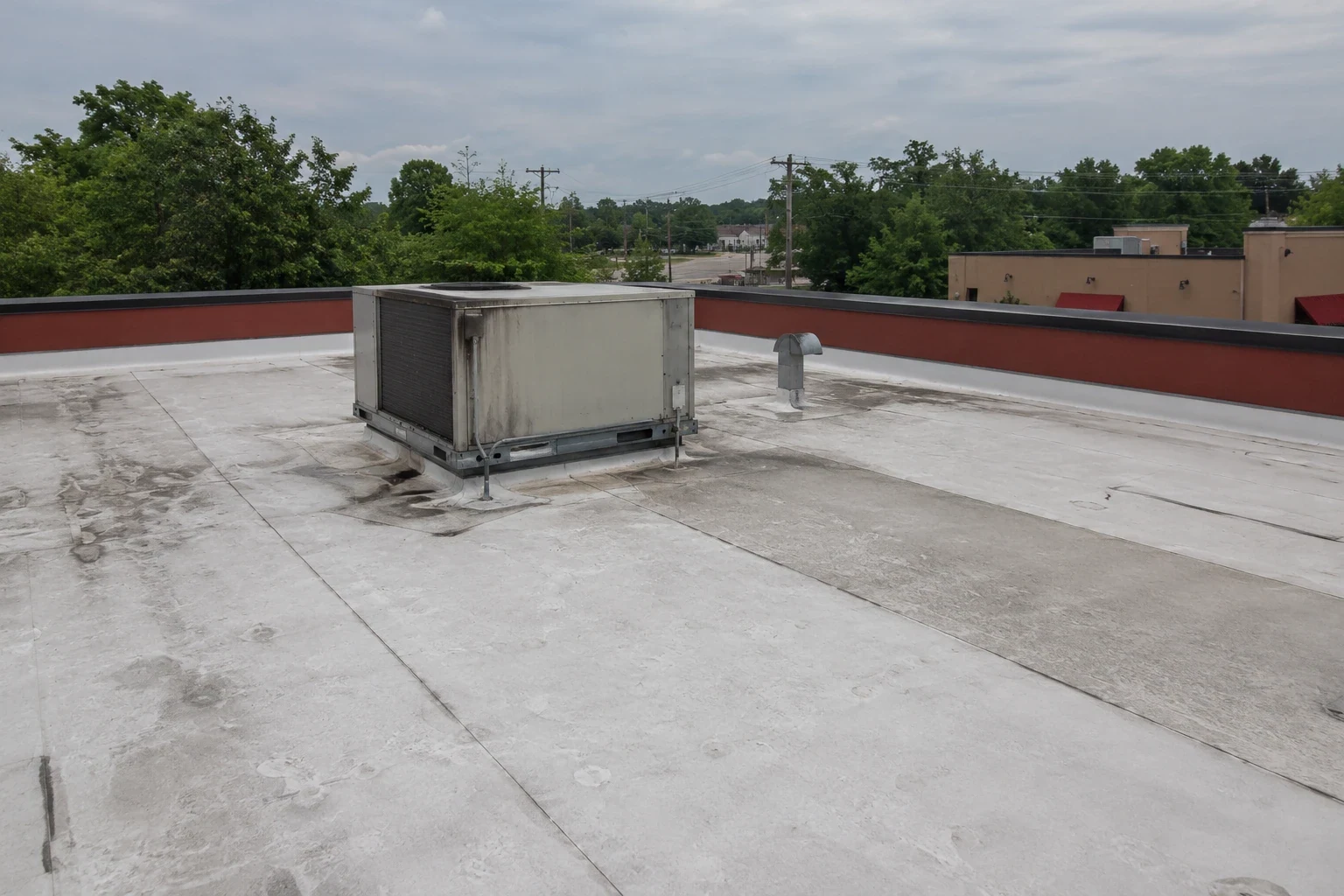
Kitchen exhaust and rooftop grease can turn a small flashing defect into a stubborn leak around a restaurant's service area. We inspect the hood exhaust curb, nearby seams, drains, and roof surface before deciding where a repair should stop. A water mark above a dining room may come from a penetration or edge farther away, so we trace the roof path and coordinate any opening with the operator before service is interrupted. If the roof must be opened over active prep space, the manager sets the interior protection and food-safe shutdown window before removal begins.
Downtown Longview planning includes restaurants alongside office, retail, entertainment, and mixed-use activity. US 80/Marshall Avenue and Estes Parkway also serve as commercial corridors across the city. Delivery and lift access vary by restaurant. Before work, we confirm the property's hours, exhaust schedule, equipment list, roof system, and prior repairs with the facility contact.
Inspect hood curbs and grease-exposed details
Exhaust fans and hood systems move heat, vapor, and grease through roof penetrations. We look at curb flashing, counterflashing, fasteners, grease containment, fan supports, and the membrane around the opening. A fan that vibrates or shifts can stress its attachment; a curb with poor drainage can hold debris and water. We record the detail and coordinate with the kitchen-equipment service company if the fan must be lifted or disconnected.
Grease management is part of keeping the roof serviceable. We check whether residues are degrading coatings or blocking drainage, and we distinguish cleaning from membrane repair. A curb and equipment repair addresses a failed roof transition. When water is reported indoors, a targeted leak investigation traces the entry point rather than sealing every nearby joint without evidence.
Schedule work between prep and service
Restaurants may receive food early, serve through the evening, and clean kitchen systems overnight. We ask when exhaust must run, when deliveries arrive, and which entrances or patios need to remain open. Those answers shape lift placement, material movement, noisy work, and the window for opening a roof zone. If the repair crosses an active dining or kitchen area, the owner sets the interior protection and temporary room limits before the crew starts.
In a downtown block, limited staging and neighboring businesses can make the plan different from a freestanding site. The City describes Downtown as a historic area with ongoing commercial and mixed-use activity, so access coordination needs to address the specific street and building. We also confirm whether deliveries can be shifted by an hour, whether a patio needs a temporary barrier, and where a lift may stand without blocking fire access. A phased occupied-building plan can keep unaffected spaces operating. For a restaurant in a larger retail property, shopping-center roof coordination also includes shared walks, deliveries, and adjacent tenant boundaries.
Follow water from the roof to the room
Water can enter at the exhaust curb, travel below the membrane, and appear in a ceiling away from the fan. We compare the interior report with roof seams, drains, wall transitions, and old patches. If the entry is not visible, a controlled test or selective opening can provide better evidence than another layer of sealant. The written scope names the confirmed defect, the repair tie-in, and any portion of the path that remains concealed.
A restaurant roof may have membrane fields, metal canopies, kitchen penetrations, and rooftop cooling equipment. We identify the material at the repair zone and check whether earlier mastics or coatings affect adhesion. A roof inspection with photos can establish conditions across multiple areas. When moisture may extend under a roof field, we target follow-up investigation before the owner commits to a larger opening.
Keep roof drains clear of kitchen debris
Grease residue, leaves, and packaging can collect at strainers, behind curbs, and along parapet corners. We clear the drainage path only after documenting its condition, then check whether water reaches the outlet and whether the drain flashing is intact. A blocked strainer is maintenance; a split membrane collar, damaged bowl, or low roof section requires a repair decision. The report distinguishes those conditions and notes whether an overflow route is available.
Longview's July normal high is around 94 degrees, and seasonal thunderstorms can bring short periods of heavy runoff. The city also has recorded hail and a tornado track that produced roof and tree damage, so after severe weather we inspect the reported property rather than assuming its roof was affected. A drain and scupper repair can restore a leaking outlet. If standing water remains after cleaning, the next check is whether the issue comes from obstruction, slope, or movement in the underlying assembly.
Select a repair that fits the roof system
A local patch is appropriate when the surrounding membrane is sound, the substrate is stable, and there is compatible material for a durable tie-in. If grease exposure, recurring curb movement, or wet insulation extends beyond the visible opening, a wider scope may be needed. We note the evidence for each roof zone and explain what was not opened or tested. This gives the owner a basis to compare immediate water control with a larger repair or replacement.
Longview's Building Inspection Division reviews commercial building and site plans under adopted codes. For an assembly change, the project team coordinates the scope and any applicable review with the City. A hotel roof plan may add guest-room and event scheduling to the access discussion, while a replacement review is appropriate when deterioration extends beyond practical repair limits. We state why the selected boundary fits the observed roof.
Return the kitchen to normal operation
Before leaving, we confirm the repaired curb, seams, drains, and any temporary protections. Closeout photos identify the roof zone, materials, and completed tie-in. We also note if the exhaust contractor must reset equipment or if a follow-up inspection is scheduled. Any interior restriction remains in place until the owner confirms the space is ready for use.
For restaurants in Longview, share roof plans, kitchen-equipment records, grease-service schedules, leak reports, and operating hours before the visit. We coordinate the work window with management and return a scope tied to the actual roof detail. A clear record helps the next facilities visit distinguish routine cleaning from a flashing, membrane, or drainage repair.
Kitchen exhaust, grease handling, and rooftop make-up air equipment can constrain where a crew works. Coordinate with the restaurant manager before disturbing a curb or moving a fan, and protect food-preparation areas from debris or open-roof exposure. Inspect the membrane and flashing around the equipment without assuming the exhaust caused the leak. Record the work window, any shutdown coordinated with the kitchen, and the roof detail restored so the operator can reopen with a clear closeout record.
Commercial Roofing Questions
Can roof repairs be scheduled before restaurant service?
Often. We coordinate with management around food deliveries, exhaust use, cleaning, and opening time, then identify any roof or interior area that needs a temporary restriction.
Does grease on the roof always mean the membrane needs replacement?
No. We inspect the affected surface, curb flashing, coating, and drainage to determine whether cleaning, a localized repair, or broader work is supported by the condition.
Who coordinates rooftop exhaust equipment?
We handle the roof flashing and repair boundary, while the kitchen-equipment contractor controls fan service or disconnection. The scope makes that division clear before the equipment is moved.
What records help investigate a dining-room leak?
Interior photos, timing, weather notes, roof plans, exhaust service records, and prior repair details help us trace the path and compare it with nearby seams and drains.