
Government Building Roofing in Longview, TX
Government Building Roofing
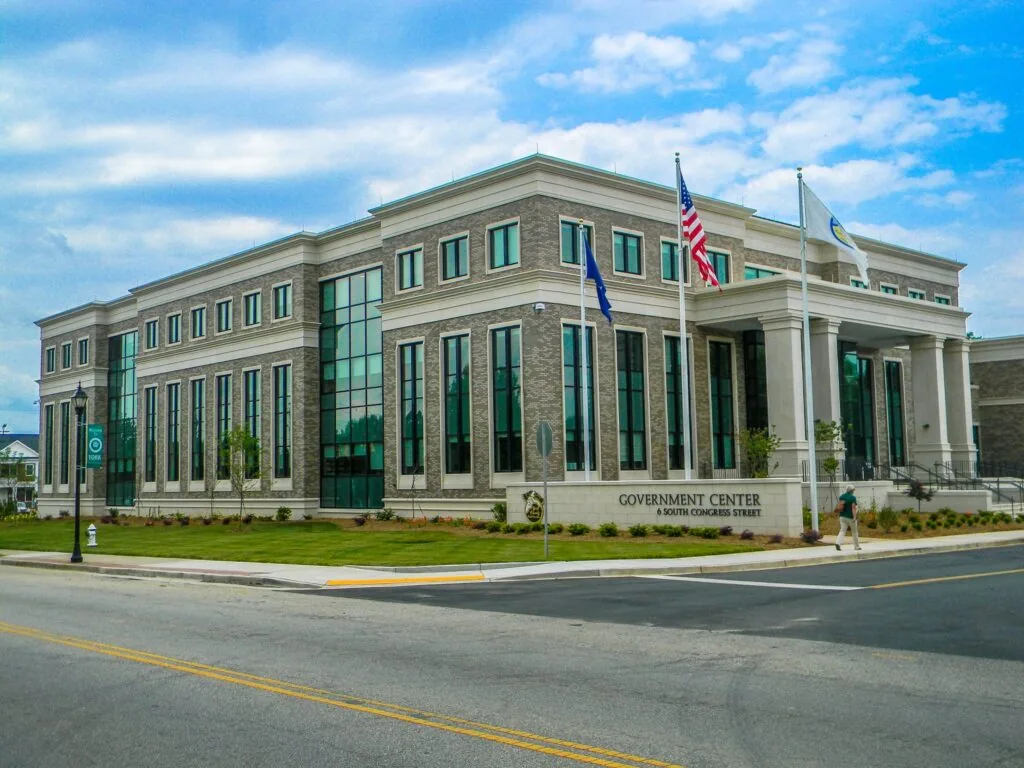
A roof leak in a public building can affect records, counters, meeting rooms, or an essential service route. We inspect the roof zone above the reported area, trace seams and drainage, and coordinate access with the facility contact before work begins. Public hours, security controls, and emergency routes belong in the repair plan, not as a last-minute field adjustment. The scope identifies what was observed, which area will be closed, and how the building can keep serving the public.
Longview's Downtown plan covers streets, public spaces, building reuse, and infill; Mobberly Avenue's complete-street project includes sidewalks, crossings, and lighting between Cotton Street and Estes Parkway. Those projects illustrate the city's active public spaces, while the Building Inspection Division reviews commercial plans under adopted codes. We confirm site-specific access, records protection, roof materials, and operating hours rather than assume every civic building has the same assembly or security process.
Keep public routes and service counters open
We identify the public entrance, accessible route, delivery door, and emergency exit that must remain available while crews work overhead. Lift placement and material staging are reviewed with facilities staff so the work area does not block sidewalks or create an unmarked path through construction. If an interior room needs protection, the building contact schedules access and notifies affected departments before the roof is opened.
A courthouse, library, utility building, and administrative office can have very different visitor and security procedures. We follow the process supplied by the facility and keep the repair boundary limited to the approved area. A phased occupied-building plan can preserve service in unaffected sections. For public-facing office operations, an office roof scope also accounts for tenant and visitor movement, while the public agency sets its own access requirements. We confirm whether public meetings, voting periods, court calendars, or scheduled maintenance closures affect the available work hours before a crew is assigned.
Trace water without disrupting records or equipment
Water may travel along a deck flute, insulation seam, conduit, or wall transition before it reaches a records room or public counter. We compare the interior report with drains, curbs, parapets, seams, and past repairs. If the route is uncertain, a controlled test or selective opening can narrow the problem, but interior protection and records handling are agreed with staff first. The report separates a confirmed roof entry from staining that needs an interior follow-up.
Longview's hot summers and seasonal thunderstorms make drainage and exposed flashings recurring inspection priorities. After a reported storm or leak, we document the municipal building's visible roof conditions and trace water from the affected room to the roof zone. A leak repair visit follows a reported entry. If the building has several roof sections or public departments, the condition review can record findings by zone before a larger funding decision.
Check outlets and perimeter details
Roof drains, scuppers, gutters, and overflow routes need clear flow away from public entrances and sensitive rooms. We inspect strainers, bowls, flashing collars, edge metal, and the slope leading to each outlet. A blockage may call for cleaning; a split drain detail or low area requires a repair scope. We note whether water has a reliable overflow path and whether the roof edge protects the wall below.
Mobberly Avenue improvements include pedestrian crossings and accessible route features, a useful reminder that public circulation is part of a civic building's daily operation. At the roof, we preserve the drainage route during work and prevent temporary materials from entering outlets. A drain and scupper repair can restore a failed outlet tie-in. Coping and gutter work addresses a separate perimeter opening that should not be hidden by a field patch.
Protect rooftop equipment and building services
Government facilities may have HVAC units, exhaust systems, antennas, communications lines, or emergency equipment on the roof. We inspect curbs, pipe boots, supports, and service clearances before repairing a membrane near those systems. If a unit must be isolated or moved, facilities staff coordinate with the mechanical contractor and approve the work window. The roof scope states who protects the opening and who confirms that service is restored after the flashing is complete.
Security and communications equipment may have additional access controls. The facility identifies authorized personnel and any escort requirement before the crew arrives. A curb and support repair can rebuild a failed equipment transition. If work touches a room that carries critical service, we coordinate the temporary protection with the department that operates it and document the limit in the closeout record.
Build a scope that can be reviewed and funded
Public owners need a scope that defines the roof area, assembly, preparation, material, tie-in, and closeout evidence. We identify alternates separately when concealed conditions may change quantities, and we avoid describing an untested deck as sound or damaged. This gives the project team a clear comparison between a local repair, a recover, and replacement. Photos and a zone plan make quantities easier to review and help connect the work to future maintenance. We can separate urgent water control from optional test openings so reviewers can see what work is necessary now and what evidence would support a later phase.
Longview's Building Inspection Division handles commercial building and site-plan review under current adopted codes. When the project changes the assembly or expands beyond repair, the owner coordinates required submittals with the City. A replacement assessment can define a larger capital scope. For buildings with classroom or public-event use, a school roof plan offers a related approach to scheduling people below the work while preserving the distinct public-service function.
Document what was completed and what remains
Closeout should show the roof-zone label, repair materials, photos, drain or curb correction, and any condition held for follow-up. We note access restrictions, test results, and whether the facility has returned equipment or rooms to normal use. The record gives procurement and maintenance staff evidence they can attach to the work order and use when comparing a later inspection. Any alternate work stays listed separately from the completed base scope.
For a public facility in Longview, provide roof plans, building hours, access procedures, department contacts, and prior repair files before the visit. We will coordinate with the facility team and return a defined scope with completed work separated from recommended testing. Clear records help the next project reviewer see why the repair area ended where it did and what decision remains.
For a government facility, confirm access credentials, escort procedures, procurement timing, and who may authorize a test opening. Work around public counters and emergency functions should be scheduled with the building contact, not assumed from normal business hours. Record the scope and closeout in a format that the facilities team can retain with its maintenance and capital files. Roofing observations inform agency decisions; they do not replace the agency's procurement, safety, code, or engineering process.
Commercial Roofing Questions
Can a public building stay open during roof repair?
Usually, if public routes, security controls, and room protection are planned with the facility contact. The work can move by roof zone while unaffected services remain available.
What should a government roof proposal include?
A defined roof area, assembly description, repair detail, materials, access assumptions, photos, and a separate treatment of concealed conditions make the scope easier to review.
How do you handle secure roof access?
We follow the facility's access and escort procedures and confirm authorized routes before mobilization. The work plan identifies any area or system that requires a separate contact.
Does a roof repair require City plan review?
The project's scope and adopted requirements determine what review applies. Longview's Building Inspection Division reviews commercial plans; the owner coordinates project-specific requirements with the City.