
Flex Industrial Roofing in Longview, TX
Flex Industrial Roofing
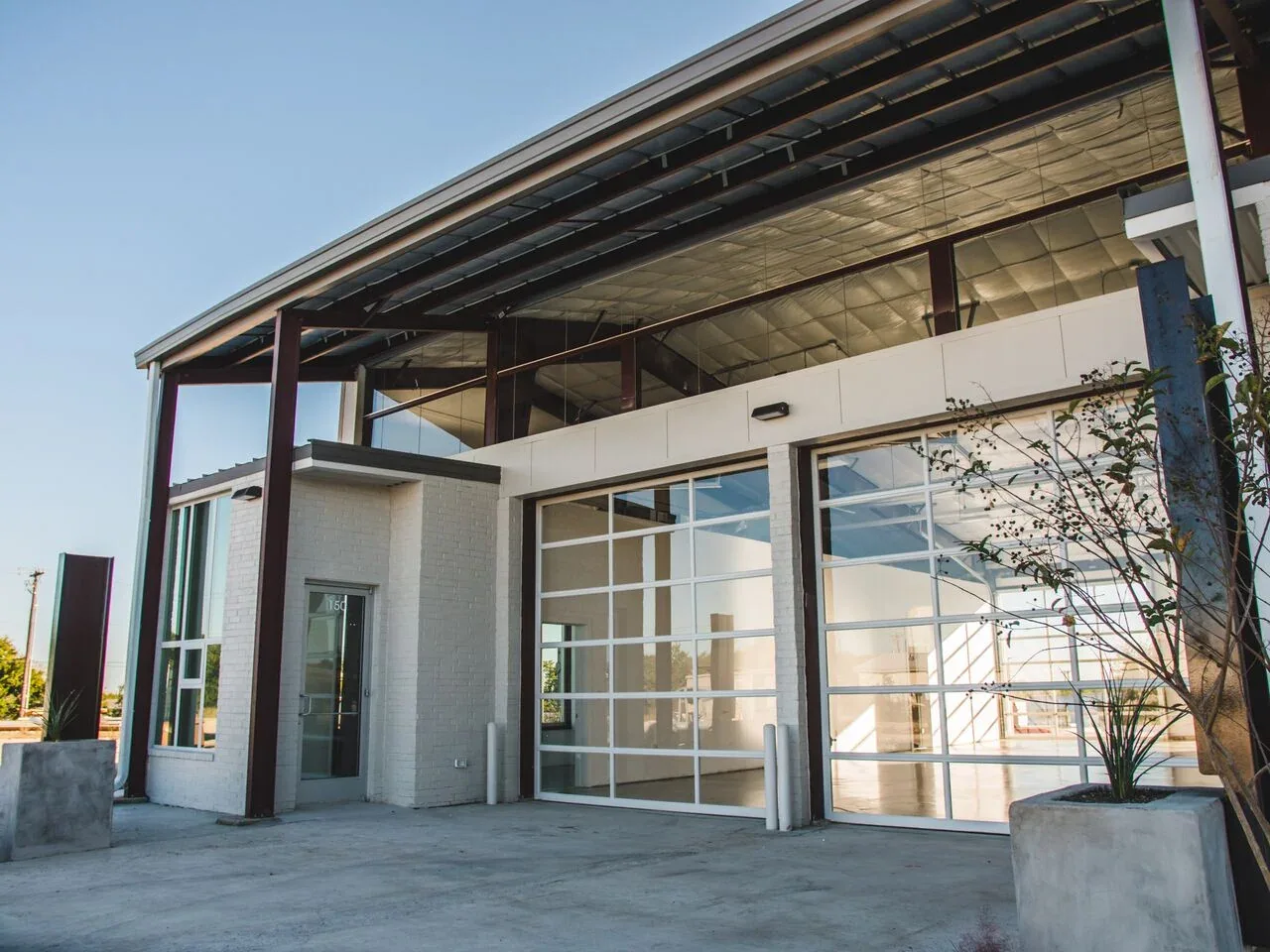
A flex building can place offices, light assembly, storage, and shipping beneath one connected roof. A leak above an office suite may follow a different assembly or drain path from a problem over a loading bay. We inspect by roof zone, identify the material and past repairs, and coordinate access with the tenant or facility manager before opening the surface. The repair boundary follows confirmed conditions, not the lease label or the building's marketing category.
Longview Business Park is a light-industrial park along US 259 near I-20, and North Business Park includes heavy-commercial sites connected by FM 2275 and George Ritchie Road. Henderson Innovation Park adds a separate East Texas development area with utility infrastructure and sites for business uses. Those settings help describe the market's industrial mix, but they do not identify a specific roof assembly. We verify roof plans, tenant uses, equipment, access routes, and leak history on the property itself.
Separate tenant work zones and roof records
Leases can divide the interior without dividing the roof. Before a repair, we identify who controls the roof, which tenant spaces sit below the work, and how maintenance notices are delivered. Lift staging, material storage, fire lanes, and deliveries are placed so one tenant's work does not block another's access. Each roof zone is labeled independently, with temporary protection and access restrictions tied to a responsible contact.
Where a building has several suites, we record the limits of each reported leak and avoid assigning a defect to a tenant before the source is confirmed. A phased occupied-building sequence can keep separate operations functioning as the crew moves through the roof. A warehouse roof plan also manages loading access, while flex facilities may add office visitors and production areas that require a different daily boundary. When leases turn over, we update the roof map and equipment list so new contacts inherit the work-zone history rather than relying on a prior tenant's notes.
Identify each roof system before selecting material
Flex properties may have additions, office build-outs, and different roof materials across a connected footprint. We map membrane, metal, coating, insulation, edge details, and equipment zones before proposing a patch. A heat-welded sheet, rubber membrane, and metal panel use different preparation and tie-in methods. Earlier repairs can affect adhesion or compatibility, so we record them before deciding which material can restore the assembly.
Longview's commercial building plans are reviewed by the City's Building Inspection Division under adopted codes. A project that changes an assembly may need coordination with the authority. We provide roof details for the owner and separate the repair scope from any design or review work. A TPO field and a standing-seam section should not be treated as one continuous repair surface if their transitions fail differently.
Trace water across office and production zones
A ceiling mark can be offset from an exterior opening because water moves along a deck flute, insulation joint, conduit, or structural member. We compare interior timing and location with seams, drains, curbs, parapets, and old patches. A selective opening or controlled test may be needed when more than one path looks plausible. The field record states what is confirmed and where a second test would change the repair limit.
Longview has hot summers, seasonal thunderstorms, and documented hail and tornado events. Those conditions make exposed seams and drainage reasonable inspection targets after a report, but they do not prove damage at a particular flex property. A leak investigation follows the reported entry; follow-up testing can help locate concealed moisture when the assembly may hold water.
Keep drains and rooftop equipment serviceable
Drain strainers, gutters, scuppers, rooftop units, exhaust fans, and utility supports can share a crowded roof zone. We check whether runoff reaches each outlet and whether flashing remains intact around equipment. If a unit replacement is planned, the mechanical contractor and roofer coordinate the curb dimensions and temporary weather protection. A drain obstruction is handled separately from a failed curb or low area, so the owner can see which condition requires which trade.
Henderson Innovation Park's documented utility package includes water, sewer, storm drains, electricity, gas, and fiber. When a facility's utility package includes storm drains, electricity, gas, and fiber, coordinate roof drain discharge and equipment penetrations with the site's approved plans before work. A drain correction can restore an outlet, while curb and support work repairs an equipment transition.
Compare repair, recover, and replacement by zone
A local patch may be suitable where the membrane is sound around the defect, the substrate is stable, and the tie-in can use compatible material. Repeated failures, moisture spread, or multiple systems with weak transitions may call for a broader scope. We describe the repair evidence, opening limits, and conditions not yet tested. The property owner can then compare a targeted repair against recover or replacement without treating every tenant space as equally urgent.
Longview's industrial park network includes different site sizes, access points, and transportation links. A flex facility may need work sequenced by suite or production schedule, and a distribution-center roof review can offer a useful comparison for buildings with freight operations. The actual scope remains specific to the flex property's assembly. Photos, roof plans, and a zone schedule let the owner align the work with lease turnover and capital planning.
Give owners and tenants a usable roof handoff
Closeout lists the building and roof zone, material installed, finished tie-in, drain or curb corrections, and any follow-up recommendation. We note which areas were accessible and whether another trade needs to confirm equipment operation. An owner can share a maintenance summary with tenants without distributing private lease or production information. The map shows where roof work occurred and where the next inspection should continue.
For a flex property in Longview, share site and roof plans, suite contacts, delivery windows, equipment records, and leak reports before inspection. We will coordinate the visit and return a scope that separates confirmed repairs from testing options. When more than one roof system serves the same property, each assembly receives a distinct note so later work does not carry assumptions across a tie-in. The owner can align access notices with lease contacts and reserve a separate window for equipment service that requires a curb opening.
A flex building may combine warehouse bays, small offices, and tenant-installed equipment under one roof plan. Mark the suite boundary and roof zone for each service request, then compare the tenant's equipment work with the base-building maintenance file. Before opening the assembly, confirm which party controls the lease area and who can approve access. This prevents a repair to one tenant's curb from being described as a building-wide condition or charged to the wrong scope.
Commercial Roofing Questions
Can roofing work proceed while flex tenants are operating?
Often, if work zones, tenant notices, fire routes, equipment access, and delivery timing are coordinated. The scope identifies which area is restricted and when it can return to service.
Does one leak mean the whole flex roof needs replacement?
No. We inspect the affected assembly and surrounding zones, then compare a local repair with broader work only when the observed conditions support it.
How do you handle different roof systems on one property?
We map each assembly and transition, select materials compatible with the existing surface, and record findings by zone so a repair on one section does not hide another failure.
What should the property manager provide before a visit?
Roof and site plans, tenant contacts, access rules, equipment changes, leak reports, and upcoming deliveries help define the work area and protect ongoing operations.