
GAF Commercial Roof Repair and Inspection in Longview, TX
GAF Commercial Roof Repair and Inspection
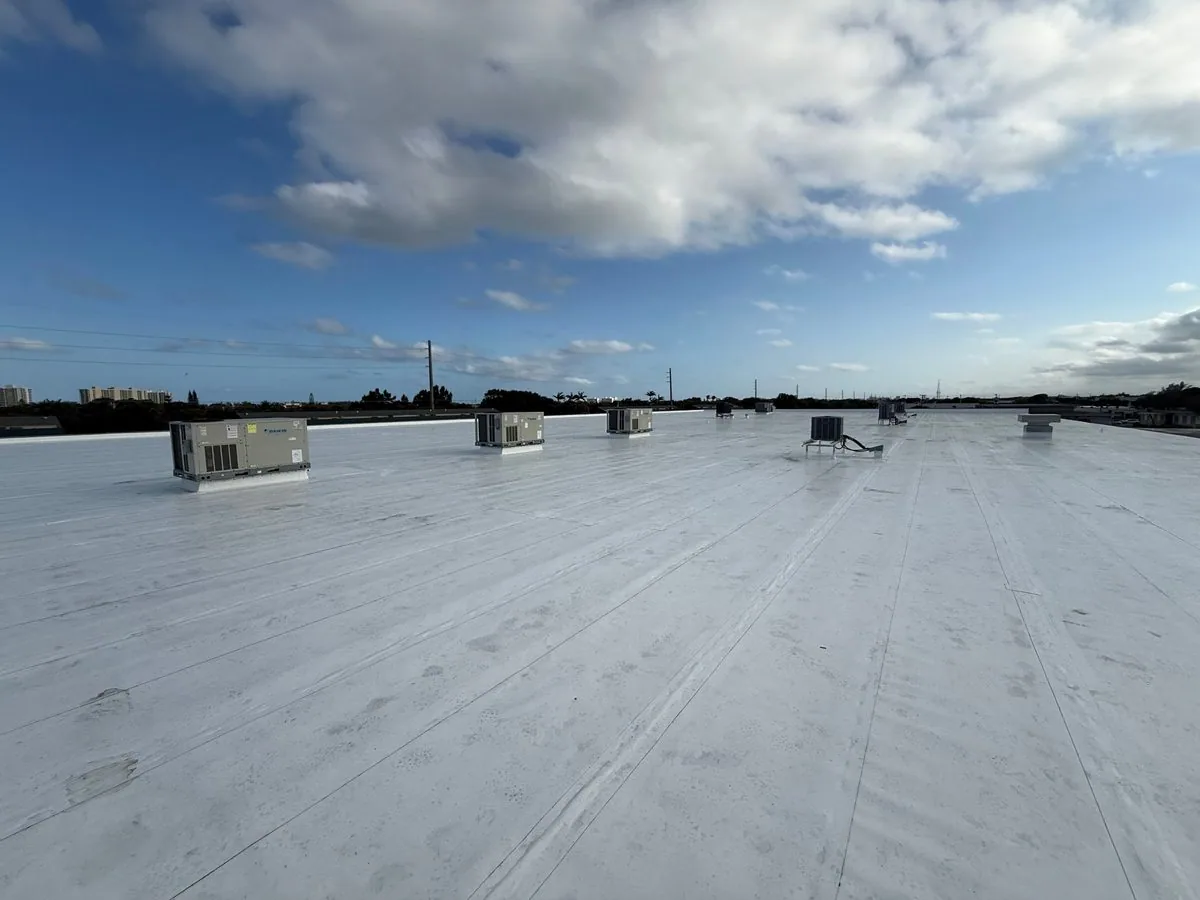
A roof record that says “GAF” does not by itself identify the membrane, attachment, cover board, or warranty on a building. We verify the installed assembly through available submittals, labels, repair files, and field details before selecting a repair. The inspection then maps seams, curbs, edges, drains, and reported leaks to roof zones. That prevents a service ticket from assigning a system detail based on the logo in an old invoice.
Longview Business Park lies along US 259 near I-20, and Downtown Longview has a separate plan for building reuse and infill. Those areas can contain different building forms and roof access constraints. Neither local setting identifies an individual roof system. We check the property records, safe access route, and prior work before describing a GAF-labeled assembly or proposing a compatible tie-in.
Confirm which GAF assembly is actually installed
Start with the warranty, approved product submittals, closeout package, repair history, and any label or material sample available at the building. Compare that record with seams, fasteners, flashing, and visible layers in the field. If the documents describe one system and the roof shows another, we record the conflict and ask for clarification before choosing material. The manufacturer name is not a substitute for a system description.
Longview's commercial building stock includes light-industrial, retail, healthcare, education, and downtown properties. Those uses change access and operating schedules, but not the evidence needed to identify the assembly. A Carlisle SynTec system review is another manufacturer-specific record path, and Holcim Elevate documentation may concern a different roof history. We keep each asset's records distinct and do not infer that one product family is present because the owner uses the brand elsewhere. If older closeout files identify a roof field but omit edge details or later service work, note the gap and request the missing page before relying on it. The owner should also confirm which building additions belong to the original warranty and which were completed under a separate project.
Inspect the detail behind the service request
For an active leak, we compare the interior report with roof slope, seams, drains, penetrations, and nearby previous repairs. A ceiling stain may appear away from the roof entry, so the report records the suspected water path and marks any area requiring confirmation. We check the membrane or panel surface and the base of the nearest curb, wall, or drain. At a roof transition, the crew follows the water-shedding path across the lap and verifies whether the receiving surface remains attached. If a previous repair obscures the original detail, we document that layer and ask whether the owner has photographs or an approved repair record. The proposed repair follows a confirmed failure, not a broad assumption about every area under one brand label.
Where a covered assembly may be involved, check the written warranty for notice and repair requirements before opening it. A roof inspection can document the system and visible condition, while leak investigation follows a reported water path. If the surface is intact but moisture below it is a concern, a survey can help identify an area for testing. We distinguish those observations in the report so a screening result is not treated as proof of damage.
Tie a repair into compatible material
A repair method must fit the installed material, surface condition, and manufacturer's current detail requirements. We inspect whether the surrounding area is clean, dry, attached, and sound enough to hold a repair. If an old coating, patch, or incompatible sealant is present, the scope identifies it before new material is applied. The field lead records the preparation, repair boundary, and final check appropriate to the assembly. If the repair needs a sample, test weld, or pull check, it should be performed at the location and under conditions specified by the system instructions. The closeout identifies the check completed and any area the crew could not verify.
Longview's summers bring sustained heat, which can affect surface temperature and work timing. The crew follows material requirements and checks conditions at the site instead of relying on the calendar alone. A coating restoration scope is appropriate only when the existing surface can support it. maintenance inspections can also log seam, drain, and edge observations for the next visit. The owner should retain the installed product and repair record with the building's system file.
Keep warranty communication with the property owner
Before modifying a roof represented as GAF, locate the actual warranty and verify its term, notice rules, maintenance requirements, and approval steps. Coverage depends on the executed document, not the brand name alone. We can provide photographs, repair details, and field observations for the owner's communication with the provider. The party administering the executed warranty rules on coverage and can approve or decline the proposed repair.
If a project changes roof assembly, drainage, or equipment, Longview's Building Inspection Division may have a review role under current adopted requirements. The owner and design professional confirm applicable City review. Roofing documentation supports that process but does not grant approval. A warranty tracking record can keep dates and repair files in one place. It should identify what was observed and what remains unverified so the property team can coordinate the next step.
Return a repair record that can be checked later
Closeout identifies the building, roof zone, assembly information available, repair material, surface preparation, photographs, test results, and remaining recommendations. If the repair required an opening, it notes what was seen beneath the field. The owner can retain this record with approved product data and the warranty contact history so future service teams know which detail was installed and whether a later review is outstanding. If records could not confirm the system, that uncertainty remains in the file. Include the repair date, product information used, photos before and after preparation, and any other trade that touched the opening. Those details help a future visit distinguish a repair callback from a new failure in an adjacent zone. A later leak call can then be compared with the repaired zone and the actual detail rather than a generic manufacturer label.
For a property in Longview Business Park or another commercial district, share roof plans, service history, access restrictions, and warranty documents before the site visit. We will return observations and repair limits tied to the building's own system record.
Plan the inspection around records and access
Send the roof map, current leak location, product submittals, prior repair notes, and any warranty correspondence. Identify how the crew will reach the roof, whether a lift is required, and which tenant or equipment restrictions apply. We can then confirm what can be inspected and which system questions require a test or manufacturer response.
The report supports a specific owner decision: repair, test, monitor, or prepare a broader project. Each recommendation is tied to the evidence available at the property, with unknown quantities kept separate from measured work.
Commercial Roofing Questions
Does a GAF label tell you which roof assembly is installed?
Not by itself. We compare the warranty and project records with visible field details before identifying the system and selecting a repair method.
Can you repair a GAF roof without contacting the manufacturer?
That depends on the executed warranty and scope. The owner should check notice or approval requirements before modifying a covered assembly.
What if the roof documents do not match the field?
We record the discrepancy and identify what label, opening, or record could resolve it before specifying a system-dependent tie-in.
What should be included in closeout?
Keep the roof zone, materials, preparation, photographs, tests, warranty communication, and unresolved items with the building's system file.