
Commercial Roofing for Insurance Restoration in Longview, TX
Insurance Restoration
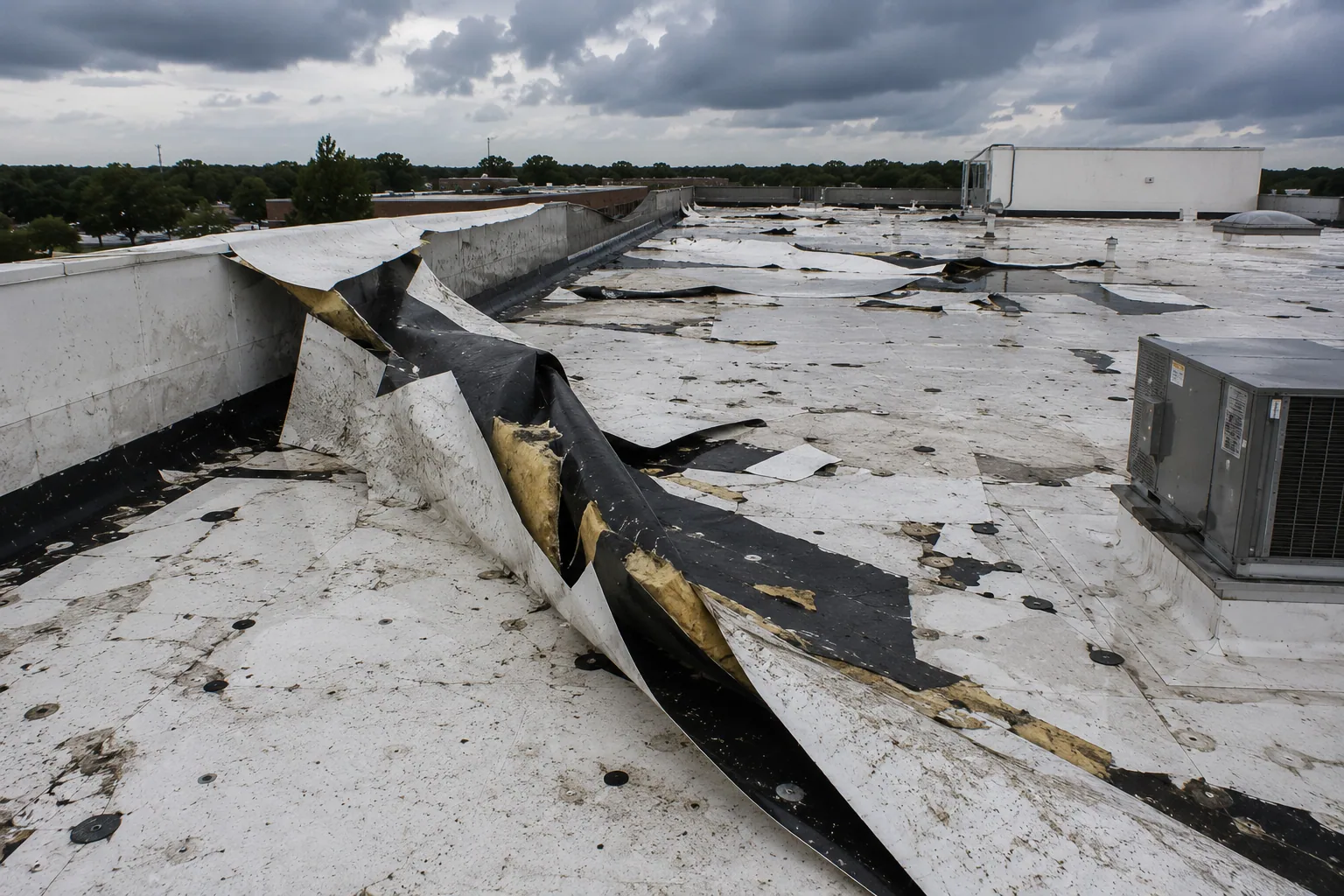
After a storm, the owner needs to know what changed on the roof and what should be protected first. We inspect the reported area, photograph visible conditions, and separate fresh impact or displacement from older wear when the field evidence allows. The report identifies the assembly, affected roof zones, temporary measures, and any test needed to establish concealed damage. It documents roofing conditions; the insurer or adjuster determines coverage and claim decisions.
Longview has a documented history of hail and tornado activity, including a 2008 tornado track that reached the city and a recorded 1996 hail report. Use that history to plan a prompt inspection after a reported event, then compare each property's roof details with maintenance records and field conditions. We inspect each property after the reported event and compare roof details with available maintenance records. For a property near Downtown Longview, the I-20 corridor, or US 80 and Marshall Avenue, coordinate the roof visit with the building's access route and operating hours.
Control active water before permanent work begins
If an opening allows water inside, the first priority is temporary protection that can withstand the expected exposure until a permanent repair is authorized. We identify the leak area, protect contents as directed by the owner, and document the temporary material and limits. A tarp or temporary patch should not conceal roof damage from later review. The property team records what was protected, when the measure was installed, and whether water entry continued after the visit.
Storm cleanup also changes access. Debris, displaced edge metal, saturated surfaces, and damaged rooftop equipment may create hazards around ladders and hatches. We coordinate entry with the building representative, identify a safe route, and avoid moving components that belong to another trade. A emergency roof response can stabilize an active opening, while public facility restoration coordination describes the extra approvals that may apply to government-owned buildings.
Build a clear photo record without overcalling damage
For every observed item, we note the roof zone, detail, visible condition, and photograph that supports the description. Hail marks, wind movement, punctures, torn membrane, lifted flashing, and debris impact are not interchangeable labels. We state what can be seen and flag areas where a closer test is required. A roof report should avoid assigning an event date to damage if the field evidence or property records cannot support that conclusion.
Before-and-after photographs help distinguish temporary mitigation from the permanent scope. If the repair requires removal, we document the opening and underlying condition before replacing material. Where water may have entered below the membrane, a moisture survey can help select areas for direct confirmation; a roof inspection can document the wider assembly and repair history. These records support the property owner's discussion with an adjuster but do not promise claim acceptance or a settlement amount.
Separate emergency stabilization from final restoration
A temporary cover, small membrane patch, and permanent assembly repair may be different phases. The scope identifies which condition is stabilized, what remains exposed to risk, and whether matching materials or a larger tie-in are needed. If concealed insulation or deck damage appears after the opening, we record the new evidence and obtain approval before extending the repair. That gives the owner and adjuster a change point they can review rather than folding unknown conditions into an assumed quantity.
Longview's hot summers and seasonal thunderstorms affect the timing of roof access and temporary protection. The field crew checks actual surface and weather conditions when deciding how much roof to open. A storm-damage assessment can identify permanent roof work after immediate exposure is controlled. If the roof has recurring defects beyond the event area, a separate replacement review should explain which findings extend outside the documented damage boundary.
Give the property team a usable claim-support record
The roofing package can include a roof-zone map, inspection date, weather report supplied by the owner, field photographs, materials removed and installed, test findings, temporary work, and remaining recommendations. We identify the difference between observed damage and a condition that requires additional investigation. If a contractor estimate includes unknown quantities, those items are labeled as allowances until an opening confirms them. The file should stay consistent with the actual repair completed and should not characterize policy coverage.
A chain or ownership group may have several affected locations, but each roof condition needs its own evidence and work record. Property portfolio records can help managers maintain repair history by asset, and roof condition reporting can organize findings for a later capital review. For Longview work, keep the site access contact and roof drawings in the project file so a follow-up inspection can revisit the same location accurately.
Restore the assembly with a compatible tie-in
Storm damage can affect membrane fields, edge metal, flashings, drains, rooftop equipment, or the deck beneath them. The permanent detail needs to connect with the existing system and follow the applicable manufacturer requirements. We identify the material observed and call out a transition that needs design direction rather than assume different products can be combined. If the existing assembly is not known, we state what document, opening, or test would confirm it.
Longview's Building Inspection Division reviews commercial building and site plans under adopted codes. A restoration that changes assembly, insulation, or equipment coordination may need a project review by the City and the owner's design team. Roofing Diligence Notes help explain the repair; they do not replace that process. A TPO system review can address membrane-specific repair questions, and drain and scupper service can restore a storm-affected outlet detail.
Close the repair with dates, limits, and next actions
At completion, we provide the roof zone, repair material, completed detail photographs, and any test or warranty information available for the installed work. The closeout notes whether temporary protection was removed and whether any adjacent condition remains untested. If a later visit is recommended, we explain what it should confirm. The owner can then update the asset file and provide the same record to its insurer or adjuster without adding a coverage conclusion from the roofing contractor.
For a commercial property in Longview, share the reported event, known entry locations, roof plan, maintenance history, and current access restrictions. We will document the roof evidence and explain which work is temporary, permanent, or still dependent on an opening. Clear records make it easier to continue repairs after the immediate event window has passed.
A restoration file should separate the date of reported loss, the areas inspected, temporary protection, and permanent work. Label every photograph with its roof zone and keep pre-repair and post-repair views together. If the carrier requests a quantity, show how it was measured and identify any concealed condition not included. We can document observed damage and perform roofing work; the property owner and insurer determine claim handling, coverage, and payment under their own documents.
Commercial Roofing Questions
Can your report determine whether insurance covers the roof damage?
No. We document roof conditions, repairs, photographs, and test results. The insurer and adjuster determine coverage under the policy.
Can you install temporary protection before a claim decision?
We can discuss a limited stabilization scope for active water entry. The owner should document the condition and temporary work, then coordinate claim requirements with its carrier.
How do you separate storm damage from older wear?
We describe visible conditions by roof zone and compare them with available repair history. When records and physical signs point to different timing or possible cause, document each observed condition and identify what further records or testing would clarify the timeline.
What should we provide before a restoration inspection?
Send roof plans, maintenance and repair records, reported leak locations, event timing, access restrictions, and any carrier or adjuster documentation relevant to the requested visit.