
Commercial Roofing for Retail and Restaurant Chains in Longview, TX
Retail and Restaurant Chains
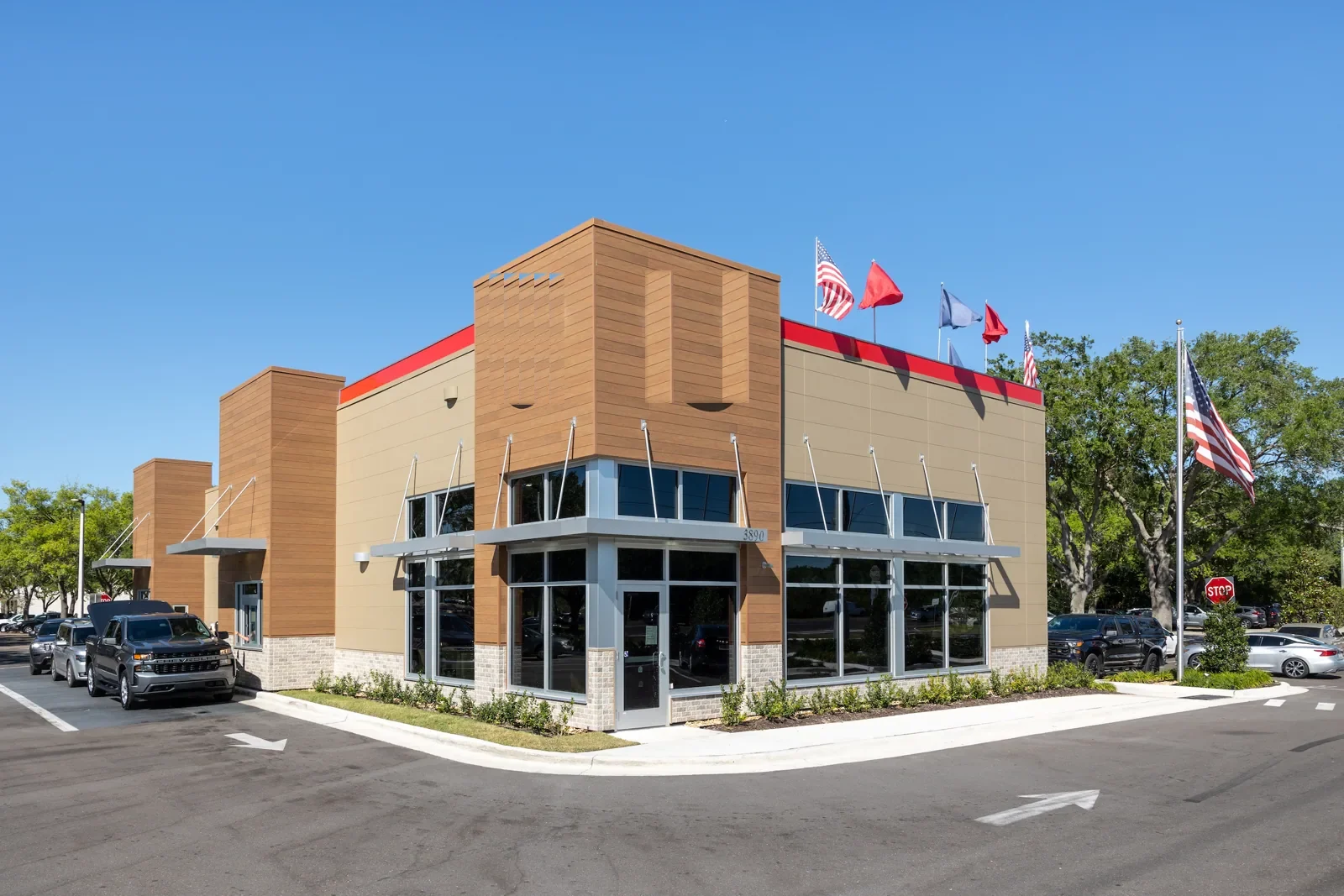
A roof leak during business hours can put a dining room, sales floor, stockroom, or drive-through lane out of service. We locate the roof zone above the report, inspect the surrounding assembly, and tell the operator whether a repair can stay local. The service plan must account for customers, deliveries, grease exhaust, and the hours when a work area can be isolated. A ceiling stain does not show where the roof opened, so the first step is to connect the interior report with field evidence.
Longview serves a regional retail trade area, and Downtown's small-area plan includes restaurants, retail, entertainment, offices, and mixed-use reuse. US 80 and Marshall Avenue cross the city east to west, while Estes Parkway is a key south-city commercial corridor. These locations help frame dispatch and access planning. They do not reveal the condition of a particular storefront or restaurant. We confirm the operator's site rules, roof plan, service hours, and the person who can authorize access before dispatch.
Keep customers away from the active work zone
Retail and food-service sites need a clear separation between roof work and customer circulation. We review public entrances, patio seating, delivery doors, accessible routes, drive-through traffic, and fire access before positioning a lift. If a roof opening is above a dining area, the operator decides whether to relocate service or close the affected section while protection is installed. The job lead confirms barriers, signage, debris control, and reopening criteria with the site manager rather than leaving those decisions to a tenant employee.
A chain may have a narrow overnight maintenance window or a quiet period between meal services. We schedule noisy cutting, tear-off, and material handling within the approved time, then check the tie-in before the first customer arrival. A store-hours roof sequence can keep work bounded to a section while the rest of the location operates. For facilities with high-volume deliveries and loading, our logistics roof coordination approach covers yard and dock conflicts that may also affect retail receiving.
Inspect exhaust, signs, drains, and perimeter details
Restaurant roofs can have grease exhaust, make-up air equipment, gas lines, and access hatches that need coordination with kitchen contractors. Storefronts may add signs, canopies, parapets, and transitions where the membrane meets a taller wall. We inspect flashing around each penetration, check attachment and sealant condition, and record any component that another trade must isolate. The roofing scope describes the interface; it does not authorize a kitchen shutdown or electrical disconnection.
Storefront runoff should reach a working drain, gutter, or scupper instead of spilling over an entry or onto a customer path. We check the outlet opening, surrounding membrane, and overflow route for blockage or separation. Longview sees hot summer weather and seasonal storms, but those conditions do not prove that a particular outlet has failed. A drainage repair visit addresses an identified outlet issue, while curb and penetration work focuses on the roof interface around mechanical or kitchen equipment.
Match the service ticket to the roof evidence
For a chain, the caller may be a store manager who has not seen the roof. We ask for the room, time, weather, and any temporary response already taken, then compare the report with roof slopes, seams, drains, and prior patches. Water can travel laterally before appearing above a register or display. We separate a confirmed opening from a likely path, and we state whether an additional test is needed. That keeps a broad repair from being presented as certain before the roof is opened.
A focused leak visit can address an active report, and moisture mapping may help select areas for confirmation where the visible surface does not settle the question. Photos and notes should identify the store and roof zone, not customer names or payment data. For multiple locations, the same ticket standard lets a regional manager compare evidence without assuming that a recurring symptom has the same cause at each site.
Decide whether a patch fits the roof assembly
A localized repair is appropriate when the material around the defect can accept a compatible tie-in and the surrounding insulation and deck remain suitable. A larger area may need review if the roof has multiple patches, wet material, loose edge metal, or recurring leaks. We show the photographs, test results, and limits of the inspected area so the owner can compare a targeted repair with a broader project. We state any expected service life only when the system documentation supports that term.
For a store project changing insulation, drainage, rooftop equipment, or electrical routing, the owner should ask Longview's City staff and design professionals to confirm the commercial review path before sequencing the work. A replacement assessment can document what field evidence supports a new assembly, while a TPO system review should be based on substrate, details, and operating conditions. For ownership groups making a wider capital decision, investor roof documentation can place store findings in a portfolio record.
Give regional teams comparable roof records
Each closeout should identify the roof zone, observed assembly, repair material, completion photographs, and open recommendations. The owner can retain tenant and address details in its restricted asset file, while facilities staff use the roof-zone label and repair record to route a later issue. We can present the same categories across stores while keeping findings specific to each building and roof. A similar-looking stain at a second restaurant is a reason to inspect, not proof that the cause matches.
For chains in the US 80 and Marshall Avenue corridor, Downtown Longview, and the Estes Parkway area, send service hours, access contacts, delivery restrictions, roof plans, and any equipment shutdown rules with the request. We can identify which action is urgent, what can be scheduled during a planned closure, and what condition needs confirmation before regional capital approval. Clear site-level records make a multi-location program easier to manage without flattening the differences between buildings.
Set the visit up to answer an operating question
Tell us whether the goal is to stop active water, inspect a recurring area, review storm damage, or prepare a replacement scope. Include the store manager's safe access window, roof hatch or ladder arrangement, customer restrictions, and any requirement for a kitchen or refrigeration contractor. If a location is open late, specify when noise and exhaust shutdowns are possible. We will confirm who is responsible for approving the work boundary and how the location should be returned to service.
After work, the chain receives the findings by building, the repair limit, materials used, and any next action. If the inspection could not confirm the source, we say what additional evidence is needed. The regional operator can then decide whether to authorize that step, close the work order, or plan a broader assessment.
Commercial Roofing Questions
Can roof repairs be completed before a store opens?
Often, if access, noise, lift setup, and the repair material's conditions fit the approved overnight window. We confirm the tie-in and area cleanup before the location resumes normal use.
Do you coordinate with restaurant kitchen contractors?
Yes. The operator's authorized mechanical or kitchen trade controls equipment shutdowns. We coordinate the roof opening, protection, and flashing work around that handoff.
Can one roof leak ticket cover several locations?
Each location should have its own roof-zone finding and repair record. A regional summary can compare priorities, but the evidence and scope remain attached to each building.
How do you decide whether the roof needs replacement?
We document the assembly, repair history, moisture findings, and condition beyond the reported area. A replacement scope follows those observations rather than a single ceiling stain.