Commercial Fire Damage Roof Repair in Longview, TX
Commercial Fire Damage Roof Repair
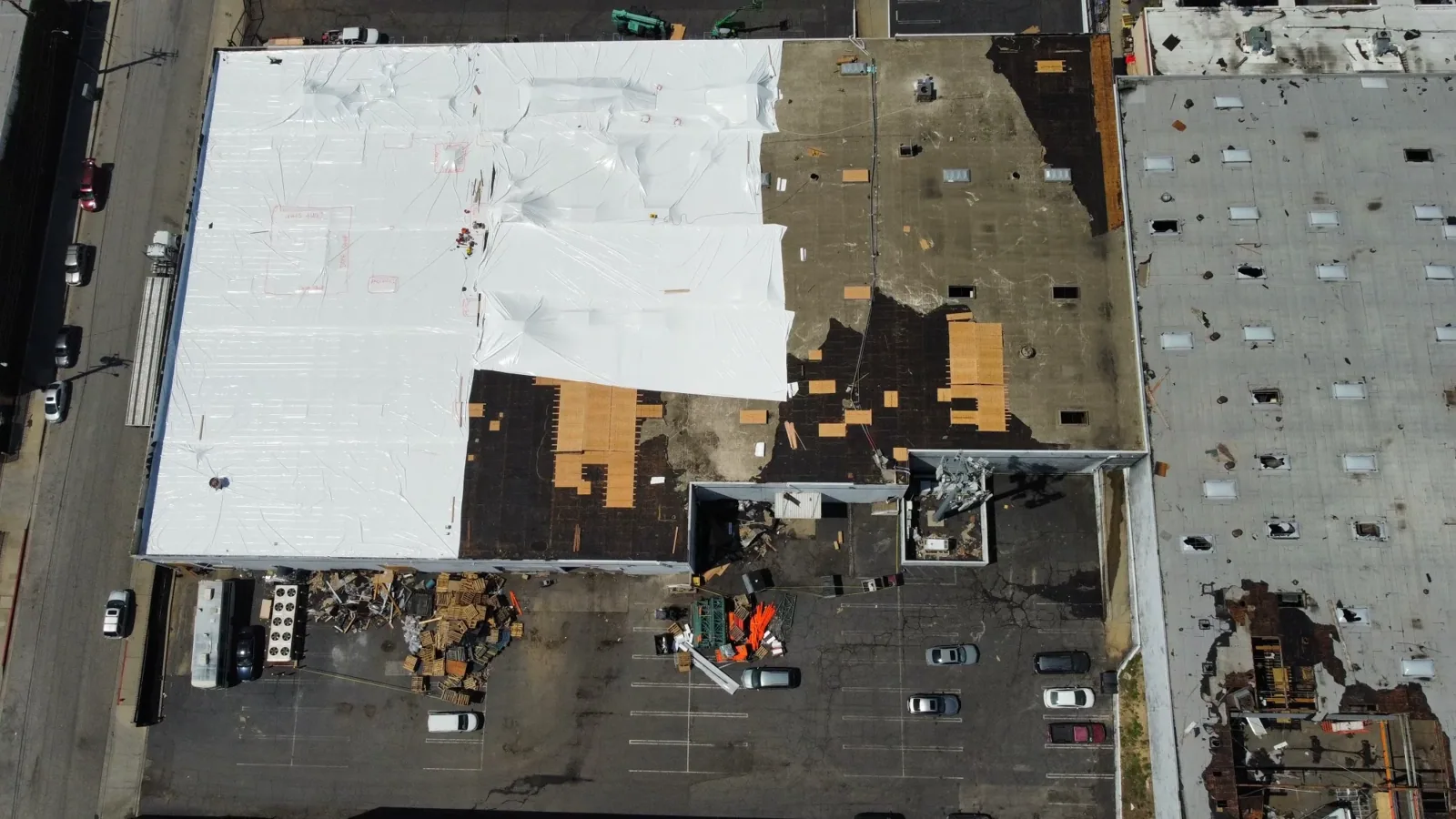
After a fire, the roof may be exposed where crews opened the assembly, heat altered membrane or insulation, or suppression water entered from above. The roofing inspection begins after the building representative confirms that roof access is safe. We map the affected zone, document visible heat and water effects, and identify openings that need immediate protection. The report avoids treating every discolored surface as a structural or membrane failure; each condition is tied to what can be seen or tested.
Longview's building stock includes downtown commercial buildings, industrial parks, healthcare and education facilities, and retail corridors along US 80 and Estes Parkway. These locations can require different access and occupant coordination after an incident. Before entering the work area, we review the owner’s incident boundary, roof drawings, suppression or demolition records, and any restrictions from fire officials.
Wait for a safe and authorized roof entry
Fire scenes can include unstable decking, damaged mechanical equipment, exposed electrical pathways, smoke residue, and debris. We do not enter a restricted zone until the building owner or authority having jurisdiction releases access. The site contact identifies safe ladders, fall protection, blocked areas, and any personal protective requirements. If another contractor is removing debris or opening the roof, we coordinate the boundary and avoid disturbing evidence outside the roofing scope.
Once access is authorized, the crew checks roof stability and marks hazards before materials are moved. We identify where a temporary cover can be attached without loading a weakened deck or directing water into another opening. A emergency dry-in response may protect the building while the owner and design team review permanent work. For an event with a broader storm component, hail damage evaluation covers a different set of surface observations and should remain separate in the incident record.
Separate heat impact from suppression-water damage
Heat may discolor, blister, shrink, or embrittle membrane; water may wet insulation, cover board, or deck through an opening. Smoke residue can be present without confirming how deep heat affected the assembly. We record each observed condition and photograph it before removal. If the roof has been cut for fire suppression or investigation, we mark those openings separately from areas exposed to flame or radiant heat. The repair scope should not confuse an access cut with fire damage.
Where concealed materials are involved, an opening or sample may be required to confirm whether insulation can remain. We identify the proposed location and explain what it can establish before removal. A moisture survey may help prioritize areas for direct testing, but heat and smoke can affect surface readings. The roof report distinguishes that screening from material confirmation and leaves structural capacity to the qualified design professional.
Keep the exposed assembly protected during investigation
When the roof has an open penetration or cut, temporary protection must be secured to the conditions that remain. We define the area to cover, the route runoff will take, and how the temporary work will be checked. Water should not be trapped beneath a cover or sent into a neighboring roof zone. If a damaged curb or duct must remain isolated for investigation, the owner coordinates that equipment with its mechanical and fire-protection contractors.
Longview's hot summers and seasonal thunderstorms make the exposed period a practical scheduling concern. The crew limits daily removal and closes work at a watertight point. The crew documents what is exposed, connects it to the incident record, and marks the affected roof zone. A roof inspection can document conditions for the next decision, while membrane puncture repair applies to an isolated cut after the adjacent substrate has been checked.
Set restoration limits from the confirmed assembly
Permanent work can require replacement of membrane, insulation, cover board, flashing, edge metal, or deck sections, depending on what the incident and testing reveal. We record the material removed and what the opening showed before installing replacement layers. The repair must tie into compatible material and restore drainage, fire-related penetrations, and rooftop details. If assembly records are missing, we identify what must be verified before ordering a matching or replacement system.
Longview's Building Inspection Division reviews commercial building and site plans under adopted codes. A fire-related roof alteration may require coordination with the City's plan review and the owner's design professionals. We provide field measurements and photographs for the owner's design professionals and City staff to review structural or code questions. When damage reaches beyond a localized repair, replacement assessment can evaluate the remaining roof, and flashing repair can address a specific opening or perimeter transition.
Keep roofing, mechanical, and interior work aligned
Roof work often shares a schedule with electrical, HVAC, fire-protection, insulation, and interior restoration teams. The job plan lists which opening belongs to each trade, who authorizes equipment movement, and when the roofing crew can complete a permanent tie-in. We protect the assembly while another contractor uses a curb or penetration and inspect the roof detail again before closing it. If the interior team needs a dry space, the daily roof boundary must be communicated before that work begins.
Longview Business Park near US 259 and I-20, South Longview near LeTourneau University, and Downtown's reuse area have different traffic and access patterns. The project manager supplies gate access, staging limits, and delivery windows for the affected facility. A roof condition record can retain observations, photos, and open issues for the owner's file. For organizations managing multiple assets, property manager coordination can help maintain a separate record for each building.
Close out with a record of work and remaining limits
At completion, we provide the affected zones, materials removed and installed, repair photographs, test findings, temporary measures, and outstanding recommendations. The report states what was confirmed and what still depends on access or testing. If an opening remains temporarily protected, it is marked with its check interval and the person responsible for follow-up. The owner can then coordinate the roof file with incident, insurance, safety, and building-restoration records without treating the roofing report as a coverage or fire-cause decision.
For a commercial property in Downtown Longview or another local industrial or retail area, provide the release for roof access, incident boundary, roof plans, equipment restrictions, and restoration schedule. We will document the roof assembly and define the next safe repair step.
After utilities are safe, coordinate the roofing inspection with the building team and any fire-restoration work already underway. Mark where suppression water reached the roof edge or a penetration, then trace the reported interior area to the roof opening before setting the repair limit. Photograph each layer removed and record which areas remain inaccessible. If the deck or insulation is affected, the owner can then compare a localized repair with a larger assembly replacement using the exposed condition rather than the interior cleanup footprint.
Commercial Roofing Questions
Can you inspect the roof while fire investigation is active?
Only after the owner or authority releases the area for roof access. We follow the site's safety restrictions and avoid disturbing areas outside the roofing scope.
Does discoloration confirm fire damage to the membrane?
Not by itself. We record visible surface effects and identify any opening or material test needed to confirm the condition below.
Can you install a temporary roof cover immediately?
We can scope temporary protection once the access area is safe and the cover can be secured to remaining sound material without directing water into another opening.
Do you determine whether fire repairs are covered by insurance?
No. We document roof conditions, repair work, and test results. The carrier and adjuster decide coverage under the policy.